

The emerging lifestyle trends are becoming more pronounced, even as today's residences grapple with the complexities of multigenerational living, thermal regulation, and the conflicts surrounding communal spaces. Observations based on how my clients navigate through various thresholds inform my perspective. According to AIA, there’s a noticeable increase in demand for versatile layouts and outdoor connections in residential designs, making a 6 bhk triplex bungalow floor plan in India a fundamental blueprint to respond to these requirements. In this context, I envision the home as a sophisticated software architecture—layers meticulously designed to enhance family interaction, ensure privacy, and facilitate shared environments—supported by a continually evolving spatial reasoning toolkit as family practices transform.
Social Hub at the Garden Level
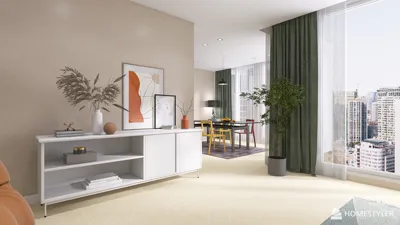
Design Concept: The ground floor merges living spaces, dining areas, and a dynamic pooja/sitting area that opens to the garden, as future designs call for seamless transitions and community engagement.
Flow: From the entryway → foyer as a buffer → living center → dining area → behind a service corridor, the kitchen → veranda acting as an environmental portal.
Sightlines: Emphasizing transparency: foyer filters the light, the living area frames the greenery, and dining spaces provide a visual connection to the kitchen like a user interface breadcrumb trail.
Storage Solutions: Under-stair compartments, discreet dining storage, and lockers in the mudroom; designed to accommodate festive gatherings and day-to-day cycles efficiently.
Furniture Planning: Sofas measuring 900–1000 mm in depth, dining tables at 2400–3000 mm, and a customizable pooja area of 900 mm; all dimensions respect the circulation norms.
Conclusion: This welcoming space can engage guests and host rituals effortlessly, prepared for five years of mixed social interactions.
save pin
Private Space at the Middle Level
Design Concept: The second level serves as a quiet zone: four bedrooms arranged like reliable servers, with a central family lounge functioning as a load balancer.
Flow: Arrival via stairs → lounge → curved corridors → bedrooms each equipped with en-suite baths → a small study nook designated for children’s activities.
Sightlines: Controlled perspectives: lounge leads to the stairs, corridors guide towards daylight wells, with bedrooms providing privacy while preserving an information hierarchy.
Storage Solutions: Wardrobes that are 600 mm deep, hidden compartments within bed bases, a central linen hub; predictable layouts minimize mental workload.
Furniture Planning: King-sized beds for master suites, queens for secondary rooms; maintaining a 900 mm clearance around beds; desks measuring 1200 mm; all tailored to support daily routines effectively.
Conclusion: This level serves as the family’s foundational core, where routines converge seamlessly, allowing conflicts to dissipate over time.
save pin
Retreat and Flexible Suite on the Top Level
Design Concept: The third level features the master retreat and a versatile suite—ideal as a home office, gym, or room for seniors—anticipating transitions in life stages.
Flow: Staircase → vestibule → master suite → terrace deck → flexible space → pantry/bath cluster enabling independent functionality.
Sightlines: Uninterrupted views from bed to terrace, a flex space angled to prevent screen glare; akin to a UI dark mode that calms the mind.
Storage Solutions: Walk-in closet with widths of 2400–3000 mm, a terrace storage area for seasonal items, a secure document space; compartments arranged by access priority.
Furniture Planning: Master seating with lounge chairs, desk space at 1600 mm, a treadmill area with 1000 mm clearance; terrace seating designed within wind paths for comfort.
Conclusion: This space remains a tranquil retreat—a blend of work, wellness, and solitude operating on dedicated channels for the upcoming years.
save pin
Final Insights
The 6 bhk triplex bungalow floor plan in India resembles a structured operating system, each level finely adjusting elements of privacy, climate comfort, and the flow of rituals. Related concepts—multigenerational design, adaptable floor layouts, and living spaces that prioritize terraces—hint at the methodologies families are adopting. Long-term requirements such as Vastu-compliant pathways and heat management solutions will emphasize functional performance over mere size. From my perspective, the intelligent homes of tomorrow won’t necessarily be larger; they will simply be more purposeful, making platforms like Homestyler essential for visualizing and planning these modern spaces.

Minimalist Solid Oak Wood Platform Bed 3D Model

Modern Leather Upholstered King Size Bed With Metal Frame 3D Model

Minimalist Solid Oak Dining Table With Cylindrical Legs 3D Model
If you're looking to transform your home with ease, try Homestyler. This user-friendly online design platform offers an intuitive design tool along with stunning 3D renderings and a wealth of DIY video tutorials. Unleash your creativity and see your vision come to life today!
立即免费设计
































