


I have always cherished the subtle rhythm of a living room—gentle water movements, soft reflections dancing across surfaces, and a serene focal point that feels vibrant. A fish tank coffee table can offer this tranquil ambiance without overwhelming the space; however, achieving success requires a thoughtful integration of design, user comfort, and aquatic well-being.
Before exploring aesthetic choices, it is essential to acknowledge real-world comfort: lighting around seating areas plays a pivotal role in minimizing eye strain and enhancing relaxation within a room. The WELL v2 standard emphasizes the importance of balanced lighting, focusing on glare reduction and circadian effects; a living room that achieves optimal lighting manages to alleviate harsh reflections and is far more conducive to reading and social gatherings. A study by Steelcase suggests that well-tuned settings promote longer, more gratifying interactions with spaces—particularly valuable when your coffee table also serves as a living aquatic habitat. In terms of color selection, color psychology insights from Verywell Mind reveal that shades of blue and green are associated with calmness and stress alleviation, which effortlessly align with the soothing qualities of aquascapes and freshwater environments.
As design intentions converge with daily usage, ergonomic considerations and visual comfort become paramount. In many living rooms, seating height typically ranges from 17 to 19 inches; consequently, a coffee table's surface generally stands between 16 and 18 inches high to maintain reachability and visual equilibrium. It’s crucial that a tank coffee table adheres to this height range while safeguarding the aquatic environment with stability and minimized vibrations. Take into account the appropriate glass thickness for weight support; for smaller tanks in coffee table formats, tempered glass of 10 to 12 mm is standard, whereas larger constructions may require robust framing. Be aware that each gallon of water weighs approximately 8.34 lbs; thus, even a 30-gallon setup can exceed 250 lbs when accounting for glass, substrate, and equipment. Keeping weight distribution and floor strength in mind is essential. For more extensive insights on workplace and environmental design that can be applied to enhance residential comfort and visual flow, the Steelcase research library offers valuable human-centric data.
Design Concept: Establishing a Living Centerpiece
My goal is to achieve visual tranquility through layered textures—water, glass, natural stone, and foliage—complemented by a sleek table form. Minimizing framing reduces visual noise; a slender rim or inset top allows you to place a book or cup without disturbing the aquatic life beneath. If your living room embodies Scandinavian or Japandi aesthetics, consider using warm ash or oak with satin finishes, combined with a low-iron glass tank that eliminates the green tint for clearer views. For modern designs, powder-coated steel frames with sharp mitered edges and a matte black or warm gray finish can beautifully accentuate the aquascape.
Spatial Planning, Proportions, and Movement
Ensuring intuitive room circulation is key. I recommend maintaining a clearance of 18 to 24 inches on all sides of the table to facilitate movement, with a minimum of 36 inches for primary pathways. The table’s footprint should be about two-thirds the length of the sofa for visual harmony; when utilizing sectional seating, size the tank to fit the shorter side to prevent overwhelming the room. To aid in planning optimal layouts or experimenting with different sofa arrangements, a room layout tool like Homestyler can help visualize traffic patterns and sightlines without moving any furniture.
room layout tool
Selecting the Ideal Tank Style
• Rectangular low-profile: Easy maintenance, wide viewing area, stable for books and trays.
• Square cube with a perimeter shelf: Compact and visually striking; consider a floating top panel to maintain a functional surface.
• Split-level with inset glass: A raised edge safeguards the viewing area and contains splashes, making it suitable for homes with children.
• Peninsula-style within a frame: Allows multi-angle viewing in larger spaces; ensure easy access to plumbing and electrical connections through a discreet channel.
Durable Materials for Long-Term Use
• Glass: Low-iron tempered glass provides clarity and scratch resistance; chamfered edges help reduce chipping.
• Acrylic: Lightweight with excellent clarity but may scratch more easily—suitable for weight-sensitive situations.
• Frame: Solid hardwood options (oak, ash, walnut) with moisture-resistant finishes, along with powder-coated steel for sleek profiles.
• Top surface: Consider a separate tempered glass pane or a sealed hardwood panel on soft bumpers to absorb vibrations.
• Sealants & gaskets: Use aquarium-grade silicone and EPDM gaskets for cable pathways.
Lighting: Comfort for Occupants, Health for Aquatic Life
Strive for a balance between human comfort and aquatic requirements. Utilize full-spectrum LED lighting that has adjustable intensity and a color temperature around 6,500K for freshwater planted tanks. Ensure that glare is minimized in seating areas by angling the fixtures to avoid direct reflection. Additional ambient lighting should range from 2,700 to 3,000K for warmth in other parts of the room, allowing the tank to appear jewel-like without compromising color vibrancy. Dimmable drivers and schedules can help align with the circadian rhythm norms as outlined in WELL v2 guidelines. Install lighting beneath a top panel to shield it from spills and minimize visual clutter.
Controlling Acoustics and Vibration
Water and pumps can generate low-level noise. Isolate pumps using silicone mounts, manage canister filters within ventilated cabinetry, and cushion the table legs with felt pads or rubber pucks to minimize structural vibrations. Keep tubing runs short and avoid rigid 90-degree fittings that emit whistling noises. Aim for a background noise level that does not outcompete conversations—around 40 to 45 dBA in living areas is a comfortable target.
Ergonomic Considerations: Reach, Safety, and Upkeep
Design a maintenance pathway: include an access panel that raises without needing to shift the entire tabletop, and provide cable management that exits through the back. Maintain daily reach distances under 20 inches for tasks such as feeding and pruning plants. Incorporate a quick-disconnect mechanism for filters and place a drip tray underneath equipment to capture spills. If the table is also used for serving, consider adding a 1 to 2-inch perimeter lip or a floating top panel to prevent objects from sliding into the viewing area. Ensure rounded corners have at least a 10 mm radius for safety.
Freshwater vs. Saltwater: Smart Beginnings
Freshwater planted tanks are easier to manage, require less upkeep, and offer a calming visual presence—ideal for novices. In contrast, saltwater reefs demand stringent water chemistry, protein skimming, and more intense lighting; the payoff lies in their stunning colors and movements. If your living room receives abundant sunlight, be cautious of any direct sunlight hitting the tank, as it may lead to increased algae growth; utilize sheer curtains and strategically position the table to avoid glare during peak sunlight hours.
Elevating Room Aesthetics with Aquascape Concepts
• Nature-style: Incorporate driftwood arcs and rocky clusters, planting mid-ground with Anubias, Java fern, and carpeting varieties like Monte Carlo.
• Iwagumi: A minimalist arrangement of stones (using an odd number) creates a strong directional flow—stunning within contemporary environments.
• Biotope-inspired: Replicate a specific ecosystem (like Amazonian or Southeast Asian) for both authenticity and educational opportunities.
• Blackwater: Offers a dark, moody aesthetic with soft lighting and leaf litter, harmoniously paired with walnut cabinetry.
Electrical, Ventilation, and Safety Measures
Ensure the integration of GFCI outlets for powering any aquatic equipment. Route cables through a grommeted chase and separate low-voltage LED lines from pump cords where feasible. Ventilate cabinetry to mitigate humidity; incorporate perforations under the table’s apron to facilitate passive airflow. Use a non-slip mat underneath the filter and employ cable clips to prevent wear from movement during table adjustments.
Comprehensive DIY Project Guide
1) Determine dimensions: Align with sofa height and the overall scale of the living space; confirm the floor's load capacity.
2) Choose tank style: Select glass thickness based on volume requirements; assess seam integrity.
3) Construct the frame: It should be square, sturdy, and moisture-resistant; test-fit a removable top for easy access.
4) Plan equipment layout: Decide on filters, heaters (if necessary), LED lights, and cable paths.
5) Conduct a water test: Fill the tank outdoors or in a utility area for 48 hours to verify seals.
6) Aquascape the tank: Rinse substrate, arrange hardscape elements, plant vegetation, and carefully fill to prevent clouding.
7) Cycle the aquarium: Cultivate beneficial bacteria before introducing fish; routinely check ammonia, nitrite, and nitrate levels.
8) Install and adjust lighting: Program timers and minimize glare to seating.
9) Position in the room: Ensure circulation clearances and visibility lines are met; verify accessibility to power outlets.
10) Maintain: Perform weekly partial water changes (10–20%), clean glass surfaces, trim plants, and examine seals.
Color Psychology and Styling Approaches
Soothing color palettes are ideal around aquariums—think muted greens, slate blues, and grounding neutrals. Insights from Verywell Mind validate using blues and greens to lessen stress and foster tranquility. Complement these with textured fabrics—such as bouclé, linen, or wool—and select warm metallic accents to harmonize with the coolness of glass and water. A corresponding stone or driftwood feature can subtly mirror the aquarium's design on adjacent shelves for thematic coherence.
Sustainability and Material Maintenance
Prioritize durable finishes with low-VOC emissions and opt for sustainably sourced hardwoods. Incorporating LED lighting reduces energy consumption and heat output. For enduring clarity, use magnetic algae scrapers that won’t scratch the glass or acrylic. Regularly replace worn gaskets and inspect silicone seams annually to ensurelong-lasting performance.
Common Pitfalls to Avoid
• Overburdening the surface with overly heavy trays or decorative items.
• Neglecting water chemistry checks before introducing fish.
• Using unsealed wood in high-humidity areas.
• Allowing direct sunlight to hit the tank for extended periods.
• Failing to plan for access—this can make maintenance cumbersome.
Frequently Asked Questions
Q1: What tank size is optimal for a coffee table?
A volume between 20 and 40 gallons strikes a balance between ease of maintenance and stability while ensuring height remains within standard coffee table ranges (16 to 18 inches). Always verify that the frame and floor can support the entire water load plus additional weight from glass and equipment.
Q2: How can I minimize glare on the viewing surface?
Position LED fixtures at an angle, opt for matte finishes on nearby surfaces, and locate the table away from direct sunlight. Surrounding ambient lighting should stay between 2,700 and 3,000K, while aquarium LEDs can hover around 6,500K for natural planted setups.
Q3: Should I choose acrylic or glass?
Acrylic is lighter and provides excellent clarity but is more susceptible to scratches. Glass, particularly low-iron tempered glass, is more resistant to scratching and retains a clean edge, making it more suitable for a dual-purpose table.
Q4: Can I still use the table for drinks and books?
Absolutely—consider utilizing a separate tempered glass top on softer bumpers or a shallow perimeter lip. Ensure the top is easily removable for convenient maintenance access.
Q5: Are the sounds of the equipment disruptive?
With properly isolated pumps, a canister filter, and insulated cabinetry, background noise can be kept around 40 to 45 dBA—perfect for conversation and media enjoyment.
Q6: What beginner-friendly fish and plants can I add?
For freshwater setups: small tetras, rasboras, or peaceful shrimp, along with plants like Anubias, Java fern, and Monte Carlo. These species adapt well to moderate lighting and simpler maintenance requirements.
Q7: Do I require special electrical safety measures?
Install GFCI outlets and implement drip loops on all cables. Whenever possible, separate the circuits for lighting and pumps while ensuring cabinetry is well-ventilated to prevent moisture-related damage.
Q8: How often should maintenance be conducted?
Plan for weekly water changes of 10 to 20%, monthly checks on filter media, and consistent glass cleaning. Trim plants as they grow to the surface to maintain sightlines and support their healthy growth.
Q9: Is a saltwater setup feasible as a coffee table?
Yes, it is possible, but a saltwater aquarium requires stricter water chemistry control, protein skimming, and more intense lighting. If you're a beginner, it may be wiser to start with freshwater and transition once you gain more experience.
Q10: How can I ensure the table is safe for children?
Utilize laminated or tempered glass, rounded corners, and a raised rim, and securely fasten the top panel. Store cables within cabinetry equipped with child-proof latches to enhance safety.
Q11: How should I manage the table's weight?
Calculate the total weight: each gallon weighs around 8.34 lbs. This includes substrate, glass, and equipment. Employ a sturdy frame with cross-bracing and evenly distribute legs to maintain weight contact over a broader area.
Q12: Can I incorporate smart controls into my setup?
Definitely—consider adding smart plugs for automated lighting schedules and leak sensors inside the cabinetry. Keep manual overrides accessible for maintenance purposes.

Minimalist Solid Wood Geometric Side Table 3D Model


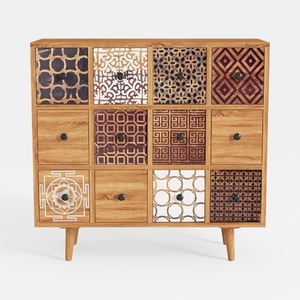
Bohemian Solid Wood Multidrawer Accent Cabinet With Patterned Fronts 3D Model
Discover Homestyler, your go-to online home design platform! With its easy-to-use design tool, impressive 3D renderings, and a wealth of inspiring design projects and DIY tutorials, transforming your space has never been easier. Unleash your creativity and start designing today!
Progetta ora GRATIS
































