


I have crafted sensory environments for children with neurodiversity, individuals recovering from strokes, as well as adults facing high-stress situations who need respite. A Snoezelen-inspired room at home can be both intentional and affordable, rather than looking clinical. Begin by identifying the emotional outcome you wish to achieve—whether it's calming, alerting, or a combination of both—then incorporate elements such as light, sound, texture, fragrance, and motion in a controlled and safe manner. Numerous studies indicate that the design of our surroundings can significantly impact our stress levels, concentration, and overall well-being. Hence, I approach these spaces as finely-tuned instruments instead of mere collections of gadgets, much like what is offered in Homestyler designs.
Evidence is essential in this field. The WELL Building Standard (WELL v2) emphasizes the importance of acoustic comfort and adjustable lighting, linking them to reduced stress and enhanced mood through its Mind and Light principles. This reinforces how tunable light and minimized noise contribute to the well-being of those occupying the space (source: WELL v2). The effects of color on our emotional state are also illustrated by Verywell Mind’s color psychology insights, noting that shades like blues and greens promote calmness and mental rejuvenation, while bold reds can boost energy and heart rate—ideal for alert settings when used strategically (source: Verywell Mind on color psychology). I apply these research findings to make informed choices regarding intensity, color, and sensory pacing within each area.
Functional ergonomics are vital for enduring user comfort during longer sessions. Studies from Steelcase in workplace environments reveal that allowing for postural choices—such as reclined, seated, or perching positions—can enhance comfort and mitigate fatigue. This principle translates to a Snoezelen-inspired space, where it's beneficial for users to have the option to lie down, curl up, or sit comfortably based on their sensory requirements (source: Steelcase Research). It is equally important to ensure that lighting adheres to safety standards while remaining adjustable for mood purposes. The IES advises maintaining minimal illumination levels for safety, typically around 50–100 lux for task-related areas, while soothing zones should be layered at 10–30 lux using warm color temperatures.
Plan the Space with Distinct Sensory Zones
It's advisable to define two to three distinct zones rather than settling for a one-size-fits-all approach. I frequently establish areas such as a Calm Nest (featuring low lighting and soft textures), a Focus Corner (providing gentle, rhythmic stimulation), and a Movement Patch (designed for safe, low-impact activities). For those who wish to test configurations before making a commitment, an interior layout planner or a room layout tool can help simulate placements for items like beanbags, bubble tubes, and fiber-optic strands while ensuring safe pathways. Implementing a room layout tool can aid in validating circulation routes and sightlines for projected visuals, which aligns well with designs available through Homestyler as well.
Lighting: Adjustable, Dim, and Layered
Lighting acts as the primary mood regulator in these environments. Aim to combine three lighting types: ambient glow (using indirect LED strips concealed behind coves or shelves), focal sparkle (like fiber-optic curtains or bubble tubes), and effect lighting (such as projectors displaying slowly moving galaxy or aquatic visuals). It's essential to utilize dimmable drivers and select LEDs with a high Color Rendering Index (CRI) for a natural look. For calm zones, target warm-white hues (between 2700–3000K) at 10–30 lux; for alert or playful moments, increase to 3500–4000K at 50–150 lux. To minimize glare, utilize baffle strips, frosted diffusers, and position lighting sources out of direct sightlines when reclining. A single smart dimmer or scene controller can facilitate seamless transitions between lighting modes without abrupt changes.
Color Psychology: Soft Saturation, Nature-Inspired Palettes
When it comes to wall and ceiling finishes, opt for low-sheen and low-chroma tones to help prevent visual fatigue. I tend to prefer soft greens, muted teals, and gentle grays—colors linked to restoration in environmental psychology. One accent wall can be designated for projection purposes; matte finishes help maintain gentle contrast. Small bursts of color, like cerise or amber, can be introduced through removable objects to avoid overstimulation. For those particularly sensitive to visual clutter, it's best to keep visible colors limited to three at a time, with additional colors stored in closed cabinets, aligning with the personalization offered by Homestyler layouts.
Acoustic Comfort: Soundproofing and Shaping Audio
While silence can be unsettling for some, controlled sound proves to be more beneficial. Start by softening the room's boundaries: seal gaps around doors, incorporate thick rugs, and utilize acoustic panels or fabric-wrapped cork positioned at ear level behind seating. Next, layer intentional audio such as soothing nature sounds at levels between 35–45 dB, soft tempo music under 60 dB, or binaural beats with professional guidance. To achieve sound efficacy, avoid placing speakers in hard corner areas to mitigate unwanted booming. For compact spaces, nearfield bookshelf speakers at a lower volume create a more intimate and non-intrusive sound experience than bass-heavy systems.
Tactile and Proprioceptive Inputs
Incorporating a variety of textures can help ground users in the environment. Options might include a plush rug, knit throws, weighted blankets, and smooth satin or bamboo materials. Fidget objects such as silicone rollers, soft beads, or velvet cubes can be beneficial as well. To cater to proprioceptive needs, consider adding features like a soft crash pad, a gentle rocking chair, or a mini-trampoline with a safety bar if appropriate. Employing floor poufs at various heights encourages diverse postures. Organize tactile items in labeled bins, enabling users to quickly curate the intensity they desire.
Safe Movement and Vestibular Opportunities
If space allows, a professionally-rated ceiling-mounted swivel hook for swings or cocoon hammocks can be a great addition. Low-amplitude movements are preferable; pair them with a soft mat underneath and ensure a clear 1-meter radius surrounding the installation. For smaller rooms, a floor rocker or balance cushion can offer vestibular input without the need for overhead mounts. It’s essential to encourage slow transitions that allow users to control their pace and duration to prevent sensory overload.
Scent and Thermal Comfort
Scent can be a powerful yet polarizing factor in a sensory space. Use essential oils sparingly: lavender, chamomile, or bergamot can promote calmness, while peppermint can enhance alertness. Position diffusers downwind from seating areas to allow for a gradual increase in intensity. Additionally, it's crucial to provide a fragrance-free mode; some individuals with sensory sensitivities require sessions absent of smell. Thermal comfort should not be overlooked as well—using breathable textiles and keeping a cozy throw nearby can make a difference; a slight drop in room temperature can cue relaxation, especially in conjunction with a weighted blanket.
Visual Rhythm: Projects, Bubbles, and Fiber Optics
The movement of light in these spaces should be slow and predictable. Utilizing projectors that move at a rate of 0.5–2 Hz can maintain user engagement without inducing agitation. Bubble tubes can add vertical rhythm and gentle white noise; ensuring that their bases are anchored reduces the risk of tipping, and selecting models with safety shrouds is wise. Fiber-optic strands provide a safe touch option and can be visually arranged in various styles. Keeping a programmable remote on hand allows users to pause any movement instantly if they feel overwhelmed.
Furniture and Ergonomics
It's essential to provide options for three postures: fully reclined (consider a daybed or crash pad), semi-reclined (perhaps a chaise or zero-gravity chair), and supported sitting (like a high-back lounge with lumbar cushioning). Prioritize safety with rounded edges, wipeable surfaces, and non-slip pads. For shared living spaces, incorporating modular pieces—such as folding mats or nesting poufs—can facilitate quick room resets. When anticipating longer durations of use, it's advisable to select breathable upholstery and avoid heavy foams that retain heat beneath thick blankets.
Material Selection and Safety
Prioritize materials with low-VOC paints and adhesives, washable slipcovers, and phthalate-free plastics. Effective cable management is crucial; using velcro ties and cord sleeves can prevent snags. Also, utilize tamper-resistant outlet covers and ensure that any water features (such as bubble tubes) are connected to GFCI-protected circuits. If mirrors are part of the design, opt for acrylic or safety film. Clearly label storage containers with icons for ease of navigation by non-readers, alongside color coding for efficient reorganization.
Control, Choice, and Routines
A sensory room should offer a range of experiences rather than operating at a single intensity level. Consider constructing distinct scenes such as Calm (with warm dim light at 2700K, nature sounds, and lavender), Focus (neutral light at 3500K, slow moving projections, and soft tempo music), and Reset (minimal lighting at 10 lux, complemented by silence or white noise). Users should receive a simple laminated card featuring 3–4 scene selections to operate via the wall remote. Empowering users to choose their preferred textures, light intensities, and soundscapes significantly alleviates anxiety and enhances the effectiveness of the room, akin to the customizable features found in Homestyler designs.
Compact Space and Budget-Friendly Solutions
If your space is limited to a corner, creating a defined area using a canopy, LED strip with a diffuser, weighted throw, and a small speaker can be highly effective. For rental spaces, relying on portable projectors, battery-operated fiber optics, and stick-on acoustic panels works well. Source soft furnishings from thrift stores while investing in new items that directly contact the face. Prioritize having dimmable lighting, one high-quality texture, and a controllable sound source over many underused gadgets, embodying the efficient design principles seen in Homestyler.
Layout Testing and Iteration
Before drilling, it is crucial to test reach, sightlines and clearances for safety. Tools for layout simulation can provide assistance in verifying dimensions for bubble tube placements, swinging clearance, and projector distances—especially in confined spaces. Utilizing an interior layout planner to prototype lighting setups ensures that cable routes are kept outside of walking paths, crucial for user safety and comfort, and aligns with best practices observed in Homestyler implementations.
Maintenance and Hygiene
Establish a weekly maintenance routine that includes wiping down high-touch items, washing slipcovers, and checking filters on diffusers and projectors. Rotate sensory elements regularly to maintain novelty without heightening intensity. Adjusting light scenes according to seasonal changes can optimize user experience; for instance, winter afternoons might necessitate higher baseline lux, while summer evenings may require less. Keeping a straightforward log of effective strategies for each user helps guide necessary adjustments.
Research and Additional Resources
To enrich your strategy, investigate the WELL v2 framework for environmental approaches that connect lighting, acoustics, and mental health, alongside studying insights on color psychology for choosing calming palettes that suit the needs of your users.
Frequently Asked Questions
A sensory room is a carefully controlled multi-sensory environment designed to soothe, focus, or gently stimulate through the use of light, sound, touch, scent, and movement. At home, it represents a customized, secure, and adaptable alternative to clinical multi-sensory rooms.
Maintain ambient lighting levels around 10–30 lux with warm-white tones (ranging from 2700–3000K), employing indirect diffused sources and dimming capabilities to prevent glare.
Utilize calming shades such as soft greens, muted blues, and low-chroma neutrals to promote relaxation. Reserve highly saturated reds and oranges for occasional use as stimulating accents.
To minimize disturbances, seal gaps in doors, introduce a thick rug, hang fabric or acoustic panels at ear height, and incorporate subtle nature sounds at a volume of 35–45 dB.
Select structures that come with stable, anchored bases, and ensure they have safety shrouds; use GFCI circuits for all water features. Fiber optics generally present a safe touch experience when cables are well-managed.
Calming scents such as lavender, chamomile, or bergamot can be beneficial, while peppermint is great for alertness. Always provide a fragrance-free option and maintain low diffuser intensity.
Create one Calm Nest with clear circulation spaces. Use a room layout tool to test furniture and device placements, ensuring easy navigation and comfortable sightlines.
Begin with a dimmable light source, a single high-quality soft seating choice (like a chaise or beanbag), a weighted blanket, and a small speaker. Additional textures can be added gradually.
Limit simultaneous stimuli: offer one dynamic visual, one auditory layer, and adjustable lighting. Include an easy-to-reach “low-stimulation” scene button for immediate intensity reduction.
Incorporate nature sounds, slow-tempo ambient music, or low-volume white/pink noise. Keep bass levels minimal to avoid vibrations; using small nearfield speakers is often effective.
Implement safety features such as rounded edges, non-slip pads, ensuring pathways are at least 900 mm wide, properly managing cables, and labeling all storage. Use shatter-safe mirrors and protect water features with GFCI circuitry.
Focus on maintaining essential elements for familiarity, rotate a couple of tactile items weekly, and adjust light and sound according to seasonal needs. Tracking user reactions is crucial for guiding modifications.
Yes, neutral white light (3500–4000K) at 50–150 lux, combined with minimal clutter and gentle rhythmic visuals, can be conducive to sustained focus without overwhelming users.
While not required, a single smart dimmer or scene controller can streamline the transition between calm, focus, and reset modes while minimizing jarring changes.
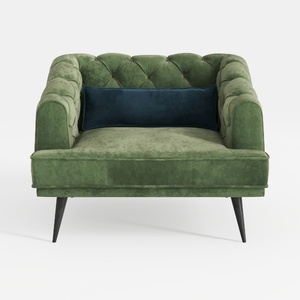
Modern Green Velvet Tufted Armchair with Accent Pillow 3D Model
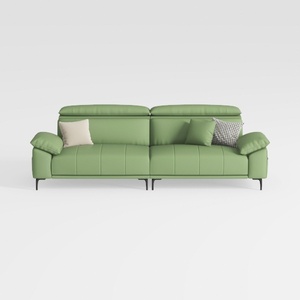
Modern Sage Green Leather Sofa With Decorative Throw Pillows 3D Model


Mid Century Modern Sage Green Leather Wood Trim Sectional Sofa 3D Model
Transform your living spaces with Homestyler! This intuitive online design platform empowers you with sophisticated 3D rendering, a wealth of design projects, and comprehensive video tutorials. Whether you're a novice or a seasoned DIYer, it's your go-to tool for bringing your home design dreams to life!
Diseño ahora GRATIS
































