


Developing a 3D model of mitochondria is a captivating endeavor, whether you're delving into cell biology, instructing students, or seeking to enhance visual understanding through interactive activities. Mitochondria, known as the 'powerhouses' of the cell, possess a distinct structure. Transforming their intricate internal organelles into a three-dimensional model can significantly enrich your grasp of cellular functionality and design. Here’s a step-by-step guide on how to create a 3D mitochondria model effectively:
As a designer, I've discovered that crafting intricate 3D models—whether digital or physical—not only solidifies abstract biological concepts but also creates new opportunities for visualization and learning. To inspire your creations or simplify the design process, utilizing a tool like Homestyler can breathe life into any spatial project, including educational models, by offering precision and customization features that handcrafting alone might not achieve.
Tips 1:
When constructing your model, be mindful of color coding and structural accuracy. Choosing contrasting colors for different components can help viewers easily identify each part, enhancing both educational value and visual appeal. For digital projects, consider experimenting with adjustable lighting and texture settings to achieve a more realistic representation.
FAQ
Q: What materials are ideal for a physical 3D mitochondria model?
A: Excellent materials for building durable and detailed models include air-dry clay, polymer clay, foam, and colored craft paper.
Q: How can I accurately depict the cristae within mitochondria?
A: You can create folds on the inner layer with clay or use markers to draw or paint the folds if you opt for paper. In digital models, employ built-in software tools to extrude and adjust surfaces for a realistic appearance.
Q: Are there any digital tools for constructing a 3D mitochondria model?
A: Certainly! Various modeling software and 3D design platforms, including Homestyler, allow you to create and export scientifically accurate models of cell organelles.
Q: Can household items be used for a mitochondria model?
A: Absolutely! You can use sponges as the outer membrane and pipe cleaners or felt for inner structures like cristae.
Q: How intricate should my mitochondria model be for a school science project?
A: The level of detail required will depend on the grade, but including the outer membrane, inner membrane, cristae, matrix, and a representation of DNA is generally adequate.
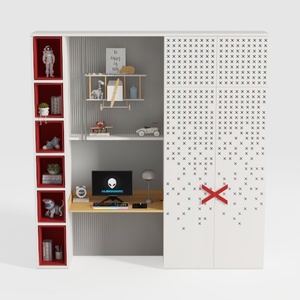

BAKAJI Scrivania con Doppia Libreria 7 Ripiani Tavolo da Lavoro Porta Pc Computer Struttura e Piano in Legno MDF Arredamento Casa Ufficio Cameretta Design Moderno 120 x 60 x 148 cm (Red)
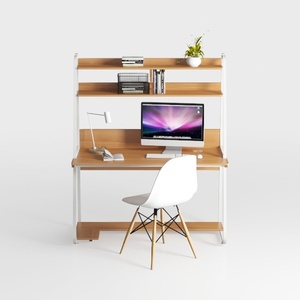
Home Office Desk with Book Shelf Hutch, Computer D

Modern Minimalist White Solid Wood Metal Office Desk With Drawers 3D Model
Homestyler is an ideal online platform for all your home design needs. With its user-friendly design tool, realistic 3D renderings, diverse design projects, and informative video tutorials, you can effortlessly create and visualize your dream space, even if you're a beginner!
Zaprojektuj teraz za darmo
































