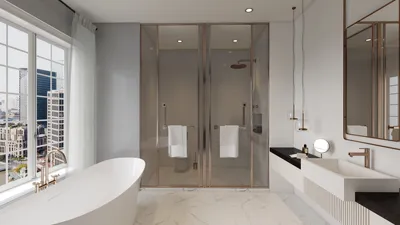


Once, a client requested their compact bathroom to evoke a forest cabin atmosphere. Their desire for extensive browns almost turned it into an uninviting cave. That experience taught me an essential lesson: small areas can spark substantial ideas, especially when you intertwine warm browns with gentle beiges. To effectively envision the ideal design before making purchases for tiles or paint, I frequently utilize visualization tools such as Homestyler to help clients anticipate the ambience without the hassle of a messy renovation.
1. Warm layered neutrals: combine finishes but not colors
I adore the combination of warm beige plaster walls with wood-style brown porcelain flooring — it provides a cozy and organic feel without being oppressive. This choice boasts durability and ease of maintenance; however, the challenge lies in avoiding a monotonous appearance. To counter this, I mix matte and satin finishes and incorporate brass fixtures to add a touch of brilliance.
save pin
2. Two-tone tiles for height and definition
Applying a darker brown subway tile to the lower section, paired with a lighter beige above, visually anchors the bathroom fixtures while creating the illusion of higher ceilings. This method is wallet-friendly and particularly suited for compact bathrooms, although careful selection of grout color and tile sheen is crucial to maintain a modern aesthetic.
save pin
3. Matte beige stone contrasted with a deep brown vanity
A matte beige stone countertop or wall brings a tranquil, spa-like vibe, while a floating vanity in chocolate brown provides an elegant contrast that effectively hides scuffs. This combination offers a luxury feel on a modest budget if you select engineered stone; however, selecting natural stone involves considerations for sealing and upkeep.
save pin
4. Patterned tile accents in brown and beige
Integrating an encaustic or patterned brown-beige tile as a backsplash or in the shower floor can serve as a captivating focal point without overwhelming the space. This choice energizes a neutral palette while cleverly concealing dirt; however, excessive patterns can cause a cramped feeling in small bathrooms, making balance essential. If you want to see how finishes and materials will look in a realistic context, I frequently demonstrate designs via Homestyler to ensure clients can visualize their plans confidently.
save pin
5. Compact spa nook: beige bench, brown accent, layered lighting
In very petite bathrooms, I create a shower bench or niche in warm beige and complement it with a rich brown accent wall to craft a mini-retreat. This setup promotes a calming and intentional atmosphere; nonetheless, moisture control and ventilation are key to long-term viability. For tight spaces, I initially sketch layouts and explore various configurations to maximize comfort without feeling cramped.
My personal preference? A soft beige limewash paired with a walnut-look vanity — it exudes a timeless elegance without being dull. Combining brown and beige encourages restraint and texture, so select one striking element while keeping the rest of the decor tranquil. Think of this palette as a stage, where your fixtures and accessories become the stars of the show.
save pin
FAQ
Q1: What types of tiles are recommended for a brown and beige bathroom?
I typically recommend porcelain wood-look tiles for the flooring and matte porcelain or stone-look tiles for the walls, as porcelain is resistant to moisture and stains, making it ideal for bathroom settings.
Q2: Can brown make a small bathroom feel even smaller?
It can, especially if overused. However, pairing darker brown for lower surfaces with lighter beige above adds depth and can actually enhance the sense of coziness and height in the room. Contrast and vertical lines enhance the impression.
Q3: How do I maintain a brown and beige palette without it looking outdated?
Incorporate modern finishes such as matte black or warm brass, choose updated tile formats, and focus on texture rather than color alone. Refreshing hardware and lighting can also give a contemporary twist to the decor.
Q4: Are beige walls difficult to maintain in bathrooms?
Not when you opt for washable or semi-gloss paint suitable for high-moisture environments and ensure adequate ventilation. Textured beige finishes like plaster can be forgiving of minor stains, while good air circulation minimizes humidity-related deterioration.
Q5: What vanity colors complement brown tiles best?
Deep brown or walnut vanities create a unified look, while a soft beige or off-white vanity can introduce contrast and lighten the overall design. I often recommend floating vanities to enhance the feeling of space.
Q6: Is it possible to use patterned tiles in a small bathroom?
Absolutely! Use them sparingly as an accent feature or on a single wall to create a striking effect without overwhelming the space. The key is to consider the scale: smaller patterns are best suited for compact areas.
Q7: How can I prevent mold growth in a brown and beige bathroom?
Ensure proper ventilation, use vapor-resistant paint, and opt for rapid-dry tile grout. It's wise to install an exhaust fan tailored to the room size. For expert insights on moisture management and best practices, resources from NKBA can be very helpful (Source: https://www.nkba.org).
Q8: What budget-friendly options can help achieve a luxurious brown and beige aesthetic?
Select wood-look porcelain tiles, paint the ceiling a soft beige, and consider investing slightly more in a standout vanity or mirror. Small enhancements in lighting and grout color can significantly uplift the overall look without overspending.
Homestyler is your go-to online home design platform! With its easy-to-use design tool, stunning 3D renderings, and a wealth of DIY video tutorials, you can effortlessly transform your space and unleash your creativity. Perfect for both beginners and seasoned designers alike!
Design Now for FREE
































