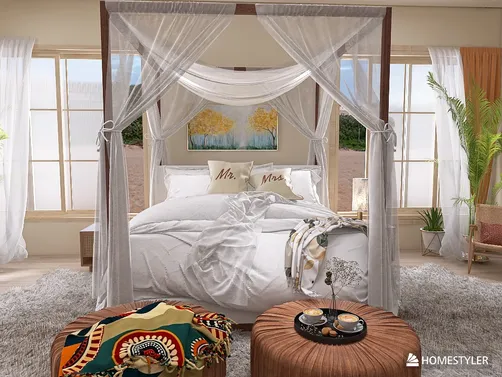
Romantic Couples' Bedroom Design
The 'Romantic Couples' Bedroom' is a dedicated interior space designed to foster intimacy, emotional connection, and shared tranquility between partners. Unlike standard bedrooms focused solely on rest, this scene prioritizes dual-user ergonomics, layered sensory experiences (soft lighting, tactile textiles, ambient scent), symbolic personalization (shared mementos, meaningful art), and intentional spatial zoning — such as a cozy reading nook, a private dressing area, or a small balcony retreat. It reflects the convergence of aesthetics and emotional function, where every design decision supports mutual comfort, privacy, and romantic resonance — making it ideal for celebrations like Qixi Festival or modern love milestones like Taylor Swift and Travis Kelce’s engagement.
Design Challenges & Common Pitfalls
Designing a romantic couples’ bedroom presents unique challenges: balancing individual style preferences without visual conflict; accommodating dual storage and functional needs in limited square footage; avoiding clichéd ‘romance’ tropes (e.g., excessive pink, heart motifs) that undermine sophistication; integrating smart lighting and acoustic control for mood flexibility; and ensuring accessibility and comfort for both users — especially when styles, routines, or physical needs differ. Many designers also overlook transitional zones (e.g., entry vestibule, en-suite threshold), leading to disjointed flow and diminished intimacy cues.
✅ Prioritize Dual-Centered Layout & Circulation
A truly romantic couples’ bedroom must reject single-focal-point arrangements (e.g., bed against one wall facing TV only). Instead, adopt symmetrical or L-shaped furniture layouts that encourage face-to-face interaction — such as twin nightstands with matching lamps, a centered bench at the foot of the bed, or a shared lounge zone with two armchairs and a low table. Ensure 900mm minimum circulation paths around all key elements (bed, wardrobe, bathroom entrance) to support simultaneous movement and accessibility — critical for long-term cohabitation harmony.

Designer Tora Luke’s 'Lover's Retreat' exemplifies dual-centered layout thinking: the oversized canopy bed is centrally anchored, flanked by identical floating nightstands and sculptural floor lamps — creating visual equity and functional parity. Using Homestyler AI design tools, she simulated natural sunrise HDR lighting ('g_umhlanga_sunrise') to verify balanced illumination across both sides of the bed, while real-time 3D walkthroughs confirmed seamless 900mm+ clearance around the wardrobe and ensuite doorway — demonstrating how digital spatial validation supports inclusive, romance-forward indoor space planning.
Start Free Design🎨 Curate a Cohesive Yet Personalized Material Palette
Avoid monolithic themes. Instead, select a unifying base (e.g., warm-toned oak flooring, ivory linen bedding) and layer in *meaningful contrasts*: one partner’s favorite texture (velvet accent pillow), the other’s signature hue (terracotta ceramic vase), or shared symbolism (woven rattan — referencing the Magpie Bridge’s craftsmanship). Use tonal gradation over bold clashes: e.g., charcoal + rust + oat, not red + purple. Introduce biophilic elements (potted fiddle-leaf fig, dried lavender bundles) to enhance calm and organic warmth — supporting emotional safety and sensory grounding.

Yulia Sicheva’s '【Система автоэкономия】Без названия' masterfully applies this principle: a neutral gray upholstered bed serves as the calm anchor, while rich red velvet pillows and a crimson abstract painting introduce personalized vibrancy — not as decoration, but as emotional signatures. Leveraging Homestyler design tips, she used the material swap tool to test 12 fabric variants in real time, selecting one with optimal light-reflectivity for evening ambiance. The result is a space that feels jointly authored — a tangible outcome of collaborative indoor space planning supported by AI-driven iteration.
Begin Your Design✨ Layer Lighting for Mood & Functionality
Romance thrives on lighting versatility. Implement a 3-tier system: (1) Ambient — recessed ceiling LEDs with dimmable 2700K–3000K CCT; (2) Task — adjustable swing-arm sconces at each bedside (≥350 lux at reading height); (3) Accent — cordless LED strips under bed frames, inside display shelves, or behind headboards for soft glow. Avoid overhead-only schemes. Integrate smart controls (e.g., voice or app-triggered 'Goodnight' mode that dims ambient lights and activates bedside candles via smart plugs) to reinforce ritual and intentionality.

Estela Ruiz’s 'Dormitorio perfecto' showcases intelligent lighting layering: pendant lights above a small desk provide focused task light, while concealed LED strips beneath floating shelves cast upward washes that highlight framed travel photos — turning memory into ambient art. Using Homestyler’s real-time lighting simulation, she toggled between 'shenzhen_night' and 'peoples_square_night' HDR environments to preview how shadows and highlights evolve after sunset — proving how advanced Homestyler design techniques enable precise emotional choreography through light, essential for authentic romantic interior space planning.
Create Your SpaceFAQ
Q: Do I need professional interior design experience to participate in the AIDA 'Lovers’ Room' challenge?
A: No — Homestyler is built for beginners and pros alike. Its AI-powered drag-and-drop interface, auto-space planning tools, and real-time 3D rendering let you experiment freely. Thousands of contest entries came from hobbyists who used Homestyler design tips and pre-vetted furniture libraries to create award-winning concepts.
Q: Can I design a romantic bedroom for non-traditional couples or diverse relationship structures?
A: Absolutely. The contest celebrates universal love — whether same-gender, polyamorous, intercultural, or long-distance reunions. Top entries like 'Boho Romance' and 'Honeymoon Hotel Suite' intentionally avoid heteronormative assumptions, focusing instead on emotional resonance, shared ritual, and inclusive spatial flow — core tenets of modern interior space planning.
Q: How does Homestyler help me optimize small or irregularly shaped bedrooms for romance?
A: Homestyler’s AI room analyzer suggests space-saving layouts (e.g., wall-mounted nightstands, lift-up storage beds), calculates exact clearances, and renders accurate scale under varied lighting. You can instantly test round beds in tight corners or floating vanities beside angled windows — transforming constraints into intimate design opportunities.
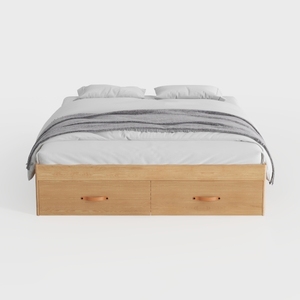
Minimalist Solid Wood Storage Platform Bed With Drawers 3D Model

Modern Toile Upholstered Bed With Metal Ball Base Soft Bedding 3D Model


Modern Japandi Oak Rattan Nightstand With Open Shelf 3D Model
Homestyler offers an easy-to-use online home design tool with stunning 3D renderings, inspiring design projects, and helpful DIY video tutorials—perfect for bringing your interior ideas to life effortlessly.
立即免费设计