Retail Store Space Design
Retail store space design refers to the strategic planning and aesthetic execution of commercial environments—especially those intended for seasonal promotions, clearance events, or high-traffic shopping occasions like Black Friday. Unlike static showroom layouts, this scene emphasizes dynamic spatial flow, visual merchandising hierarchy, brand storytelling through environment, and adaptive zoning (e.g., entry zones, featured product islands, fitting areas, and checkout corridors). It prioritizes customer journey psychology, lighting dramaturgy, material tactility, and scalable modular furniture systems—all while maintaining strong brand identity and functional clarity. Successful retail store spaces balance excitement with ease, luxury with accessibility, and density with breathing room.
Design Challenges & Common Pitfalls
Common challenges in retail store space design include overcrowded floor plans that impede circulation, inconsistent lighting that flattens product appeal, poor signage hierarchy causing navigation confusion, over-decoration distracting from merchandise, and lack of adaptable infrastructure for rapid seasonal reconfiguration. Many designers also underestimate acoustics and thermal comfort—critical for dwell time—and fail to integrate digital touchpoints (e.g., QR-triggered AR previews) seamlessly into physical layout. Furthermore, balancing visual 'wow factor' with practical inventory storage and staff workflow remains a persistent tension.
✅ Prioritize Customer Journey Flow
A well-designed retail space guides customers intuitively—from bold entryway attraction to curated discovery paths and frictionless checkout. Use zoning (e.g., threshold, exploration, decision, transaction, exit) to structure movement. Avoid dead ends or bottlenecks; maintain minimum 1.2m clear aisles and ensure sightlines connect key displays. Incorporate subtle cues: directional flooring patterns, lighting gradients, and strategically placed mirrors or greenery to extend perceived depth and encourage deeper exploration.

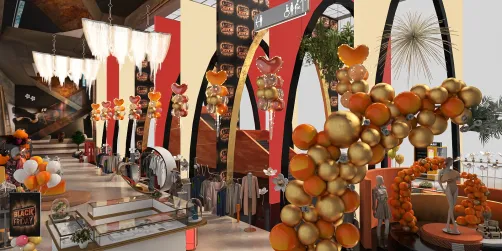
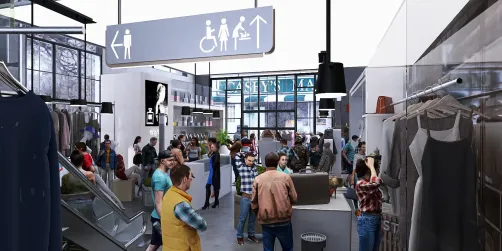
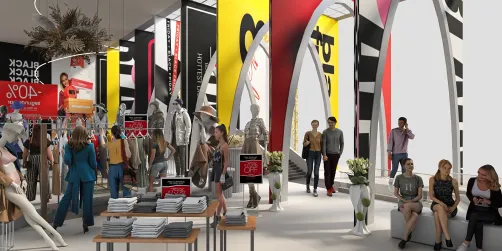
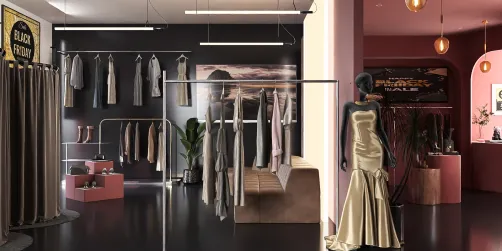
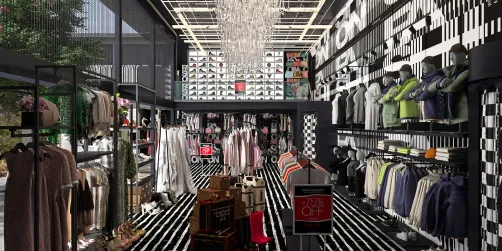
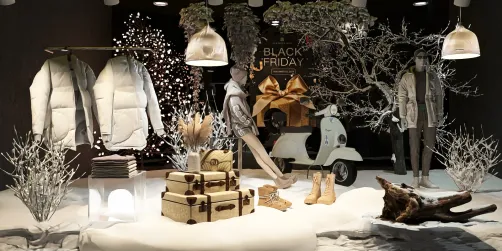
Designer Beth M’s '✨Black Friday Sale✨🛍️' leverages Homestyler AI design tools to simulate real-time customer pathing—using virtual walk-through mode to test sightline continuity from the entrance staircase to the central display zone. She employs staggered furniture placement and vertical greenery as soft wayfinding elements, reinforcing journey flow without signage. Her use of layered lighting (chandelier + floor lamps + ambient window light) creates rhythm along the path—highlighting product clusters while sustaining energy. This exemplifies how interior space planning in retail must be both data-informed and emotionally intuitive.
Start Free Design Now💡 Optimize Visual Merchandising Through Lighting & Contrast
Lighting is not just functional—it’s the primary merchandising tool. Use focused accent lighting (3000K–3500K CCT) on hero products, ambient washes (2700K–3000K) for warmth and comfort, and strategic shadows to add dimension. Combine contrast techniques: matte vs. glossy surfaces, warm vs. cool tones, and dense vs. open arrangements. Avoid uniform brightness—create visual 'hotspots' that draw attention to promotions while keeping background zones calm and navigable.

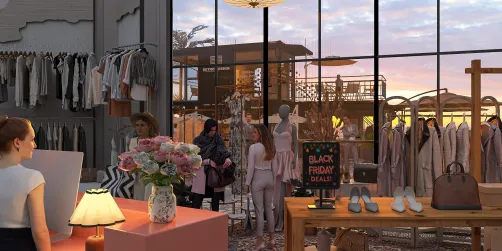
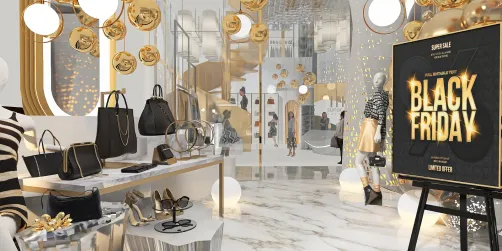
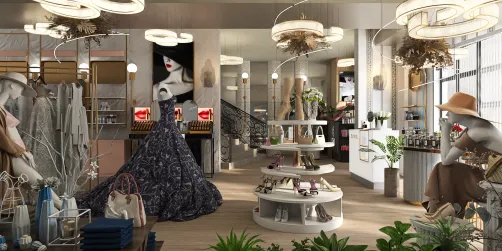
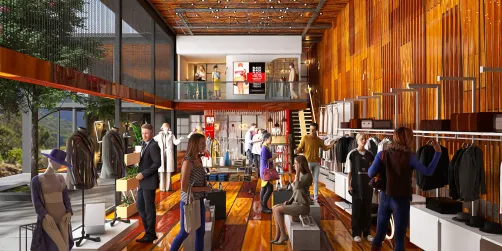
sabrinik 💫’s 'società dei consumi' uses Homestyler AI’s real-time lighting simulation to calibrate daylight integration—maximizing natural illumination from large windows while supplementing with adjustable track lights over wardrobe displays. The contrast between crisp white shelving and rich-toned textiles, enhanced by warm chandelier glow, makes seasonal apparel pop without glare. Her interior space planning ensures every lit zone corresponds to a customer decision node (e.g., try-on area vs. gift-wrap station), proving how lighting-driven contrast supports both aesthetics and behavioral guidance.
Begin Your Free Design🌱 Integrate Brand Identity Through Contextual Materials & Greenery
Materials and biophilic elements are silent brand ambassadors. Choose finishes that reflect brand values—e.g., reclaimed wood for sustainability-focused labels, polished concrete for urban minimalism, or velvet-lined niches for luxury intimates. Introduce living greenery not just decoratively but functionally: vertical plant walls improve air quality and acoustics; potted ferns soften hard edges and signal approachability. All materials should support durability, easy cleaning, and tactile engagement—inviting touch, lingering, and social sharing.

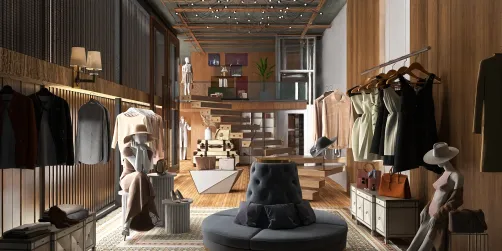
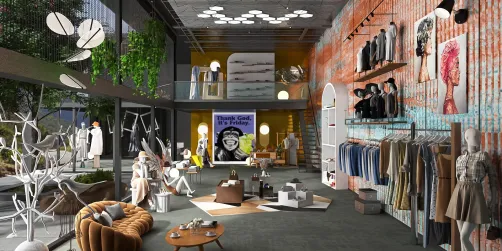
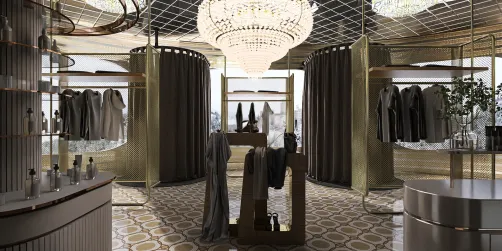
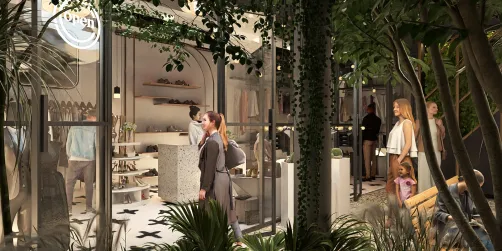
sabrinik 💫’s unnamed luxury retail concept (‘design-ideas-mobile’) deploys Homestyler AI’s material library to rapidly prototype cohesive palettes—pairing brass-finished shelving with linen-textured wall panels and cascading pothos vines. The consistent use of organic shapes (curved wardrobes, oval mirrors, rounded planters) reinforces a gentle, premium brand voice. Her interior space planning intentionally clusters greenery near high-dwell zones (e.g., seating nooks), enhancing perceived freshness and dwell time—a subtle yet powerful application of biophilic design principles via Homestyler design tips.
Launch Your Free DesignFAQ
Q: How can I use Homestyler AI to test different retail store layouts before construction?
Homestyler AI enables rapid iteration of floor plans using drag-and-drop modular fixtures, real-time photorealistic rendering, and interactive walkthrough mode. Upload your floor plan, assign zones (e.g., 'promo wall', 'checkout lane'), and simulate foot traffic density or lighting impact—no coding or 3D modeling expertise required.
Q: What’s the most common mistake in Black Friday store space planning?
The top error is over-prioritizing visual density at the expense of circulation. Crowded displays may look festive but cause bottlenecks, reduce average dwell time by up to 40%, and increase cart abandonment. Always validate aisle widths, sightline reach, and queue flow using Homestyler’s measurement and pathing tools.
Q: Can Homestyler AI help me align my retail space with seasonal branding (e.g., Black Friday red/black/gold)?
Absolutely. Use Homestyler’s color palette sync feature to apply branded HEX codes across all surfaces, furniture, and lighting gels. Then generate multiple variant renders (e.g., 'Day Mode' vs. 'Evening Spotlight') to evaluate emotional resonance and product visibility—key for effective indoor space planning.
Q: How do top designers balance budget constraints with high-impact retail design?
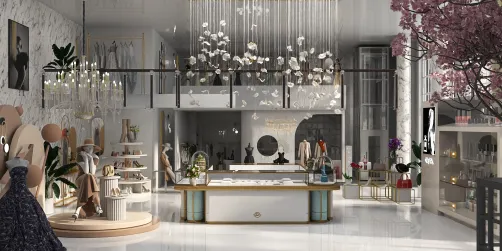
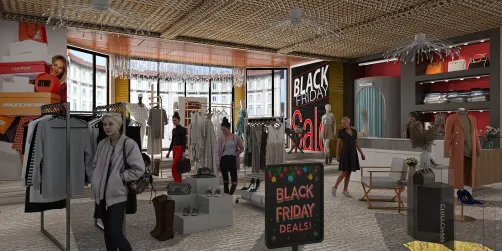
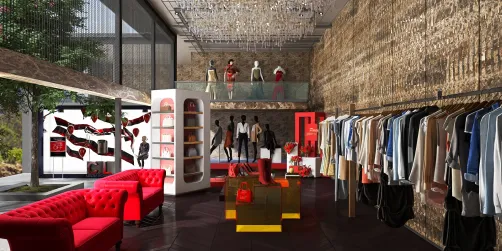
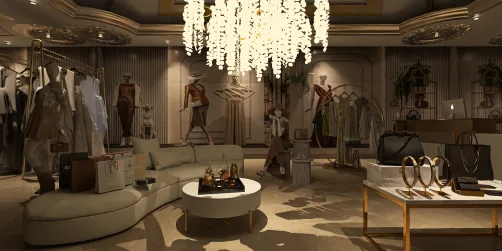
Winning entries like GaronaX 🖤’s 'Moda & Complementos' use cost-smart strategies: repurposing existing shelving with removable vinyl decals, leasing modular LED light bars instead of built-ins, and selecting high-impact focal pieces (e.g., one sculptural chandelier) surrounded by neutral backdrops. Homestyler design tips emphasize ‘hero-and-harmony’ layering—invest where eyes land first, simplify elsewhere.


Homestyler offers an easy-to-use online design tool packed with 3D renderings, inspiring interior projects, and helpful DIY video tutorials—perfect for bringing your home design ideas to life with confidence and creativity.
立即免费设计