Maximalist Living Room Design
The 'Maximalist Living Room' is a vibrant, expressive interior space that celebrates abundance, personality, and sensory richness. Unlike minimalist approaches that prioritize restraint and negative space, maximalist living rooms embrace layered textures, bold color juxtapositions, curated collections, pattern-on-pattern layering, and intentional visual density. This scene serves as the emotional and aesthetic heart of the home — a canvas for storytelling through furniture, art, lighting, textiles, and architectural details. It reflects global influences, personal heritage, artistic passions, and evolving tastes — all coexisting harmoniously within a thoughtfully anchored spatial framework.
Design Challenges and Common Pitfalls
Maximalist living rooms risk visual chaos without strong compositional discipline. Common issues include overwhelming color saturation without tonal hierarchy, clashing patterns lacking scale variation or unifying motifs, overcrowded layouts that impede circulation and function, mismatched material finishes that compete rather than complement, and insufficient focal points leading to viewer disorientation. Additionally, many designers struggle to balance personal eclecticism with cohesive indoor spatial planning — especially in multifunctional or compact urban apartments where every square foot must serve both aesthetic and practical needs.
🎨 Layer with Intentional Hierarchy
Maximalism isn’t about randomness — it’s about curated abundance. Establish a clear visual hierarchy: one dominant focal point (e.g., an oversized artwork or sculptural sofa), two to three supporting elements (a statement rug, layered lighting, or a gallery wall), and background textures (wallpaper, textured paint, or upholstered walls) that unify without competing. Use Homestyler AI design tools to simulate multiple layout iterations and test contrast ratios, saturation levels, and spatial rhythm before finalizing — ensuring each layer enhances rather than obscures the next.

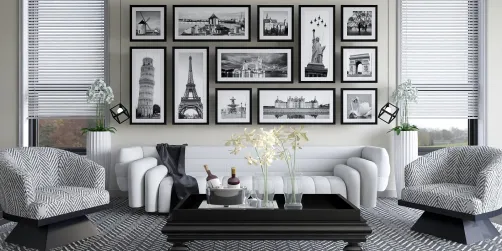
Maribel Fiñana Cruz’s design exemplifies intentional layering: she anchors the composition with a richly textured ivory sofa, overlays it with a geometric kilim rug and velvet throw pillows in jewel tones, then introduces visual rhythm via a curated gallery wall above and cascading pendant lights. Using Homestyler AI design tools, she precisely calibrated scale relationships — ensuring the large-scale wallpaper motif doesn’t overwhelm the smaller decor items — demonstrating how strategic indoor spatial planning transforms clutter into cohesion.
Start Free Design Now✨ Curate Color & Pattern with Unifying Motifs
Bold hues and complex patterns are hallmarks of maximalism — but cohesion comes from shared undertones, recurring shapes, or thematic continuity (e.g., botanical motifs across wallpaper, upholstery, and ceramics). Limit your dominant palette to three core colors plus neutrals used structurally (e.g., black metal frames, warm wood tones, or matte plaster walls). Introduce pattern variety through scale contrast: large-scale florals on walls, medium-scale geometrics on upholstery, and fine-scale textures in rugs or curtains. Homestyler’s real-time color-swap and pattern-matching features help maintain harmony across diverse surfaces.

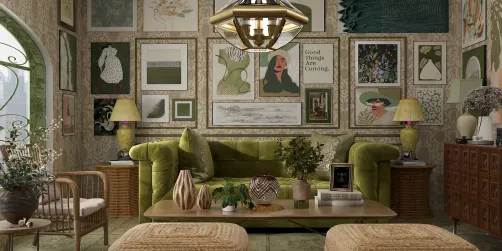
Anwar🦋 🤍 uses a deep emerald-green accent wall as a unifying anchor, echoed in velvet armchairs, botanical-print cushions, and hand-painted ceramic vases. The staircase backdrop introduces architectural rhythm, while the brass chandelier and black iron stair railings create tonal continuity across materials. Leveraging Homestyler’s AI-powered style transfer, they tested over seven pattern combinations before selecting a cohesive triad — proving how Homestyler design techniques elevate intuitive maximalism into disciplined expression.
Begin Free Design Today💡 Anchor with Functional Focal Points
Every maximalist living room must retain clarity of purpose and ease of use. Define functional zones (conversation area, media zone, reading nook) using furniture grouping, area rugs, lighting layers (ambient + task + accent), and subtle floor-level changes or ceiling treatments. Avoid placing critical furniture against windows or doors; instead, use them to frame views or highlight key pieces. Prioritize ergonomics — even in exuberant designs — by verifying clear pathways (>90 cm), seated sightlines to screens/art, and accessible storage solutions disguised as sculptural cabinets or ottomans.

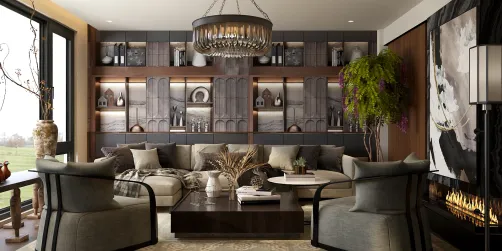
Cecreta Mitchell-Davis masterfully balances maximalist energy with livability: their design centers around a U-shaped sectional anchoring the primary conversation zone, flanked by a built-in bookshelf unit (housing lighting and display) and a compact reading nook tucked beside a sunlit window. Using Homestyler’s drag-and-drop spatial planning, they validated traffic flow and sightlines — confirming that even with abundant decor, the room supports daily living. This reflects advanced indoor spatial planning where aesthetics never compromise function.
Launch Your Free DesignFAQ
Q: How do I avoid visual overload when designing a maximalist living room?
A: Start with a neutral structural base (walls, floors, ceiling, large furniture frames), then introduce maximalist elements in controlled layers — begin with one bold color or pattern, add texture next, then curated objects. Use Homestyler AI design tools to preview saturation levels and toggle individual elements on/off to assess visual weight.
Q: Can maximalism work in small apartments or narrow living rooms?
A: Absolutely — in fact, strategic maximalism can enhance perceived space through vertical layering (floor-to-ceiling shelves, tall mirrors, hanging plants) and reflective surfaces (glossy tiles, metallic finishes). Prioritize multi-functional maximalist pieces like storage ottomans or sculptural room dividers.
Q: What Homestyler design techniques help maintain cohesion across bold patterns and colors?
A: Use Homestyler’s ‘Color Match’ tool to extract dominant hues from one element and apply them consistently elsewhere; leverage ‘Pattern Preview’ to overlay digital swatches on walls/furniture before committing; and run ‘Style Consistency Check’ to receive AI feedback on motif repetition, scale balance, and tonal harmony.
Q: How important is lighting in a maximalist living room?
A: Lighting is foundational — it’s both functional and decorative. Maximalist spaces thrive on layered lighting: ambient (chandeliers, recessed), task (architectural sconces, adjustable floor lamps), and accent (picture lights, LED strip under-shelves). Homestyler’s real-time lighting simulation helps visualize how fixtures interact with textures and colors at different times of day.
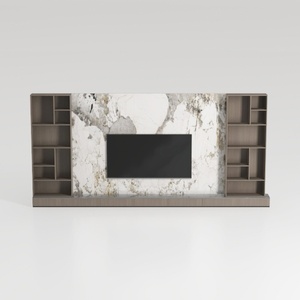
Modern Marble Solid Wood TV Wall Unit With Bookshelves 3D Model
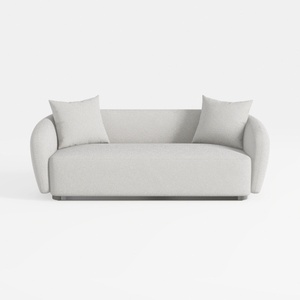
Minimalist Boucle Fabric Living Room Sofa 3D Model
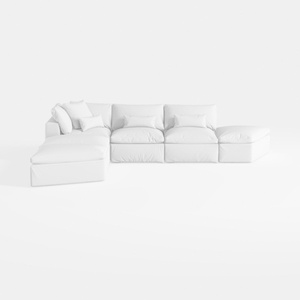

Minimalist White Fabric L Shaped Sectional Sofa 3D Model
Homestyler is an easy-to-use online platform offering powerful home design tools, stunning 3D renderings, and a vast collection of interior projects. With helpful DIY video tutorials, it’s perfect for anyone looking to create and visualize beautiful home designs effortlessly.
Design Now for FREE