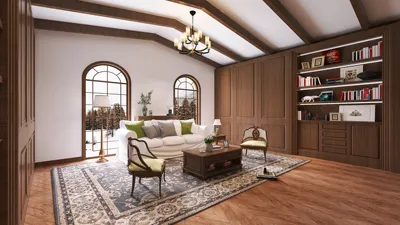


The future of our living spaces is evolving quickly, yet many homes are still grappling with challenges related to storage, privacy, and the demands of hybrid work. According to the AIA, there's a rising need for flexible layouts, while Zillow indicates a growing interest in multifunctional areas—evidence that our living plans must adapt as our lifestyles change. Utilizing a spatial reasoning toolkit, I focus on the workflow of a 3D floor plan creator, recognizing that the interface of our living environments needs ongoing real-time updates.
H2: Core-Loop Studio (Single-Volume Optimizer)
Design Logic: Envision a single volume that offers three functions—workspace, dining, and relaxation—arranged like segments of time. The future trend leans towards adaptive density rather than just measuring square footage. This layout positions the kitchen as the central hub, with flexible boundaries.
Flow: The pathway moves from entry to a drop zone, then to an island pivot point, followed by a desk nook, a sofa wall, and finally a sleep alcove; this configuration minimizes unnecessary movement, akin to streamlined coding paths.
Sightlines: A diagonal view from the entrance to the window creates a sense of depth; the island's height conceals the sink, promoting a peaceful horizon; a sliding screen reduces visual clutter as though managing layers in a design application.
Storage: Optimized with a ceiling-high pantry, under-bed drawer systems, and flush wall rails, this design employs a tiered memory organization—categorizing items as hot, warm, or cold—to prevent chaos.
Furniture Fit: The dimensions include an 84" sofa, a 24" deep desk, 36" clearance for the island, and 30" bedside access—each element is carefully calibrated to fit within human comfort parameters.
Verdict: This studio seamlessly transitions from a focused workspace during the day to a cozy retreat at night. Even five years down the line, it adapts alongside lifestyle adjustments without demanding renovations.
save pin
H2: Split-Axis One-Bed (Privacy at Low Latency)
Design Logic: Clients seek dedicated quiet areas while maintaining social interaction; a split-axis design effectively divides sleeping and gathering spaces while utilizing shared utilities, ensuring efficiency.
Flow: Journey from entry through a utility spine, leading to the living area, then out to the balcony, and finally into the bedroom; this arrangement ensures guests bypass the sleeping quarters—maintaining privacy as needed.
Sightlines: The main view extends from the living area outdoors, while the bedroom offers a limited glimpse of the sky, avoiding distractions from screens; a reflective credenza captures daylight, enhancing the overall ambiance.
Storage: This setup includes a hallway tower for coats and tools, a shelf above the bed for less frequently used items, and an ottoman for daily essentials, all designed to minimize retrieval times.
Furniture Fit: A versatile 60" round table adapts to dinner gatherings or work sessions; a 9' rug defines the social space; 24" nightstands ensure stable accessibility for nighttime routines.
Verdict: This layout successfully diverts distractions away from sleep; over the next five years, evolving hybrid work trends won’t disrupt the plan but simply adjust its components.
save pin
H2: Two-Bed Crossfade (Family/Roommate Protocol)
Design Logic: Two equally sized rooms provide stability for co-habitation; the shared central area functions neutrally, with spaces dedicated to kitchen, laundry, and storage for both parties.
Flow: Two entrances converge at a welcoming foyer, leading to a kitchen hub and a living space—a layout that allows children or roommates to navigate independently without disturbing others.
Sightlines: Maintaining a clear view from the kitchen to the living area fosters a secure environment; bedrooms are strategically positioned to prevent sightlines crossing, while large glazing invites external tranquility as the standard.
Storage: Featuring a communal closet for seasonal items, unique vertical storage grids in each room, and a bench in the foyer to manage daily essentials, this design emphasizes accessibility.
Furniture Fit: An extendable 72" table can accommodate various gatherings, while a three-piece modular sofa fits neatly within a 10' wall. Each room includes 5' wardrobes to keep belongings organized and accessible.
Verdict: This adaptable crossfade easily accommodates life changes—be it a new baby, roommate, or routine—without overhauling the entire design.
save pin
## Final Takeaway
When utilizing a 3D floor plan creator such as Homestyler, my focus is not merely on sketching out rooms—it's about crafting a dynamic living interface that evolves with time and necessity. Whether considering a one-bedroom, a compact studio, or a two-bedroom residence, the optimal design is one that adapts even faster than our lifestyle changes. The home of the future isn’t necessarily larger; it simply requires more thoughtfulness in its layout, storage solutions, and furniture integration. From my perspective, these subtle spatial choices fundamentally transform how my clients experience their daily lives.

Minimalist Solid Oak Wall Mounted Floating Shelf 3D Model

Minimalist Solid Oak Open Bookshelf 3 Tier Display Storage 3D Model

Modern Geometric Pattern Solid Wood Sideboard Console Cabinet 3D Model
Discover the power of Homestyler, an intuitive online home design platform that lets you effortlessly create stunning spaces. With its advanced 3D rendering, extensive design projects, and engaging video tutorials, you can unleash your creativity and transform any room into a masterpiece!
立即免费设计
































