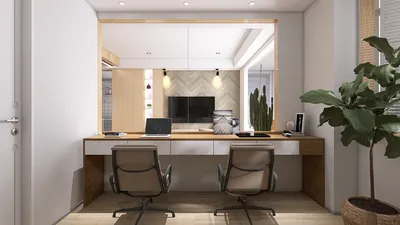


The future of urban living is leaning towards compact intelligence, as today's inhabitants face challenges like storage worries, privacy issues, and inefficient layouts. My design approach targets future pressures rather than past comforts—after all, a 3BHK within 750 sq ft serves as a testing ground for the urban living demands of the next decade. Using a spatial reasoning toolkit helps maintain coherence in my clients' micro-decisions. Keeping in mind trends from AIA and NAHB, it’s evident that while smaller living spaces are gaining popularity, expectations remain high—thus, the 3BHK design must operate like a well-crafted program. By integrating the capabilities of tools like Homestyler, creating these efficient living spaces becomes more attainable.
Split-Core Spine with Dual Micro Suites
Design Logic: A central corridor serves as the backbone of the space; two cozy bedrooms are situated on one side, while the master suite is strategically placed at the end for added privacy. The living and dining areas are compacted to create a versatile bay.
Flow: The layout follows an entry → drop zone → living bay → kitchen node → split corridor → bedrooms sequence; circulation is streamlined to reduce cross-traffic, akin to a clean function call.
Sightlines: The elongated axis highlights the living bay; angled views prevent exposure in bedrooms, while the kitchen is partially shielded to minimize visual distractions.
Storage: The full-height corridor closets serve as storage solutions; under-bed drawers and headboard niches act as quick-access storage, with attic-depth bins above the doors for seasonal items.
Furniture Fit: A sofa measuring 72–78 inches, a fold-down dining table of 36 × 30 inches, and a queen bed of 60 × 75 inches with a 24-inch clearance; every dimension adheres to the spatial constraints effectively.
Verdict: This layout accommodates family life seamlessly, minimizing interruptions; five years down the line, modular furniture can upgrade the space like a software update.
save pin
Diagonal Living Bay with Pocket Kitchen
Design Logic: An angled living area breaks the monotony of straight lines, providing space for two children's rooms; the pocket kitchen is designed to optimize thermal management and minimize odors.
Flow: The sequence of Door → angled living → pocket kitchen → short hall → triad of bedrooms creates a low-latency loop, efficiently managing movement especially during meal times.
Sightlines: The diagonal setup enables a layered experience: a social foreground, a more private mid-ground, and a tranquil background; sliding panels allow for visual control as needed.
Storage: Incorporating toe-kick drawers, a 15-inch deep pantry, and an 18-inch wardrobe creates efficient storage that functions like indexed caching—easy to access, shallow, and organized.
Furniture Fit: An 84-inch corner sectional, nesting tables of 18–20 inches, and 39 × 75-inch bunks ensure precision, minimizing disruption during everyday use.
Verdict: The diagonal layout makes small spaces feel intentional rather than cramped; families can adapt to changing schedules thanks to the flexible design.
save pin
Rail Kitchen with Sliding Partition Suite
Design Logic: The galley kitchen functions like a rail line parallel to the living area; a master suite is delineated by a sliding partition enabling adjustable privacy; the third bedroom can serve as a study during quiet hours.
Flow: The layout progresses as Entry → coat storage → living rail → kitchen rail → toggle for partition → bedroom nodes, creating a predictable path that minimizes overlaps.
Sightlines: Perpendicular views ensure kitchen activities remain hidden from the sofa area; translucent sliding doors introduce a subtle hierarchy of visual information.
Storage: With ceiling-height cabinets, bulk storage over the refrigerator, and a 22-inch deep hallway niche, the storage mimics the logic of frequent access—items stored near and bulkier items set further away.
Furniture Fit: A drop-leaf dining table of 48 × 30 inches, a wall-mounted desk at 48 × 18 inches, and wardrobes with a depth of 24 inches ensure that spaces are utilized effectively while respecting circulation.
Verdict: With privacy on demand via partitions, this home operates like adaptable software—the future will see the addition of features like acoustic sliders and smart lighting to enhance this responsiveness.
save pin
Final Takeaway
A 3BHK within 750 sq ft should function like a compact operating system: featuring clear flows, defined sightlines, and storage that acts like an efficient cache. Variants such as compact 3-bedroom layouts and micro family apartments validate that effective coordination is more critical than just size. In my experience, the most intelligent homes of the future won’t necessarily be bigger; they will be more purpose-driven. My projects illustrate that thoughtful spatial decisions can dramatically transform how people live, aided by tools like Homestyler for precise design clarity.
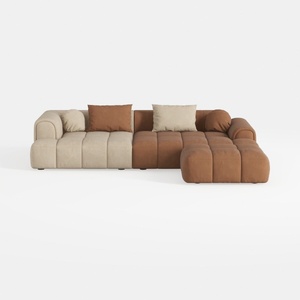
Modern Velvet Sectional Sofa, U Shape Minimalist M
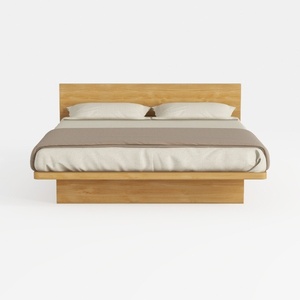
Vibe Gel Memory Foam Mattress, 12-Inch CertiPUR-US


Giantex Twin Over Twin Bunk Bed, Solid Wood Bunk B
Homestyler is your go-to platform for effortless home design! With its user-friendly online design tool, stunning 3D renderings, and a wealth of DIY video tutorials, you can unleash your creativity and transform your space effortlessly. Start designing your dream home today!
今すぐ无料でデザイン
































