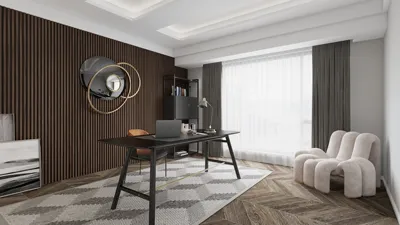


As a professional interior designer, I specialize in creating efficient spaces, and incorporating treadmills into compact environments presents unique challenges. The aim is to find a treadmill that not only folds and stores easily but also functions like a standard unit—without disturbing neighbors or overwhelming the living area. Here’s my process for evaluating specifications, usability, and long-lasting performance in selecting the optimal treadmills for limited spaces using tools like Homestyler.
Evaluating Performance for Small Spaces
Treadmills designed for compact living must balance size, noise levels, and running efficiency. Research indicates that sound and vibration issues often create friction in both home and workplace settings. According to studies by Steelcase, maintaining acoustic comfort is crucial for enhancing user satisfaction within shared spaces. Therefore, minimizing noise from a treadmill is vital, especially when situated above occupied areas. Compliance with WELL v2 guidelines emphasizes the importance of quiet motors and dampened decks for cognitive performance.
From my experiences, I consider a suitable compact treadmill footprint to be around 30-36 inches in width and 60-70 inches in length. It should feature a foldable design or a low-profile deck that can easily slide under a bed or stand upright. When selecting a model, look for verified sound levels, favoring decks equipped with elastomer footings and multi-layer damping technology to minimize noise transmission. Utilizing a room layout tool, like Homestyler, can assist in visualizing placement and ensuring adequate clearance in studio apartments or small dens.
Top Recommendations for Compact Treadmills
I categorize my recommendations into four main types: ultra-slim under-desk walkers, foldable mid-speed trainers, compact running machines with shock-absorbing decks, and smart models that offer built-in coaching features. Each type caters to specific use cases.
Ideal for those focused on step counting and light cardio, these units typically weigh between 45 to 70 pounds, stand 4 to 6 inches tall, and can easily tuck under furniture. They operate quietly during walking speeds, making them suitable companions for standing desks, although their shorter belt lengths (usually between 43-47 inches) may limit stride length. A motor with 1.0 to 1.5 HP is recommended for dependable performance, coupled with a deck featuring more than six compression zones to minimize vibration.
For individuals who jog a couple of times a week, I recommend looking for treadmills with a minimum motor power of 2.5 to 3.0 CHP and belt lengths around 50 to 55 inches, along with secure fold-assist hydraulics. The design of the handrails is critical in smaller spaces; opting for tapered rails can help save space and appear less imposing. Moreover, a balanced deck offering cushioning through elastomer mounts and multi-ply belts ensures comfort without instability. In settings where noise is a concern, rubber isolation pads under the unit can mitigate sound.
For taller users with a stride of 5'10" or more, or those training at speeds of 7-9 mph, a belt length between 55 and 60 inches is desirable, as well as a properly tuned deck stiffness. While softer decks alleviate joint stress, they can also hinder energy return; hence, mid-stiff designs with zoned cushioning will keep the forefoot responsive while softening the heel's impact—ultimately reducing noise levels. Motors that provide consistent torque are crucial to avoid jolting during interval training.
Compact models with guided workouts, incline/decline settings, and tracking options serve as excellent motivational tools, assuming the hardware operates with minimal noise. It's wise to choose units that allow firmware updates and local data storage; otherwise, lagging controls could interfere with your workout pace.
Strategic Space Management: Fit, Clearance, and Safety
When planning space usage, the minimum clearance I recommend includes 20 inches on either side for arm movements, 48 inches behind the unit for safe dismounting, and at least 80 inches of headroom to accommodate taller users during incline workouts. When working with small apartments, I often suggest angling the treadmill 10 to 15 degrees to enhance sightlines and minimize visual intrusion. For ultra-compact spaces, testing layouts with an interior layout planner, such as Homestyler, can validate pathways and effective cable management.
Addressing Noise, Vibration, and Neighbor-Friendly Solutions
To ensure a treadmill can coexist peacefully with thin floors, place an 8-10 mm rubber mat beneath it, supplemented with four isolation pads on the feet. Ensure the deck is level; uneven positions can amplify vibrations. Follow the manufacturer’s instructions for lubricating the belt; keeping the belt well-maintained mitigates friction and noise. If your treadmill shares a wall with an adjoining unit, orient the motor away from the wall to minimize the transmission of sound.
Motor Power, Belt, and Deck: Key Considerations
Motor power should be classified by continuous horsepower (CHP), as opposed to peak rating. A consistent 2.5 to 3.0 CHP is ideal for regular jogging, while serious runners might require 3.0+ CHP, even in compact designs. The belts on smaller treadmills are typically narrower (16-18 inches); opting for an 18-inch width offers improved lateral stability. A multi-ply belt with a smooth surface can reduce both noise and friction. Deck constructions vary from MDF to engineered composites; selecting a model with replaceable elastomer mounts ensures enhanced longevity.
Ergonomic Considerations and Human Factors
Handle height and console accessibility play a significant role in perceived stability. High rails can lead to shoulder elevation and discomfort for smaller users, while taller users may find low rails uncomfortable due to wrist extension. Maintaining a neutral hand position with slightly bent elbows and straight wrists will create a more natural gait. Opt for backlit displays with color temperatures between 3000 to 4000K, as they enhance readability without causing glare—particularly significant when exercising on inclines.
User Experience: Control Interface, Coaching, and Habit Formation
Simplified controls are essential in small homes, especially where the treadmill may be located near multitasking areas. Quick access to speed and incline settings, distinct tactile feedback, and intuitive designs can help reduce operational errors. To promote exercise habits, consider establishing small, achievable goals such as 15-minute post-lunch walks or scheduled interval sessions. Position the treadmill in a high-traffic area to embed it into your routine—behavioral stimuli often outweigh the need for perfect storage solutions. For folding units, ensure they can be easily transitioned to a ready-to-use state.
Sustainable Materials and Considerations
In compact living environments, off-gassing can be a concern. Therefore, I recommend selecting models with low-VOC belts and decks and opting for powder-coated steel enclosures instead of those painted with high-solvent finishes. Repairability is equally important; choose treadmills featuring replaceable belts, accessible motors, and standardized components to maximize their service life while reducing waste.
Understanding Color Psychology for Visual Harmony
Using neutral and low-saturation colors, such as grays and muted blues, can help a treadmill integrate seamlessly into a small space. Research from Verywell Mind emphasizes that cooler tones evoke calmness and focus, aligning with the energy of steady-state workouts. Enhance the environment by pairing the treadmill with lighting around 300 to 500 lux for warm-ups and 500 to 750 lux during runs; eliminating harsh glare while maintaining a color temperature close to 3500 to 4000K can create a comfortable contrast.
My Top Choices: Compact Treadmills I Recommend
Rather than recommending specific brands, I will describe configurations that have proven effective in compact environments and share the criteria I apply.
- Dimensions: Approximately 34" W x 65" L; folds down to under 25" deep.
- Motor: Between 2.75–3.0 CHP; operates quietly around 6–8 mph.
- Belt: Dimensions of 20" x 55"; features zoned cushioning and a mid-stiff deck.
- Features: Quick access keys for speeds from 3 to 9 mph, inclines up to 10%, soft-touch handrails, and hydraulic fold assist.
- Dimensions: Approximately 32" W x 63" L.
- Motor: A minimum of 3.0+ CHP with precise power control.
- Belt: 20" x 58"; made from low-friction multi-ply material.
- Features: Guided intervals, local storage options, matte displays, and Bluetooth heart rate monitor support.
- Dimensions: Approximately 25" W x 57" L; only 5" high.
- Motor: 1.25 CHP; whisper-quiet during walking.
- Belt: 17" x 45"; utilizes high-compliance elastomers.
- Features: Option for remote operation, rail-free design, portable wheels, and auto-stop presence detection.
- Dimensions: Approximately 33" W x 64" L; capable of vertical folding.
- Motor: Between 2.5 to 2.75 CHP; equipped with programmable cadence targets.
- Belt: 18–20" x 52–54"; features zoned cushioning.
- Features: Space-efficient rails, minimalistic console design, and solid isolation feet for stability.
Optimal Placement Tips for Micro Apartments
- Angle the treadmill to improve circulation paths and visual alignment.
- Implement cable management solutions to mitigate trip hazards; ideally, keep outlets within 6 feet.
- Instead of large storage racks, utilize a slim shelf for towels and hydration needs.
- If sharing a floor, establish running hours and make use of isolation pads; your neighbors will appreciate the consideration.
Budgeting and Assessing Value
Choosing a compact treadmill does not mean sacrificing quality. Invest in key areas like motor performance, deck insulation, and high-quality belt materials. Eliminate unnecessary features such as large displays, heavy audio systems, or ornamental elements that add bulk without enhancing performance. A thoughtfully selected compact treadmill will deliver effective workouts while maintaining an organized appearance.
Frequently Asked Questions
Q1: What noise level is suitable for apartment-friendly compact treadmills?
A1: Look for units rated below typical conversational sound levels while jogging. Pair with rubber mats and isolation feet to further minimize noise; correct placement and lubrication significantly influence sound perception.
Q2: What is the ideal belt length for taller users in compact spaces?
A2: A length of 55–60 inches is optimal for comfortable strides at moderate pacing. For tighter settings, a mid-stiff deck can assist in maintaining a consistent pace without overextending.
Q3: Are folding treadmills stable enough for intensive interval training?
A3: Yes—if the treadmill boasts a robust cross-braced frame and a secure locking hinge. Check for any lateral movement and ensure instant responsiveness from speed controls.
Q4: How can I reduce vibration transfer to neighbors in a multi-floor setting?
A4: Employ an 8–10 mm rubber mat and isolation pads beneath the unit, ensure the deck remains level, and avoid placing the motor directly against adjoining walls.
Q5: What motor rating is recommended for jogging?
A5: Consistent jogging requires a motor of 2.5–3.0 CHP for steady torque. Runners training at higher speeds or weights may consider 3.0+ CHP, even in compact models.
Q6: Can color selections influence the perception of a treadmill's size?
A6: Utilizing cooler, low-saturation colors can visually recede and diminish perceived bulk. Neutral color schemes also help reflect ambient light evenly, reducing glare.
Q7: How much clearance should be maintained around a treadmill in a confined space?
A7: Maintain at least 20 inches on each side and a minimum of 48 inches behind the treadmill. Ensure around 80 inches of headroom at incline for taller individuals.
Q8: What lighting is best to avoid eye strain during workouts?
A8: Opt for a 3000–4000K lighting setup with 500–750 lux targeted at workout zones. Matte displays and softened lighting can help control glare.
Q9: Are under-desk walking pads beneficial for fitness?
A9: Absolutely; they effectively help achieve daily step goals and light workouts, fit conveniently under various furniture, and operate quietly. However, for running or interval sessions, a longer belt and more motor capacity are advisable.
Q10: How can I effectively plan for placement prior to purchasing a treadmill?
A10: Begin by measuring your room, mapping out clearances, and experimenting with layouts using a digital planner like Homestyler to ensure optimal pathways, headroom, and nearby cable availability.
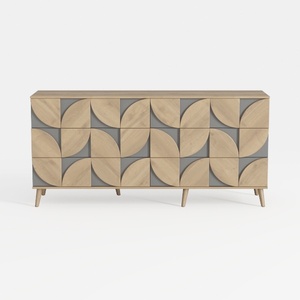
Modern Geometric Pattern Solid Wood Sideboard Cabinet 3D Model
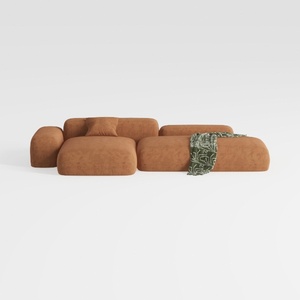
Minimalist Brown Fabric Modular Sectional Sofa 3D Model
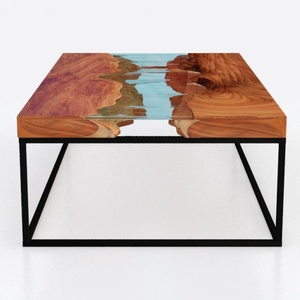
Modern Solid Wood Epoxy Resin Square Coffee Table 3D Model
Homestyler is your go-to online home design platform, perfect for both beginners and seasoned decorators. With its user-friendly design tool, stunning 3D renderings, and a wealth of DIY video tutorials, you can effortlessly transform your living space into a dream home. Start creating today!
Desain sekarang Gratis
































