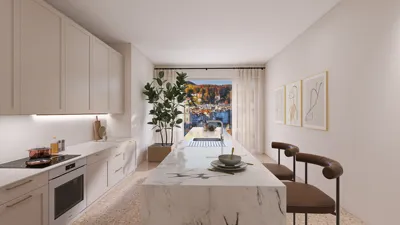


Creating a compact Indian kitchen requires meticulous planning, as each inch must have a clear function while accommodating daily activities such as making chai, preparing tadka, and rolling rotis. My approach for designing these kitchen spaces begins with establishing an efficient workflow. After that, I integrate storage solutions, lighting, and materials that can endure the rigors of masala, steam, and heat. Research from Steelcase shows that spatial efficiency can elevate productivity by 15-20%, a principle that I find equally beneficial in home cooking when minimizing clutter and simplifying movement in the kitchen (Steelcase Research). Moreover, WELL v2 emphasizes the importance of managing task lighting glare (UGR targets) and suggests a range of 300-500 lux for food preparation—standards I adhere to in order to maintain comfort for the eyes and accuracy in cutting (WELL v2).
When it comes to ergonomics, proper heights play a crucial role. The National Kitchen & Bath Association advises a standard countertop height of 36 inches (915 mm) and a minimum of 18 inches (457 mm) between countertop and overhead cabinets. These measurements typically align with most Indian households and facilitate comfortable kadai handling (NKBA). Research on color psychology suggests that warm tones enhance the feeling of coziness, whereas lighter neutrals can create a sense of spaciousness; soothing greens and soft creams are particularly beneficial during hectic cooking sessions (Verywell Mind: Color Psychology). For both photos and digital renders, I strive to capture different perspectives and utilize both natural light and task lighting to ensure that finishes, shadows, and cabinet lines are represented accurately.
For clients eager to preview their kitchen layout prior to engaging a carpenter, I utilize a room layout tool to simulate important measurements like work triangles and aisle widths, ensuring that 900–1050 mm pathways can accommodate two people comfortably during busy morning routines.
Planning the Workflow Triangle for Indian Cooking
In Indian cooking, the workflow revolves around the sink, stovetop, and refrigerator. I aim for a total triangle measurement of 1200–2400 mm in smaller kitchens to maintain function without causing any elbow clashes. Position the pressure cooker and spice pull-out close to the stove, as the sink should only be a couple of steps away to facilitate quick cleanup of hot pans. In cases where a single-wall layout restricts movement, I recommend staggering stations: placing the fridge near the entrance for easy access, with the stove as the focal point in the middle and the sink positioned at the opposite end to prevent splashes from wet zones reaching the burners.
Ideal Layouts for Limited Spaces
• Single-wall: Most suitable for studio or 1BHK apartments. Arrange a tall pantry at one end, followed by the fridge, prep counter, stove, and sink. If possible, ensure at least an 1800 mm uninterrupted counter run.
• Galley: This design allows for efficient movement with parallel counters. Maintain aisle widths of 900–1050 mm; place dry goods and appliances on one side, with the wet zone on the opposite side.
• L-shaped: Corner spaces are ideal for hidden storage solutions. Include a carousel in the blind corner, position the stove on the longer segment, and place the sink on the shorter segment to minimize splashes.
• U-shaped micro: Ideal for kitchens measuring 6–7 m², U-shaped layouts optimize prep space. Ensure an internal aisle of 1000 mm for hassle-free drawer access. To visualize design options before finalizing carpentry, tools like an interior layout planner can be invaluable.
Lighting: Cooking with Comfort, Not Glare
Following IES task lighting guidelines suggests keeping illumination between 300–500 lux at countertops; I employ under-cabinet LED strips (3000–3500K) for warm visibility, alongside a 4000K ceiling panel to represent true food colors accurately. To reduce glare, I opt for recessed fixtures and diffusers; while high-gloss tiles may reflect light, matte or satin backsplashes help maintain comfortable illumination. The glare control recommendations from WELL v2 assist in keeping the eyes relaxed during longer cooking sessions.
Color and Finish Strategies for Enhancing Space
Using lighter shades for upper cabinets—such as ivory, pale sage, or sandy tones—visually raises the ceiling. For the base, selecting deeper tones can provide grounding. A continuous hue for the backsplash creates fluidity, avoiding visual interruptions. If you’re fond of vibrant Indian patterns, it’s best to focus these on the backsplash or a framed panel, rather than distributing them across all doors. Pairing brass or matte black hardware with teak laminates adds warmth, while laminates with high abrasion resistance simplify post-cooking cleanup after handling masalas.
Functional Storage for Indian Essentials
Narrow spice pull-outs (150–200 mm wide) placed near the stove make it easy to access spices without unnecessary stretching. Heavy-duty utensil drawers should feature channels rated for 35–45 kg; store items like kadai, pressure cookers, and mixers at waist height to minimize strain on your wrists. Tall pantry units designed with adjustable shelves of 450–600 mm depth are perfect for accommodating rice containers and atta bins. Door-mounted racks on sink cabinets keep scrubbing brushes and soaps organized, and lining interiors with washable PVC sheets ensures effortless cleaning.
Ventilation and Sound Control
Controlling heat, smoke, and sounds is vital. Implementing a chimney with a capacity of 1000–1200 m³/h is ideal for Indian cooking; wherever possible, ducting out is preferred. Ensure there's sufficient make-up air through a louvered window or undercut door to prevent negative pressure issues. Acoustic comfort is also key; employing soft-close hinges and drawer runners can minimize noise, and using cork or rubber underlays under tiles will lessen impacts. A simple felt pad beneath the pressure cooker lid drop area can also mitigate metallic sounds.
Materials Designed for Heat and Spices
Opt for quartz or dense granite countertops that are resistant to stains; selecting honed finishes helps eliminate glare. For backsplashes, satin ceramic or quartz sheets are easy to clean. For durability in humid environments, marine plywood carcasses with laminates outperform particleboard. To promote sustainability, choose low-VOC adhesives and energy-efficient LED lighting; investing in resilient materials extends replacement intervals.
Zoning for Small Appliances
Arrange appliances like toasters, mixer-grinders, and air fryers on a shared circuit with 16A switches to prevent overload. Consider creating a small appliance garage with a roll-up shutter; ensure your countertop is 500 mm deep if a wet grinder is part of your routine. Additionally, a flip-up shelf near the sink can support the mixer when in use, freeing up valuable counter space otherwise.
Styling Tips for Small Kitchen Photography
Natural daylight between 9–11 a.m. effectively highlights textures; utilizing task lights adds balance. Keep the countertops clear, except for one styled vignette featuring a mortar and pestle, a brass ladle, and a small herb pot. Capture wide shots with straight vertical lines; incorporating human hands in action can provide a sense of scale. Matte finishes generally convey a calmer atmosphere indoors, while reflective metals may cause flaring under LED lighting.
Economical Choices That Exude Quality
Invest in quality hardware and hinges, as they significantly affect the daily experience in the kitchen. Opt for laminate doors with edge banding instead of subpar painted finishes. A single quartz edge as a backsplash lip can elevate the overall aesthetic. Stick to standard cabinet widths (300/450/600 mm) to reduce the need for custom cuts. Incorporating one accent feature—like textured wall tile or brass handles—can create a distinct identity without inflating costs.
Designing for Efficient Cleanup
Rounded edges on counters, sealed joints on backsplashes, and pull-out trash solutions under the sink streamline the cleaning process. It's practical to have the dish-drying area positioned directly above the sink in a closed cabinet with a drip tray. Store cooking oils in pump bottles to prevent stains, and position the masala box on a washable tray to catch spills, which can easily slide back into a drawer after usage.
Innovative Small Kitchen Photo Ideas
• Upper cabinets in ivory, lower cabinets in a teak finish, accented with brass pulls, paired with a satin green backsplash—this combination feels warm and grounded.
• A compact galley design featuring a mirrored splash on one side to create a visual sense of depth, complemented by matte tiles on the opposite side to mitigate glare.
• An L-shaped corner carousel, featuring quartz counters and a sleek chimney tucked into a boxed valance.
• A single-wall configuration that includes an appliance garage, fluted glass upper cabinets, and a soft 3500K wash of under-cabinet lighting.
• A micro-u-shaped kitchen showcasing pale sage doors and integrated finger pulls to achieve a clutter-free look.
Frequently Asked Questions
Q1: What is the ideal aisle width for a small Indian kitchen?
A: Maintain a width of 900–1050 mm between counters to balance ease of movement with drawer access, preventing collisions.
Q2: How much light is ideal for preparation areas?
A: Aim for 300–500 lux at countertops, employing under-cabinet LED lights around 3000–3500K for warm and comfortable clarity, as per WELL v2 and IES guidelines.
Q3: Which layout is most suited for traditional Indian cooking?
A: Galley or L-shaped designs enhance sink-hob-fridge workflows. If restricted to a single wall, stagger your cooking stations and extend preparation space using pull-out boards.
Q4: Which countertop materials effectively manage masala stains?
A: Quartz or dense granite with a honed finish are excellent choices as they resist staining and glare. Periodic sealing of granite is recommended for maintaining its integrity.
Q5: How can I effectively integrate a chimney in a compact kitchen?
A: Opt for a chimney with a suction capacity of 1000–1200 m³/h, venting it out if feasible, and encase the duct with a simple valance for clean lines. Ensure sufficient make-up air through a window or undercut door.
Q6: What are some effective storage solutions for bulky utensils?
A: Use deep drawers with channels rated for 35–45 kg and position heavier pots at waist height. A corner carousel can accommodate larger items, while a nearby spice pull-out of 150–200 mm is ideal for easy access.
Q7: What color schemes can help make a small kitchen appear larger?
A: Light neutrals on upper cabinets—such as ivory, soft green, or sand—paired with slightly darker base units create an illusion of more space. It’s best to limit patterns to the backsplash to reduce visual clutter.
Q8: How can noise be minimized in a small kitchen?
A: Utilize soft-close hardware, add rubber or cork underlays beneath tiles, and consider felt pads beneath common drop zones to minimize impact sounds and rattles.
Q9: Is it possible to fit a dishwasher into a 6–7 m² kitchen?
A: Absolutely—select an 18-inch (450 mm) slimline model to situate beside the sink, and ensure it has adjustable racks that can accommodate Indian cookware.
Q10: What is the recommended counter height for most households?
A: A height of approximately 36 inches (915 mm) is ideal for the majority, adhering to NKBA recommendations. A slight adjustment may be required for very tall or shorter individuals.
Q11: How should I structure electrical outlets for small appliances?
A: Group small kitchen appliances like mixers, toasters, and air fryers on a dedicated circuit with 16A switches. Provide two outlets above the counter and one inside an appliance garage for efficiency.
Q12: What are the best photo styling techniques to showcase space?
A: Keep countertops uncluttered, capturing images with a mix of daylight and task lighting while ensuring vertical lines are straight. Focus on a single vignette for best impact.
Looking to transform your home? Homestyler is your go-to online platform! With its easy-to-use design tool, stunning 3D renderings, and diverse design projects, you can unleash your creativity. Plus, the helpful DIY video tutorials make it perfect for both beginners and pros. Start designing today!
今すぐ无料でデザイン
































