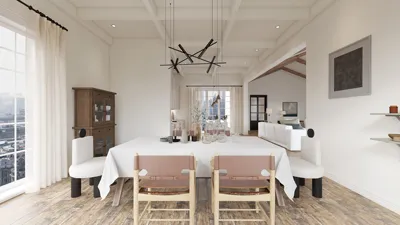


I once took on the challenge of transforming a 1.2-meter-deep closet into a comprehensive cinematic environment — the client desired a space complete with popcorn, a large screen, and seating that wouldn’t obstruct the door. This experience taught me that with a clever and compact room layout, size restrictions can be cleverly navigated by prioritizing sightlines, ventilation, and storage right from the start. Hence, I created a detailed spatial map before purchasing any equipment, ensuring an optimal setup with the help of a tool like Homestyler.
1. Closet-to-Cinema: The Coziest Option
Transforming a deep closet or alcove into a snug screening space equipped with a projector, blackout curtains, and a few cushions or a slim recliner is budget-friendly and deeply immersive. However, it’s critical to manage heat and ventilation; previously, I implemented a quiet inline fan that effectively addressed both comfort and equipment longevity.
save pin
2. Under-Stairs Mini Theater
My favorite low-profile solution is converting the under-stairs niche into a mini-theater: envision a built-in oversized screen wall across from bench seating that provides additional pull-out storage. Due to limited headroom, I suggest using lower-back seating paired with wall-mounted acoustic panels; it’s a charming and efficient option, albeit not ideal for taller guests.
save pin
3. Fold-Down Screening Wall with a Clean Look
Integrating a retractable screen or a wall-mounted short-throw projector allows the living room to stay multifunctional — maintaining a neat appearance during the day while delivering a full cinematic experience by night. I typically provide my clients with a photorealistic render through platforms like Homestyler so they can visualize the perfect balance of furniture and sightlines prior to starting any construction, which helps minimize surprises.
save pin
4. Nook with Tiered Seating
For those with a shallow alcove or bumped-out bay, introducing a single riser for additional seating creates a well-designed look, with under-seat storage for blankets or AV gear. It’s a purposeful arrangement that works particularly well for families, though building a safe riser will require a modest budget and a builder knowledgeable of local building codes.
save pin
5. Portable Pop-Up Cinema for Multi-Use Rooms
For those in rental properties or multifunctional living spaces, consider utilizing a projector mounted on a wheeled cart, coupled with clip-on blackout curtains and foldable cinema chairs, allowing for ultimate flexibility. This setup is low-commitment and cost-effective; when a different ambiance is desired, the layout can be swiftly reconfigured with a straightforward floor plan — simply sketch once to determine sightlines and the flow of furniture.
save pin
FAQ
Q1: What’s the minimum room size for a decent home cinema?
A minimum space of 6–8 square meters is recommended for a cozy two-seat arrangement, but even a compact 3–4 square meters can suffice for a solo-viewing setup in a closet equipped with a projector. The key is to prioritize the optimal viewing distance over the screen size for maximum comfort.
Q2: Should I opt for a projector or a TV for a small cinema?
Projectors are advantageous in terms of saving space and allow for larger images in small areas, while TVs offer brighter visuals and more straightforward installation. In exceptionally bright rooms, a TV might be more appropriate; in controlled lighting, however, projectors enhance the immersive experience.
Q3: How do I manage soundproofing in a compact environment?
Incorporating soft furnishings, rugs, and wall-mounted acoustic panels helps reduce reflections and control bass frequencies. For serious sound isolation, increasing the mass of common walls and sealing gaps around doors and ducts is recommended.
Q4: Are there budget-friendly acoustic solutions available?
Certainly! Affordable options include using thick curtains, bookshelves filled with books, and DIY acoustic panel frames filled with rockwool. Although these solutions may not achieve studio perfection, they significantly improve dialog clarity.
Q5: How critical is lighting control in a room?
Extremely important — managing ambient light preserves contrast and color for both projectors and TVs; I recommend using blackout curtains and dimmable wall lights. A layered lighting setup ensures a warm, safe path to the door while the screen remains dark.
Q6: Is it possible for a multi-purpose room to also feel cinematic?
Definitely! By using retractable screens, concealed speakers, and movable furniture, a room can easily transition from daily functions to movie nights. The secret lies in hiding the equipment and clearly defining a viewing axis, allowing the space to feel intentional and cinematic.
Q7: What type of seating is best for very small home cinemas?
Opt for low-profile recliners, built-in benches with cushions, or modular ottomans that can be stored away; it’s best to avoid bulky theater seats unless the room has adequate depth. Ensuring comfortable lumbar support and a clear line of sight is more important than extravagance.
Q8: Where can I find resources on acoustic standards for small spaces?
The Acoustical Society of America offers valuable research and guidelines on room acoustics and treatments (https://acousticalsociety.org), serving as a great resource when planning for sound absorption, diffusion, and speaker placement to optimize audio quality.
save pin
Discover your creativity with Homestyler, the ultimate online home design platform! Its user-friendly design tool allows you to create stunning layouts, while impressive 3D renderings bring your ideas to life. Explore endless design projects and learn through engaging DIY video tutorials. Transform your space effortlessly!
Concevez maintenant gratuitement
































