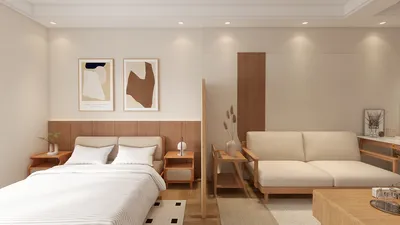


In compact bedrooms, side tables serve more than just an aesthetic purpose—they play a vital role in evening routines, help reduce clutter, and create storage and lighting solutions where they are essential. For small spaces, opt for tables that have a footprint of 14–18 inches while ensuring the height is between 22–28 inches, allowing them to align well with the typical height of mattresses. This alignment minimizes the stretching needed to reach for essentials, making bedtime more comfortable. Research from Steelcase underscores that well-organized, easily accessible surfaces can lead to fewer disruptions in your nightly routine. Applying this concept to your bedroom with a Homestyler plan could smooth the transition into sleep by keeping necessary items within easy reach. Additionally, guidelines from WELL v2 stress the importance of reducing trip hazards and visual glare, encouraging the use of rounded edges and warm lighting within the 2700–3000K range to lower nighttime visual disturbances.
The next crucial aspect to consider is the lighting around your bedside. The Illuminating Engineering Society suggests aiming for task lighting of 300–500 lux for reading and layers of ambient lighting at around 100–200 lux for general comfort. By incorporating a clamp lamp with a dimmer switch on your side table, you can avoid direct glare from your lamp while positioning it about 15–20 inches above the tabletop to keep light out of your direct sightline. Various studies, including those synthesized by Verywell Mind on color psychology, highlight that soft blues and muted greens induce a sense of calm; pairing a Homestyler-designed light oak or birch finish with these soothing paint tones can help facilitate relaxation before sleep. For more comprehensive planning, employing a room layout tool can simulate different arrangements and lighting placements without the hassle of physically moving your furniture multiple times.
When it comes to the flow of a small room, thinking in terms of ratios is more beneficial than just plain measurements. A narrow table that is about two-thirds the width of the headboard appears visually appealing, and ensuring the tabletop is 1–2 inches lower than the mattress edge makes it easier to access items like a glass of water. In very restricted spaces, open-frame designs can help minimize the visual bulk: sleek steel legs supporting a timber top can maintain stability without overwhelming the area. If floor space is at a premium, installing a wall-mounted ledge that is 10–12 inches deep can function like a floating side table, enhancing circulation.
Quick Weekend Projects to Create Your Own Compact Designs
1) Concealed Bracket Floating Ledge: Create a floating shelf using a 12 x 18-inch hardwood piece paired with sturdy concealed brackets. Round the front edges slightly to avoid accidental bumps. Finish it off with a matte polyurethane layer to reduce glare while ensuring that the shelf height is between 24–26 inches or aligned with your mattress top to minimize shoulder strain during reach. Include a cable notch at the back for a lamp cord.
2) Slim C-Shaped Table: A C-shaped table can slide neatly underneath your bed frame, providing essential surface area without impeding walking space. Construct it with a top measuring 10–12 inches wide and a stable base no less than 14–16 inches in length. By lowering the center of gravity, perhaps using a steel base or fitting a hidden counterweight, you can ensure stability in tight quarters. If you're uncertain about clearances, test it using an interior layout planner to ensure ample legroom and bedside accessibility before undertaking construction.
3) Stacked Crate Nightstand: By stacking and painting or staining two wooden crates, you create an open storage solution that can be secured with pocket screws to avoid swaying. Keep the overall height around 24–28 inches, and apply felt pads beneath to minimize vibrations. The open design contributes to a lighter visual feel and allows airflow—ideal for placing a small diffuser or plant on top.
4) Pegboard Side Table: Attach a compact pegboard panel to a basic A-frame to create a multifunctional side table. Hooks can hold items like headphones and glasses, while a 12 x 12-inch top provides space for both a lamp and a book. This design not only allows for vertical organization but also ties into findings from Gensler’s workplace research that link organized spaces to reduced cognitive load when items are properly stored. Choose low-VOC paints to maintain indoor air quality.
Material Selections and Finishes for Expanding Small Spaces
I prefer using light-grained woods such as ash, birch, or maple, as they reflect soft ambient light and help conceal dust. Opting for matte or satin finishes keeps glare minimal, fostering a restful environment. If choosing metals, opt for powder-coating rather than lacquering for durability and scratch resistance. If you're leaning towards colors, choose those with muted saturation and cooler hues for a calming bedtime atmosphere; desaturated blue-green is excellent for a soothing effect. For sustainability choose FSC-certified materials and water-based finishes; these are more conducive to small apartment living, where ventilation may be limited.
Considering Proportions, Reach, and Safety
While aesthetics are important, human factors take precedence. When seated at the edge of your bed, your reach typically spans 16–20 inches outwards—so keeping the front edge of your side table within this range can help prevent unnecessary straining. It’s best to avoid sharp table corners at hip height. If you’re looking to integrate wireless charging, place it in the middle of the table to minimize awkward stretches. Ensure that any cords are well organized along the back leg with clips and Velcro ties. Using a small motion-sensor light under the table enhances safety for nighttime navigation, as warm 2700K light minimizes melatonin disruption compared to cooler alternatives.
Efficient Storage Solutions Without Excess Weight
In small rooms, every inch of space is crucial. Incorporating a drawer with a mere 2–3 inches of depth for flat items—like journals and sleep masks—prevents the table from tipping due to overloaded storage. Adding a U-shaped shelf beneath the top increases storage capacity without the clunky appearance of bulky designs. For an extra touch, consider adding a soft basket below to absorb sound and conceal clutter. Maintaining simplicity in the front design helps to reduce visual noise, allowing your mind to relax more easily in your space.
Seamless Integration of Lighting for a Sleep-Ready Environment
For reading, a focused light beam is essential, while softer ambient lighting promotes relaxation. Pairing a compact dimmable lamp with a diffusing shade can mitigate direct glare. Place the switch within 6–8 inches of your typical reach to turn off the light comfortably. If using an LED strip beneath the tabletop, aim for less than 150 lux at ground level to guide your nighttime steps while minimizing any disruption to your sleep cycle.
Construction Tips and Handy Upgrades
Always pre-drill joints to prevent splitting. If your tabletop is relatively thin (under 5/8 inch), reinforce it with hidden cleats. Considering removable tops for cleaning or cable access can also be an advantage. Adding felt pads or silicone feet minimizes vibration and noise—especially beneficial in older buildings with creaky floors. For effortless styling, keep just three items on your surface: a lamp, a book, and a glass of water, neatly organized in a small tray to create simplicity in design.
Planning Your Space Before You Begin Cutting
In a small bedroom, movement paths can be complex due to doors and closet swings. Ideally, aim for a clear walkway of 36 inches, though in micro apartments, 24–30 inches can be acceptable as long as objects are designed with rounded edges and lighting is soft. To confirm your fit, utilize a layout simulation tool before purchasing materials; adjusting bed heights and the widths of your side table can save you from costly mistakes and unnecessary trips to the store.
Affordable DIY Projects
Repurpose old cabinet doors for the tabletop; their flat surfaces are excellent for this application. Hairpin legs add a stylish element and are quick to install. A simple pine shelf attached to the wall using a cleat system is both low-cost and frees up valuable floor space. For a vintage touch, a slim stool can easily become a nightstand with a small top added to prevent items from falling off.
Sources for Additional Learning and Research
For comprehensive information on lighting standards and healthy environments, WELL v2 provides fantastic benchmarks for residential comfort. Summaries on color psychology from Verywell Mind can assist in selecting calming color palettes for bedtime. If you're focusing on workflow and habit formation, Gensler’s research sheds light on the benefits of organized environments and their effects on cognitive load at home.
Frequently Asked Questions
Q1: What is the perfect height for a bedside table?
A: Aim for heights between 22–28 inches, generally aligning the top with or slightly below the mattress height for easier access and less wrist strain.
Q2: How wide should a side table be for compact bedrooms?
A: Widths of 12–18 inches are recommended for narrow spaces. If you require additional area, consider adding vertical storage beneath the table instead of expanding its footprint.
Q3: What lighting intensity is best for reading in bed?
A: Strive for 300–500 lux focused on the book with a dimmable lamp and a shade to diffuse glare. Ambient light in the range of 100–200 lux is soothing for winding down.
Q4: Which colors are favorable for promoting relaxation at night?
A: Desaturated blues and greens can enhance relaxation; combine these with lighter wood tones and warm 2700–3000K lighting to avoid stimulation.
Q5: How do I maintain a steady narrow table?
A: Ensuring a broader base, incorporating hidden counterweights, or securing the table to the wall can prevent tipping. Organize heavy items to keep them low and centered.
Q6: Is it safe to integrate wireless charging?
A: Absolutely. Position the charging pad centrally, with cables routed down the back leg, steering clear of metal surfaces immediately beneath to prevent overheating.
Q7: What materials contribute to a lighter appearance in smaller rooms?
A: Light-grained woods (like ash and birch) and powder-coated steel bases both keep the visual weight down. Utilizing matte finishes can further reduce glare and create a tranquil environment.
Q8: Is a wall-mounted shelf a viable option?
A: Indeed. A floating ledge measuring 10–12 inches deep opens up floor space and can be positioned at the perfect height for your needs. Ensure you use sturdy concealed brackets.
Q9: How can I effectively manage cables at night?
A: Adding clips, a rear notch, and Velcro ties to organize cords can help. Position the switch within 6–8 inches of your usual reach to limit movement before sleep.
Q10: What’s the best way to evaluate fit before construction?
A: Utilize a room design software tool to visualize dimensions and clearances to ensure that everything fits well and meets your needs before you begin construction.
Q11: How much storage space should my bedside table offer?
A: A shallow drawer of 2–3 inches, combined with a small bottom shelf, can accommodate essentials without adding unnecessary bulk. A tray on top can help keep daily items organized.
Q12: Are motion sensor lights beneficial?
A: Yes. A warm 2700K low-lux light situated under the table provides safe nighttime navigation while reducing the risk of falls and preserving melatonin better than cool lighting.
Homestyler is your go-to platform for transforming your home design dreams into reality! With its user-friendly online design tool, stunning 3D renderings, and a wealth of inspiring design projects and video tutorials, you’ll find everything you need to create your perfect space effortlessly.
Design Now for FREE
































