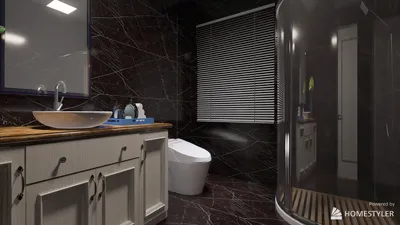


I once worked with a client who wanted their washing machine visible from the toilet because they believed it created a more genuine feel—this made me chuckle. Ultimately, I designed a clever nook that provided the openness they desired while catering to my aesthetic sensibilities. Spaces like this encourage a blend of creativity and decisiveness. In this article, I'm excited to present five compact bathroom laundry room designs I've implemented in various projects, along with a 3D layout example created using Homestyler to illustrate spatial flow.
1. Elevate and beautify with stacked appliances
I’m a big fan of incorporating stacked washer and dryer units within a slender, tall cabinet—this is one of the quickest methods to free up floor space. However, it’s important to consider access and ventilation; this setup requires a taller cabinet and a service panel, but the result is more counter space and a neat, unified appearance.
2. Combined wet zone: integrating shower, sink, and laundry
Transforming a corner into a wet zone can significantly enhance functionality. In one project, I designed a glass shower partition that also served as a splash guard for a small laundry area while waterproof finishes minimized future maintenance. Though it presents a daring option for the cautious, this approach optimizes plumbing usage and maintains organization when executed with care.
save pin
3. Vanity incorporating a built-in washer and folding area
By merging a floating vanity with a front-load washer hidden beneath the surface, you create an instant folding space while concealing the machines. While this might slightly reduce under-sink storage, the ergonomic advantage it provides—no more stooping to sort laundry—is phenomenal. When I designed this for a condominium, the client appreciated the additional daytime counter surface and improved sightlines.
save pin
4. Pull-out appliances and vertical storage solutions
Incorporating pull-out washers and slim vertical cabinets allows for appliance access only when necessary. Though this requires a minor investment and involves mechanical costs as well as precise measurements, I installed such a design in a rental renovation and received positive feedback for the neat appearance. Maintenance was also straightforward, thanks to labeled access panels.
save pin
5. Strategic layout: kitchen-laundry adjacency
Often, the ideal location for laundry is adjacent to the kitchen—this setup facilitates short plumbing runs and shared ventilation. It's crucial to design the circulation so that laundry doors do not obstruct kitchen traffic. I regularly sketch out a couple of circulation scenarios and compact mockups to evaluate daily movement patterns. While this may compromise some privacy, it often results in the most efficient mechanical arrangement.
save pin
Bonus practical insights
Small details can make a significant impact: opt for light-reflective tiles, install a pull-down drying rod, and utilize magnetic baskets on the sides of the machines. For more substantial renovations, I typically map out plumbing and ventilation needs first, layering aesthetic choices afterward to avoid surprises during the project. If you’re eager to experiment with different layouts before finalizing decisions, consider using a tool like Homestyler to visualize clearances and storage options effectively.
save pin
FAQ
Q1: What is the minimum space requirement for a washer-dryer combo in a bathroom?
A: A stacked washer-dryer typically requires a width of about 24"–27" (60–70 cm) and a depth between 24"–30" (60–75 cm), but remember to allow space for service access and ventilation behind the unit.
Q2: Is placing a washer in the bathroom safe?
A: Yes, as long as the electrical outlets are GFCI protected, the machines are adequately vented or utilize condensation dryers, and the finishes are moisture-resistant. Always consult local regulations before starting your project.
Q3: How can I manage ventilation in a small laundry area within a bathroom?
A: Install an exhaust fan that is appropriately sized for both bathroom and dryer needs (or use a vented dryer). If opting for a condenser dryer, ensure sufficient air exchange and think about employing a dehumidifier in tighter spaces.
Q4: Are front-load washing machines preferable for compact areas?
A: Generally, yes—front-loaders facilitate countertop integration and stacking, making them a space-saving choice. They also tend to be more efficient in terms of water and energy, although they may have a higher initial cost compared to top-loading models.
Q5: Is it possible to merge laundry plumbing with bathroom plumbing?
A: Definitely—sharing supply and waste lines can enhance cost-efficiency and reduce complexity. Just make sure that pipe sizes and venting conform to local plumbing codes to prevent issues like backups and odors.
Q6: What budget-friendly enhancements can I make for a bath-laundry combination?
A: Affordable upgrades such as paint, peel-and-stick waterproof tiles, flexible vent kits, and a compact folding drying rack can yield significant improvements. Prioritize waterproofing and adequate ventilation first to avoid costly repairs later.
Q7: How can I minimize washer noise in other areas of my home?
A: Implement anti-vibration pads, choose machines that balance the drum effectively, and insulate any surrounding cabinetry. Adding solid-core doors and soft-close hardware can also help muffle operational sounds.
Q8: Where can I find trustworthy information on appliance efficiency?
A: For reliable details regarding washer efficiency and water usage, visit ENERGY STAR (https://www.energystar.gov), where you can find certified models and performance metrics.
save pin
Looking to transform your home? Homestyler is your go-to online design platform! With its user-friendly design tool, stunning 3D renderings, vast array of design projects, and insightful DIY video tutorials, you can unleash your creativity and design your dream space effortlessly.
立即免费设计
































