


Common Challenges When Installing Bunk Beds in Compact Spaces
Typical difficulties encountered during bunk bed installation in confined areas include limited ceiling height, obstructed ladder access, doors hitting the bed frame, uneven flooring, and insufficient safety clearances. Many of these challenges can be addressed by reorienting the layout, opting for lower-profile bunk designs, or rearranging surrounding furniture prior to installation.
Through numerous small bedroom projects, I've observed that bunk bed issues rarely stem from the room's size itself, but rather from the lack of pre-installation layout testing.
Key Points to Remember
Overview
Installing bunk beds in small rooms appears simple until the assembled frame places the upper mattress too near the ceiling or the ladder blocks key pathways.
With over ten years in residential design, I've assisted families in resolving bunk bed positioning problems in tight bedrooms. Bunk beds are space-efficient yet tall, rigid furnishings that require meticulous spatial planning.
Before final installation, I recommend virtually testing room layouts using an intuitive tool to visualize furniture placement. Previewing circulation areas beforehand can prevent frustration.
This article highlights frequent bunk bed installation issues in small spaces and effective solutions.
Measuring Ceiling Height Prior to Installing a Bunk Bed
Important Note: Ceiling height is often underestimated when setting up bunk beds; mattress thickness can significantly affect usable space.
People typically measure just the bed frame, overlooking mattress height. Bunk frames usually stand 60–68 inches tall, with mattresses adding another 6–12 inches.
Safety guidelines often advise maintaining 30–36 inches between the top mattress and ceiling, allowing a child to sit comfortably.
Calculating safe bunk height involves considering both frame and mattress dimensions.
For example:
Low-profile bunk beds or thinner mattresses frequently solve clearance issues efficiently.
Resolving Clearance Problems Between Top Bunk and Ceiling
Essential Insight: Lowering mattress height is often safer than altering the bed frame when the top bunk is too close to the ceiling.
Homeowners sometimes try unsafe modifications like removing guardrails or cutting the frame, which compromises safety.
Better approaches include using thinner mattresses or choosing bunk designs with shorter guardrails that still meet safety standards.
Safety protocols recommend guardrails extend at least five inches above the mattress surface; thick mattresses can reduce this buffer.
Addressing Ladder Access Challenges in Narrow Rooms
Key Observation: Ladder access issues mostly result from blocked walking paths, not ladder design flaws.
In confined spaces, ladders often conflict with desks, dressers, or doors, causing awkward climbing angles or full obstruction.
Common ladder obstacles include limited floor clearance and interference with traffic flow.
Effective solutions involve repositioning the ladder or adjusting nearby furniture to clear pathways.
Using a simple 3D room layout app such as Homestyler can help test multiple configurations to ensure safe ladder access before installation.
Managing Door and Window Interference
Crucial Point: Doors and windows often hinder bunk bed placement in compact rooms.
Due to their height and rigidity, bunk beds may clash with window trims, curtain rods, or door swings.
Typical conflicts encountered include doors bumping against the frame and windows limiting bed placement options.
Designers commonly resolve these by repositioning doors, choosing sliding doors, or situating the bed away from protruding elements.
Stabilizing Bunk Beds on Uneven Flooring
Important Note: Even minimal floor unevenness can make bunk beds feel unstable.
This is common in older houses where floors have shifted over time, causing wobble.
Simple fixes include adding furniture levelers or shims under legs and securing the frame to walls.
Wall anchoring is especially advised for tall bunk beds to enhance safety when children occupy the top bunk.
Summary
Most bunk bed setup issues in small rooms arise from poor layout planning rather than bed size. Proper consideration of ladder positioning, door clearance, and ceiling height before assembly can prevent major problems.
Enhancing Safety in Limited Spaces
Key Insight: Safety becomes critical as available space decreases; it's vital to prioritize ease of movement over maximizing furniture quantity in small bedrooms.
Recommended safety improvements include adding guardrails, ensuring adequate circulation space, and using digital room design tools.
Employing design software like Homestyler allows virtual testing of bunk bed arrangements to identify potential circulation conflicts before actual assembly.
Frequently Asked Questions
What minimum ceiling height is necessary for bunk beds?
An 8-foot ceiling is generally needed to provide safe headroom above the upper mattress.
What can be done if the bunk bed is too close to the ceiling?
Opting for thinner mattresses or low-profile bunk bed frames can increase clearance safely.
How much space should be left above the top bunk?
Maintaining 30–36 inches between the mattress surface and ceiling is ideal for comfortable sitting.
Are bunk beds suitable for very small bedrooms?
Yes, but installing bunk beds in tight spaces requires careful planning of ladder access and door clearances.
Why does my bunk bed wobble after installation?
Uneven floors are a frequent cause; furniture levelers and wall anchors typically resolve instability.
Are bunk beds safe near windows?
They can be safe, but avoid positioning the top bunk directly adjacent to window frames or curtain rods.
What clearance is recommended around a bunk bed ladder?
At least 24 inches of unobstructed floor space is suggested for secure climbing.
What is the most common error when fitting bunk beds into small rooms?
The primary mistake is assembling the bunk bed without first verifying room layout and circulation space.
References
U.S. Consumer Product Safety Commission – Bunk Bed Safety Standards
American Academy of Pediatrics – Recommendations for Child Bedroom Safety


Storkcraft Next Santos Twin-Over-Twin 5-in-1 Conve
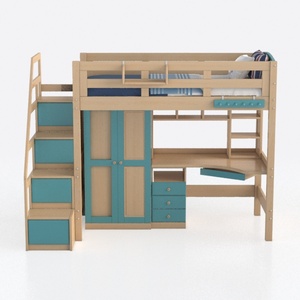
Interbeds Letto a castello MAX 4 dimensioni 200 x 80 cm con armadio e scrivania, colore a scelta con materasso (rosa)
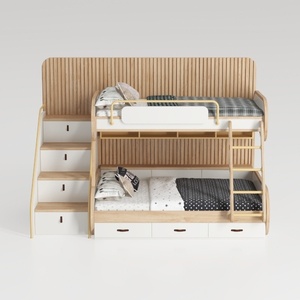
Modern Solid Wood Bunk Bed With Storage Stairs Drawers 3D Model
Homestyler offers an easy-to-use online design tool combined with stunning 3D renderings, inspiring interior projects, and helpful video tutorials—making it simple and fun to create your dream home design from start to finish.
立即免费设计
































