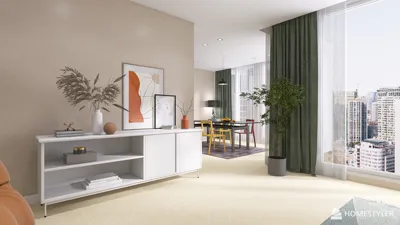


Once, a tenant needed me to fit a king-sized bed, a full dining set, and a home office into a modest 400 sq ft apartment in Green Bay — I found it amusing, yet I successfully drafted a plan that worked. In small spaces, unnecessary thoughts are penalized while clever solutions are greatly rewarded, illustrating why one-bedroom apartments can ignite significant design inspiration.
In this article, I will share five practical ideas that I have successfully implemented in various Green Bay projects, integrating space-saving strategies, local climate considerations, and budget-friendly tips to ensure your compact home feels spacious and inviting.
1. Dual-function built-in storage
Built-in furniture along the walls — such as bench seating with drawers, recessed shelving, or a floor-to-ceiling wardrobe — has become my preferred choice for designing one-bedroom layouts. These installations help minimize clutter and provide a clear line of sight, visually enlarging the space. While there's a downside of reduced flexibility for those who enjoy rearranging furniture, the visual tranquility in small apartments makes it worthwhile.
save pin
2. Furniture zoning instead of wall divisions
Rather than erecting partitions, I define the living, dining, and sleeping areas using rugs, low bookcases, and console tables behind sofas. This allows natural light to flow freely, creating an open atmosphere — essential during those long winters in Green Bay when daylight becomes scarce. A minor challenge is ensuring proportionality, so it's wise to measure spaces before making purchases.
save pin
3. Versatile kitchen and dining setups
Kitchens designed with sliding panels or foldable tables serve multiple functions, acting as places for dining, food prep, and work. In one renovation project in Green Bay, I swapped a bulky table for a wall-mounted drop-leaf design with seating that can be tucked away — guests really appreciated this feature. The benefit lies in increased functionality, but it's important to invest in durable hardware and establish clear maintenance routines.
save pin
4. Layering light and ensuring seasonal comfort
Given Green Bay's climate, careful attention to insulation and lighting is vital. I employ a mix of overhead, task, and accent lighting to create cozy evenings while utilizing stylish thermal curtains that enhance energy efficiency. Although initially costly, this investment tends to lower utility bills and result in a warmer atmosphere during the winter months — just remember to choose window treatments wisely to avoid obstructing too much light.
save pin
5. Utilizing smart colors and mirrors to create an illusion of space
Choosing light, warm neutrals complemented by deeper accents can open up a room without feeling cold. Strategic mirror placements can enhance perceived depth, and I often pair a large mirror with a gallery wall to avoid the generic look. Mirrors are highly beneficial, but ensure they reflect something appealing, rather than chaos.
save pin
Tips 1:
To effectively plan layouts and check clearances, consider using a reliable online room planner like Homestyler to quickly visualize ideas and prevent costly errors. During your planning phase, always maintain walking paths of at least 30 inches to allow for natural movement. Finally, invest in a few high-quality pieces tailored to the apartment instead of cluttering the space with numerous smaller items.
save pin
FAQ
Q: What’s the ideal layout for a one-bedroom apartment in Green Bay? A: The optimal layout maximizes natural light and features built-in or wall storage to minimize clutter; open-plan living-kitchen combinations are excellent in compact areas.
Q: How can I keep a small apartment warm during the winters in Green Bay? A: Utilize thermal curtains, add rugs for insulation, implement layered lighting, and consider upgrading window and door seals for improved energy efficiency.
Q: Are Murphy beds a viable solution? A: Yes, Murphy beds help conserve floor space during the day; however, selecting a high-quality mechanism and planning accompanying storage is essential for seamless integration.
Q: How do I create the illusion of a larger kitchen? A: Favor light-colored cabinetry, selectively use open shelving, and choose reflective backsplash materials; a narrow island or drop-leaf counter can provide additional surface area without cramping the space.
Q: Is it feasible to create a home office in a one-bedroom apartment? A: Certainly — consider fold-down desks, wall-mounted shelves, or compact workstations positioned behind a sofa; prioritizing ergonomic seating is crucial.
Q: What budget-friendly methods exist to upgrade a rental apartment? A: Removable wallpaper, adhesive backsplashes, peel-and-stick flooring, and modular storage units can create a significant visual upgrade at a modest cost.
Q: How do I select colors that suit the lighting in Green Bay? A: Opt for warmer neutrals for north-facing windows to balance cooler light; test paint swatches at different times of day before making a final decision.
Q: Where can I find reliable information on room planning guidelines? A: For authoritative standards on circulation and accessibility, refer to the American National Standards Institute (ANSI) or local building codes; the ANSI/NAHB guidelines offer helpful clearance dimensions (source: ANSI publications).
save pin
Homestyler is your go-to online design platform for transforming your space! With its user-friendly design tool, stunning 3D renderings, and a wealth of inspiring design projects and video tutorials, you can effortlessly create your dream home. Dive in and start designing today!
Design Now for FREE
































