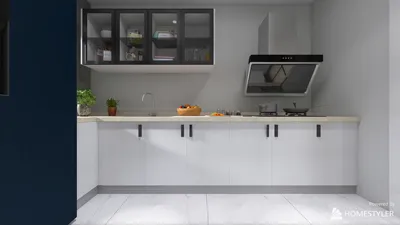


I once nearly tore down a perfectly functional wall in a condo because a client believed bigger was the only way to increase functionality. Instead, we saved both budget and time by redesigning the storage solutions. This experience taught me a crucial lesson: when it comes to small kitchen designs, clever strategies consistently outperform major renovations. Here are five practical ideas I apply to real projects that make tiny kitchens feel more spacious and purposeful while naturally utilizing Homestyler for visualization.
1. Maximizing vertical space through open shelving and stacked cabinetry
Why this strategy works: Utilizing the full height of your kitchen allows for increased storage without enlarging the footprint. The advantage is more accessible storage for daily essentials and a visually lighter appearance compared to solid walls of closed cabinets. The downside is that it requires consistent styling and neatness since clutter becomes more noticeable on open shelves. Tools like Homestyler help you experiment with these layouts effectively.
save pin
2. Using integrated appliances and sleek, space-saving combinations
Reason for effectiveness: Appliances designed specifically for compact spaces—like dishwasher drawers and shallow-depth refrigerators—free up aisle space and maintain an open flow. This approach creates a more efficient work triangle without compromising on essential appliances. The trade-off is the potentially higher cost and fewer features compared to full-sized versions. Homestyler can assist in visualizing these appliance integrations.
save pin
3. Incorporating pull-out counters and multifunctional islands
How it benefits your kitchen: Slide-out or fold-down counters offer preparation space only when needed, giving you extra working or dining surfaces without adding permanent bulk. The challenge includes the mechanical complexity and ensuring enough clearance so these additions don't obstruct walking paths. You can plan these details precisely with Homestyler.
save pin
4. Applying light-colored surfaces, reflective backsplashes, and focused lighting
Why it's impactful: Bright and reflective finishes combined with layered lighting elevate ceilings visually and widen the room's perception. This creates a more open and welcoming kitchen that feels larger at first glance. A potential drawback is that highly glossy materials can highlight wear and fingerprints, so consider durable options for high-traffic areas. Homestyler helps you preview different finishes and lighting scenarios.
save pin
5. Utilizing zoning tactics with open sightlines and specific task areas
Why it works: Defining zones for preparation, cooking, and cleaning helps minimize overlap and allows one person to use the kitchen more comfortably. This optimizes flow and reduces accidental collisions during busy cooking times. However, it demands upfront detailed planning and sometimes custom cabinetry to separate areas without sacrificing space. Homestyler's design tools can clarify these zones in your layout.
Visualization tip: Imagine your small kitchen featuring a clean vertical array of cabinets, a slim appliance wall, and a pull-out counter serving as your weekend baking station. Take action by sketching one change this weekend—replace a bulky appliance, add an extra shelf, or draft a miniature floor plan using Homestyler.
save pin
FAQ
Q: What is the typical cost for remodeling a small condo kitchen? A: Expenses vary widely depending on location and choices, but modest updates typically range from $6,000 to $12,000, while full remodels can run between $20,000 and $40,000. I always include contingencies for unexpected issues behind walls.
Q: Can I modernize my kitchen without changing the layout? A: Yes—cosmetic upgrades like new paint, hardware, lighting, or backsplash can revitalize your kitchen affordably. Keep in mind, this won't increase storage or enlarge the layout.
Q: Is investing in custom cabinetry worthwhile for a small kitchen? A: Often it is. Custom or semi-custom cabinets efficiently utilize awkward corners and vertical space better than stock options. Though initially more expensive, they provide superior long-term functionality in tight spaces.
Q: How should I select appliances for a tiny kitchen? A: Focus on the appliances you use most daily and choose compact models for secondary features (e.g., single ovens paired with microwave drawers). Measure carefully and allow proper clearance for door swings and drawer openings.
Q: What are affordable small kitchen upgrades that add value? A: Consider swapping cabinet fronts or painting them, upgrading to engineered stone counters, and updating hardware and lighting. These measures make a significant impact without needing a full renovation. Following NKBA guidelines helps maintain market appeal.
Q: How can I make a galley kitchen feel less confined? A: Employ continuous flooring and matching cabinet colors while removing visual barriers to create a sense of extended space. Use light finishes and proper task lighting to enhance openness.
Q: Are open shelves practical in condos with limited storage? A: They are ideal for frequently used items and aesthetic display but work best when paired with closed storage for pantry goods and less attractive tools. Regular decluttering keeps the look tidy.
Q: Do small kitchens benefit from professional design tools? A: Definitely. 3D planning and floor layout tools allow you to test clearances, swing paths, and appliance fit before committing. I frequently rely on Homestyler to avoid costly errors and confirm feasibility in real projects.


Homestyler is an easy-to-use online home design platform featuring powerful 3D rendering, a vast collection of interior projects, and helpful DIY video tutorials. It lets you effortlessly create, visualize, and customize your dream space from start to finish.
Design Now for FREE
































