

In spacious areas, selecting ceiling fans that can effectively move large volumes of air while maintaining architectural harmony is crucial. I strive for a perfect balance between blade span, motor efficiency, height of installation, and acoustic performance, all while ensuring the design complements the overall decor. An appropriately chosen fan can significantly lower energy consumption for cooling by allowing for higher thermostat settings. Notably, the ASID highlights that optimal air circulation leads to enhanced occupant comfort, and findings from Steelcase indicate that thermal variability is a major factor influencing comfort levels in open environments. From a practical standpoint, a correctly sized fan can provide the equivalent comfort of 4-8 air changes per hour, enhancing cooling through increased evaporation without affecting the actual temperature of the room, which can be easily planned using tools like Homestyler.
Determining the right size for a fan involves factual data rather than mere estimations. I refer to documented benchmarks: a fan measuring 60-72 inches is suitable for spaces ranging from 400 to 600 square feet, while for rooms from 600 to 800 square feet, a size of 72-84 inches is ideal. For areas exceeding 800 square feet, employing several fans or high-volume, low-speed (HVLS) fans can be more beneficial. WELL v2 guidelines emphasize thermal comfort and user control as essential performance factors. Additionally, IES standards remind us to carefully consider glare when incorporating light kits; selecting diffusers with suitable luminance characteristics is critical for maintaining visual ease. In open workspaces, Gensler’s research underscores the importance of combining air movement with localized user control to adapt to varying tasks.
Both the pitch of the blades and motor type are equally significant as the fan's diameter. A blade pitch between 12 to 15 degrees tends to offer efficient airflow with minimal noise, while DC motors often provide greater torque at reduced energy consumption compared to AC motors, potentially decreasing energy use by 30 to 70% based on model and operational speed. In residential settings, I target sound levels below 40 dB(A) when running at medium speed; levels above this can become intrusive in quiet environments.
Guidelines for Sizing a Ceiling Fan in a Spacious Room
I begin by assessing the room's dimensions, volume, and mounting conditions. It’s crucial to measure the longest and shortest dimensions and take note of ceiling height. For rooms with ceilings between 9 and 12 feet, employing a downrod of 6 to 24 inches helps keep the blades 8-9 feet from the floor, which is optimal for comfort and safety. For spaces larger than 800 square feet or with atypical shapes (like L-shaped configurations or those with double-height areas), I recommend using multiple fans to minimize dead air zones. Additionally, when experimenting with furniture layouts or multi-zone designs, a layout planner can assist in visualizing airflow and fan direction—consider using a Homestyler for quick scenario assessments as well.
Understanding Blade Span, Pitch, and Airflow (CFM)
Airflow is measured in cubic feet per minute (CFM). For large living areas, I aim for a flow of 5,000 to 9,000 CFM at high speed; for larger great rooms or loft spaces, the figure can reach 9,000 to over 12,000 CFM. The blade span defines the area covered, the pitch determines the airflow intensity, and the motor's torque ensures consistent operation across various speeds. Wider blades don’t always equate to improved performance; the blade's aero profile, edge shape, and rigidity play essential roles in minimizing flutter and noise during operation.
Ceiling Heights, Downrods, and Clearance Regulations
A minimum clearance of 7 feet from the blades to the floor is required (8-9 feet is preferred for maximum comfort). Maintain 18-24 inches between the tips of the blades and any walls or large furniture items, avoiding the installation of low-hanging light fixtures in the fan's sweep path. For rooms with ceilings taller than 12 feet, longer downrods are necessary to maintain the fan within the occupied zone; in double-height areas, I may opt to hang fans at the first-level datum, while upper-level lighting provides an ambient glow to balance temperature differences vertically.
Incorporating Lighting Solutions and Glare Mitigation
When adding a lighting system, it is important to manage brightness and shadow effects. I prefer using high-CRI LED lights with warm to neutral color temperatures (ranging from 2700K to 3500K) to complement residential color schemes, or a temperature of 3500K to 4000K for more active environments. Protect the light source with prismatic or opal diffusers to minimize glare and flicker. Incorporating dimming options allows for comfortable scene-setting in the evenings, and it’s prudent to avoid excessive uplighting on shiny ceilings to control reflection issues. Refer to IES guidelines for recommendations on luminance ratios and ways to reduce glare, especially in complex, multi-light setups.
Installation Considerations: Structural Support, Wiring, and Control Options
A substantial fan necessitates appropriate support. Standard electrical boxes should be replaced with fan-rated boxes secured to joists or with retrofit braces for older structures. It is crucial to verify the fan's total weight, inclusive of any lighting fixtures. For optimal wiring, separate circuits for the fan and the light when feasible to facilitate independent operation. I favor DC fans that come with handheld and wall control options, in addition to smart home integration; multi-speed settings and reversible modes simplify seasonal adjustments.
Sound Quality and Vibration Management
Most noise is generated from the flow of air, motor vibrations, or structural vibrations. Ensure that all screws are tightened, balance the blades using the kit provided, and check that downrod couplings are secure. In circumstances where fans are on concrete slabs or lightweight frameworks, specific speeds might cause sound resonance; a slight adjustment in speed can often rectify the issue. For noise-sensitive spaces such as bedrooms or libraries, I recommend fans featuring dampened housings and aerodynamically designed blades that minimize turbulence at mid-range operating speeds.
Adjusting for Seasonal Performance: Forward vs Reverse
In most models, a forward rotation (counterclockwise) generates downward airflow, which enhances evaporative cooling during warmer months. In contrast, reverse rotation (clockwise) redistributes warm air upwards in winter, eliminating drafts. In rooms with double-height ceilings, operating in reverse at a low speed can help even out temperature differences and lessen reliance on high-output heating systems. The research from Steelcase underscores the importance of giving users simple control options—having multiple speed presets can significantly enhance comfort levels.
Design, Materials, and Sustainable Choices
In expansive rooms, the fan's aesthetic plays a significant role in the overall design scheme. Choices like wood veneers offer a warm touch, while matte finishes reduce glare; low-profile designs help maintain unobstructed sightlines. From a sustainability standpoint, focus on energy-efficient DC motors, long-lasting bearings, and components that are easy to service. Combining fan strategies with window coverings and task-specific lighting is vital; the WELL v2 guidelines highlight the need for a comprehensive approach to comfort—airflow, lighting quality, and sound must work synergistically rather than in competition.
Common Design Scenarios in Spacious Spaces
• A great room with distinct seating and dining areas: Center the ceiling fan above the primary seating zone; consider a second fan or a larger one if dining areas are frequently used and positioned farther from the primary cooling zone. Utilize an interior layout planner to examine sightlines and clearances with hanging lights, such as Homestyler for effective visual planning.
• An open loft with elevated ceilings: Position the fan at an 8-9 foot height; enhance air circulation with floor fans on peak heat days.
• An L-shaped living and kitchen area: It’s often more effective to use two smaller fans rather than one large fan to control airflow more efficiently.
Step-by-Step Instructions for Installation
1) Verify joist placement and load-bearing capacity, and install a fan-rated support box or brace. 2) Assemble the downrod and mount the fan according to the manufacturer’s torque specifications. 3) Connect the wiring for neutral, hot, and ground; add a separate switch circuit for the light if required. 4) Attach the blades, ensuring appropriate clearances and balance. 5) Test all fan speeds, reversible function, and dimming features. 6) Observe airflow using light ribbons or tissue to confirm effective distribution and adjust fan settings accordingly.
Long-term Maintenance and Durability
Regularly dust fan blades to preserve aerodynamic efficiency. It’s advisable to tighten fasteners at least once a year. If wobbling occurs, re-balance the fan and inspect the mounting setup. For frequently used areas, proactively replace remote controls and batteries, and ensure smart controls are updated as needed to maintain optimal performance.
When Multiple Fans are Necessary
In instances where areas are exceptionally large or irregularly shaped, employing several fans or a high-volume, low-speed (HVLS) system is advantageous. Position fans so their airflow zones slightly overlap without creating conflicting air currents. Align fan centerlines with furniture arrangements for intuitive use and comfort in the areas where people gather or work.
Authoritative References
For further insights into thermal comfort and adaptive environments, research from Steelcase can be beneficial in shaping residential comfort strategies. For health-oriented performance benchmarks concerning thermal comfort, lighting, and acoustics, consult the WELL v2 standards.
Frequently Asked Questions
Q1: What ceiling fan size is ideal for a 600 to 800 square foot room?
A: Generally, a fan size of 72 to 84 inches is effective, provided you maintain an 8-9 foot height for the blades and at least 18 to 24 inches of clearance from walls. In irregular spaces, two 60-72 inch fans can sometimes deliver better airflow.
Q2: What should be the target CFM for a large living room?
A: For most large living rooms, aim for 5,000 to 9,000 CFM; for great rooms and lofts, you may want to consider 9,000 to over 12,000 CFM, contingent on ceiling heights and thermal loads.
Q3: Are DC motors truly more energy-efficient than AC motors?
A: Indeed. DC motors usually demonstrate superior efficiency, cutting energy usage by 30 to 70% compared to equivalent AC fans, along with providing smoother speed transitions and quieter operation.
Q4: What is the best blade pitch for quiet and efficient airflow?
A: A blade pitch of around 12 to 15 degrees strikes a balance between effective airflow and minimal noise. Blade configuration and motor torque will also affect performance at varying speeds.
Q5: What height should the fan be mounted at?
A: Fan blades should ideally be positioned 8 to 9 feet above the floor for optimal comfort and safety, with the minimum height being 7 feet. Utilize the proper downrod for ceilings above 9 feet.
Q6: Can a ceiling fan actually help reduce air conditioning expenses?
A: Absolutely. By improving air circulation, you may increase the thermostat setting by 2 to 4 degrees Fahrenheit while sustaining comfort, ultimately lowering cooling energy costs—especially when utilizing efficient DC fans and appropriate zoning.
Q7: What strategies can be applied to prevent glare when using a light kit?
A: Select high-CRI LED lights with color temperatures between 2700K and 3500K for residential settings, implement opal or prismatic diffusers, and utilize dimmers to match task lighting. Following IES luminance recommendations to avoid directly visible light sources is advisable.
Q8: What’s an effective method for handling double-height spaces?
A: Suspend fans so that they remain within the occupied zone using a longer downrod, and utilize the reverse mode at low speeds in winter to circulate heat effectively without drafts.
Q9: How many fans are optimal for an L-shaped configuration?
A: It’s often more effective to install two smaller fans rather than one oversized unit, as this can eliminate dead zones while allowing for localized air control over both seating and dining sections.
Q10: What can be done to address wobble or noise issues?
A: Balance blades, ensure all hardware is tightened, check the downrod coupler, and confirm that the mounting box is fan-rated. Minor speed adjustments can help circumvent resonance frequencies during operation.
Q11: Is it beneficial to utilize reverse mode beyond winter?
A: Yes, during transitional seasons, using reverse mode at lower settings can help gradually balance temperatures in tall spaces without creating airflow disturbances, leading to greater comfort.
Q12: Should I incorporate smart controls with my fan system?
A: Yes, implementing smart or wall controls with predefined settings enhances usability. Research from Steelcase and WELL illustrates the value of providing occupants with control options to optimize both comfort and productivity.
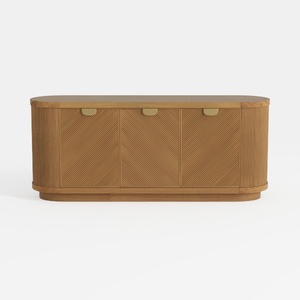
Modern Minimalist Solid Wood Fluted Sideboard with Brass Accents 3D Model
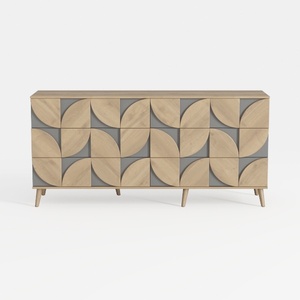
Modern Geometric Pattern Solid Wood Sideboard Cabinet 3D Model
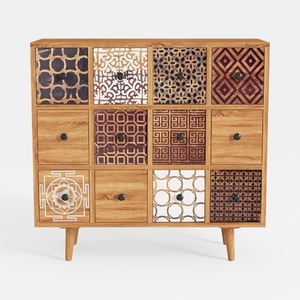
Bohemian Solid Wood Multidrawer Accent Cabinet With Patterned Fronts 3D Model
Looking to transform your space with ease? Homestyler offers an intuitive online design tool, breathtaking 3D rendering, and a wealth of DIY video tutorials. Perfect for both beginners and seasoned decorators, it empowers you to bring your dream home to life effortlessly!
Design Now for FREE
































