


Choosing a wedding venue in Tirupur involves a mix of practical considerations and emotional factors. You’re looking for a space that accommodates your guest list, facilitates rituals seamlessly, ensures comfort for older attendees, and provides stunning photo opportunities. Drawing from my experience in south Indian wedding planning, the best venues focus on circulation, acoustics, temperature control, and lighting long before the décor is introduced. This portion is crucial: research from Steelcase highlights that environmental comfort significantly affects guest engagement and satisfaction during events; areas designed for quiet and unobstructed views enhance comfort and positivity throughout lengthy celebrations. The WELL v2 framework also emphasizes the importance of acoustics and temperature in minimizing stress and maximizing comfort, serving as useful guidelines when evaluating a venue under genuine wedding conditions.
Two essential metrics guide decision-making for venue selection. The Illuminating Engineering Society recommends a baseline illumination level of 200-300 lux for multi-purpose gathering spaces, increasing to 300-500 lux in key areas such as the stage to enhance photography and rituals without causing glare. Concurrently, the WELL v2 acoustic guidelines advocate for maintaining background noise levels around 35-45 dBA for clear speech during ceremonies and a maximum of 70-75 dBA during dining or light music phases to ensure conversational ease. While these guidelines aren’t exclusive to weddings, they serve as dependable benchmarks for comparing venues, sound systems, and lighting arrangements. For those interested in diving deeper into the relationship between people and space, I encourage you to explore Steelcase’s research hub, and for health-focused environmental guidance, refer to WELL v2.
How to Assess Wedding Venues in Tirupur
Before visiting venues, I apply five key filters: capacity, accessibility, climate control systems, acoustic management, and service quality. A venue advertised to accommodate 600 guests might only comfortably fit 450 after considering the mandapam, buffet, and aisles. If your setup is complex—featuring separate dining, a sacred area, and a photo zone—it’s wise to utilize a room layout tool to visualize traffic flows, table arrangements, and sightlines before booking. This preventive measure is the easiest way to circumvent last-minute crowds and awkward seating arrangements.
layout simulation tool
Capacity, Seating Arrangements, and Visibility
Arrange seating with a focus on visibility towards the mandapam and stage. As a general guideline, maintain main aisles at 1.2-1.4 m and secondary aisles at 0.9-1.1 m; permit a clearance of 1.5-1.8 m behind the front rows for the movement of photographers and priests without obstructing views. For audiences of varied ages, combine rows of chairs with a few clusters of sofas towards the middle-back to allow elders comfort while ensuring they can observe the rituals. Banquet rounds measuring 5 ft can comfortably seat 8, whereas larger 6 ft rounds can accommodate 10 guests but may lead to increased noise and less space for elbows. If the venue features pillars, assess the angles from key seating positions to the stage to prevent obstructed views.
Designing the Stage and Ritual Area
South Indian weddings frequently involve several rituals in succession. Position the stage at a height of 600-760 mm for optimal visibility while allowing quick accessibility for elders. Ensure a clearance of at least 2.4 m behind the backdrop for priests, decorations, and cable organization. If the venue’s ceiling height is under 3.6 m, be cautious with tall floral arrangements that can trap heat; opt for layered backdrops with side lighting instead. Consider adding a secondary micro-stage or elevated platform for events such as nalangu, sangeet, or photo opportunities to avoid needing to reset the main stage during the celebration.
Lighting that Enhances and Functions
For ceremonies: aim for 300-500 lux on stage with warm-white lighting at 3000-3500K to complement skin tones, in addition to dimmable ambient lighting across the venue at 2700-3000K to maintain a festive atmosphere. Utilize cross-angled soft lights at 30-45 degrees to minimize under-eye shadows. Be sure to control glare on reflective surfaces to protect photographs. For dining: 150-200 lux will suffice; let decorative candles or lanterns provide ambiance rather than relying on overly bright overhead lights. Lastly, ensure that the venue’s lighting dimming system operates without flicker to prevent video banding.
Acoustic Comfort and Music Planning
High-reflective granite or tiled floors coupled with bare walls can produce harsh sound from microphones. Inquire about the availability of acoustic treatments, drapes, and ceiling panels. For hall venues with lively acoustics, consider adding soft furnishings, staged skirts, and fabric backdrops to enhance sound absorption. Place speakers strategically rather than clustering all sound from a single point—this strategy not only improves clarity but also minimizes sound pressure levels. For ceremonies featuring traditional instruments like the nadaswaram or shehnai, establish a decibel limit to keep elders comfortable while ensuring the authenticity of the music.
Temperature Regulation and Airflow
Given the heat and humidity in Tirupur, effective HVAC systems are crucial. Verify that fresh air is circulated rather than relying solely on recirculation, and ensure the venue can maintain a temperature of 22-25°C with 50-60% humidity during peak conditions. Schedule a visit during a similar time to that of your event; some systems struggle as the buffet service begins. It’s also vital that the bridal and groom sections have individual climate control, mirrors, and ventilation—makeup durability relies heavily on it.
Behind-the-Scenes Flow and Vendor Access
An enjoyable guest experience begins behind the scenes. Confirm the presence of service corridors to prevent caterers from crossing into guest areas, dedicated electrical points for lighting and live stations, and a protected loading bay for decorative setups. Backup power should activate automatically, with audiovisual systems on a separate circuit to avoid interruptions during rituals. If the venue provides in-house decorations, clarify the quality of the inventory and whether external specialists can be brought in for traditional themes such as temple-inspired mandapams or Kerala floral designs.
Dining Arrangements and Buffet Planning
If you're opting for the traditional plantain-leaf service, allow for 1.1-1.2 m per seat in linear placements with a 1.5 m service aisle. For buffet setups, ensure counters are spaced at least 3 m apart to minimize queue congestion and organize clockwise traffic for efficient lines. Position dessert and photo areas separately to draw crowds away from the main buffet. Keep handwashing and water stations conveniently located within 12-15 m of dining seats.
Enhancing the Guest Experience: Elders, Kids, and Accessibility
Create a quiet seating area near exits for older guests, equipped with comfortable seating and easy access. Provide a nursing corner and a small activity table for children, allowing parents to relax. Ensure ramps with a 1:12 slope and elevators for multi-level venues. Implement clear signage in both Tamil and English to guide guests to parking, dining areas, and restrooms without the need for constant announcements.
Décor and Material Selection
In Tirupur’s arid climate, flowers tend to wilt quickly; incorporate fresh blooms with greenery, fabric garlands, and brass elements to maintain a vibrant look throughout lengthy ceremonies. Opt for fire-retardant drapery. For color psychology, marigold and vermilion invigorate daytime ceremonies, while jade and ivory promote tranquility for evening receptions. If the venue has strong wall colors, choose a neutral palette and layer textures to avoid overwhelming visuals.
Ensuring Photo and Video Preparedness
Make sure there are at least two dedicated 16A circuits available for photography equipment and a safe route for cables from the control area to the stage. Request for house lights to be zoned properly, keeping the stage well-lit while dimming guest areas slightly. Provide 2-3 tripod pockets in the front rows and consider a stable balcony position if possible.
Narrowing Down the Best Venues in Tirupur: A Practical Checklist
- Capacity adequacy: 70-80% of maximum rating post-layout adjustments, rather than the brochure figure
- Pillar influence: restrict to no more than 10-15% of seats with obstructed views
- Lighting: ensure dimmable options, achieving 300-500 lux at the stage, 2700-3500K warm light
- Acoustic features: incorporate soft finishes or draperies; utilize distributed speakers
- HVAC: maintain a temperature range of 22-25°C under full load, with separate bridal room controls
- Power supply: secure automatic backup generation with AV circuit segregation; ensure safe loads for caterers
- Accessibility: cover drop-off areas, provide ramps/elevators, and facilitate clear wayfinding
- Dining arrangements: ensure linear service or buffets spaced 3 m apart; keep handwashing and water stations nearby
- Backstage arrangements: secure separate service corridors and loading bays
- Vendor policies: permit external décor, AV, and photography teams
Budget Considerations and Value Assessment
When comparing venues, consider more than just rental fees. Inquire about scheduled time slots, overtime fees, power and cleaning costs, corkage for external catering, and deposit terms. Some venues may offer package deals that seem appealing but can restrict you to basic décor or limited lighting options. Create a comprehensive cost sheet to enable a fair comparison between venues with differing offerings.
Sample Itinerary for a One-Day Wedding
- Start early with muhurtham, utilizing natural light on stage
- Serve breakfast immediately post-rituals to disperse guests quickly
- Midday reset: quick cleanup, refreshing flower arrangements, and adjust lighting to warmer hues
- Evening reception featuring softer ambient light, focused portrait lighting, and live music entertainment
- Stagger the load-out of vendors to prevent congestion at the loading dock
Final Venue Inspection: Essential Tests
- Stand at the back row: assess clarity of speech without amplification
- Walk through emergency exits and evaluate the functionality of elevators
- Test dimming functionality for flicker with a smartphone camera
- Time the distance from the bridal room to the stage while wearing heels and considering garment volume
- Confirm the timing for generator auto-start and ensure AV circuit stability
- Conduct a mini buffet practice run with two lines and around 30 guests
Frequently Asked Questions
Q1: How much space do I need per guest?
A: For mixed seating arrangements combining stage and buffet within the same venue, allocate 12-15 square feet per guest. If dining occurs in a separate area, 10-12 square feet generally suffices.
Q2: Which lighting color temperature is ideal for ceremonies?
A: A color temperature of 3000-3500K on stage enhances skin tones while maintaining warmth in traditional décor. Keep ambient lighting close to 2700-3000K and utilize dimming during transitions.
Q3: How can I manage echoes in a venue with hard finishes?
A: Incorporate fabric-heavy décor, drape side and back walls, use carpet runners, and promote distributed speakers at lower volume levels to enhance sound quality rather than relying on a single loudspeaker.
Q4: What temperature is comfortable for a crowded wedding?
A: Aim for a temperature range of 22-25°C with relative humidity at 50-60%. If possible, visit the venue during a mock event to evaluate HVAC performance.
Q5: How do pillars influence seating arrangements?
A: Map sightlines carefully and ensure that no more than 10-15% of seats have obstructed views. A room design visualization tool can be helpful to explore alternative stage placements.
Q6: What strategies can I implement to expedite buffet lines?
A: Separate vegetarian and non-vegetarian counters, space them at least 3 m apart, place dessert stations in other areas, and position water stations conveniently near the dining seats to minimize backtracking.
Q7: What items should I verify during the final venue assessment?
A: Ensure adequate backup power, audiovisual isolation, checking for flickering during dimming, restroom capacity, bridal room ventilation, and structured access for vendor loading.
Q8: What colors work well for evening receptions?
A: Jewel tones like emerald green and wine when paired with ivory or champagne translate beautifully under warm lighting while avoiding distractions from guests’ faces.
Q9: What recommendations do you have regarding sound levels?
A: Keep ceremony sound levels around what typically allows for clear conversation (about 45-60 dBA at seating) and set limits on music levels so guests can converse; distributing speakers helps ensure even sound coverage.
Q10: Is separate dining truly advantageous?
A: For guest counts exceeding 400, separate dining spaces can diminish noise, improve circulation, and maintain the main venue’s cleanliness for photographs and rituals.
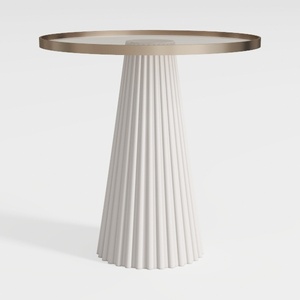
Modern Minimalist Fluted Base Glass Top Side Table 3D Model


Minimalist Solid Wood Round Coffee Table 3D Model
Discover the joy of home design with Homestyler! This user-friendly platform offers a fantastic online design tool, stunning 3D renderings, and a wealth of inspirational design projects. Plus, with engaging video tutorials, you'll have everything you need to create your dream space effortlessly.
立即免费设计
































