


Selecting a wedding venue in Jogeshwari involves careful consideration of both practical aspects and the overall ambiance. Elements such as guest flow, sound dynamics, lighting conditions, and ideal photography positions can significantly enhance the event experience. Recent studies in workplace and hospitality sectors reveal a direct connection between spatial quality and user comfort, with Gensler’s research consistently indicating that thoughtfully designed environments boost guest satisfaction and foster positive interactions. Furthermore, the WELL v2 guidelines emphasize that factors like lighting, acoustics, and air quality affect the wellbeing of attendees, illustrating how the physical setting of a venue can influence the mood and energy during any occasion. For those looking to envision their dream setting, utilizing tools like Homestyler can help bring your ideas to life.
Before making a final decision on a venue, it's wise to base your shortlist on specific, measurable criteria. For optimal lighting, the IES recommends achieving around 300–500 lux for social and dining areas, ensuring that faces are clearly visible and flattering in photographs. Key ceremonial elements may require adjustable lighting reaching 700–1,000 lux, maximizing the couple's appearance without any glare. The WELL v2 framework also underlines the necessity of effective sound management and a people-centric design approach; harmonious background noise and comfortable seating arrangements can significantly enhance guest enjoyment during lengthy ceremonies and receptions. For a solid planning foundation, consult the IES lighting guidance along with WELL v2 performance recommendations.
Key Elements of a Prime Wedding Venue in Jogeshwari
When I assess wedding halls along the Jogeshwari corridor, I concentrate on three fundamental aspects: accessibility, spatial ratios, and sensory comfort. Accessibility includes obvious, well-marked entries, dedicated service paths for catering purposes, and seamless transitions from parking to the hall's foyer. Spatial ratios pertain to guest capacity and layout; for banquet-style settings, a space of 1.2–1.5 sqm per seated guest is optimal, while events with cocktail arrangements function well with 0.8–1.0 sqm per person, provided pathways remain clear and the dance floor is centrally located. Lastly, sensory comfort hinges on maintaining a balance between lighting, sound quality, and temperature control, especially in the often warm climate of Mumbai. Well-ventilated venues with zoned cooling systems can significantly enhance guest enthusiasm compared to less optimized settings.
Practical Venue Shortlisting Checklist for Jogeshwari
I begin the venue selection process by evaluating the neighborhood's suitability and the expected travel time. The accessible transport links from Jogeshwari, particularly via the Western Express Highway and suburban rail network, are advantageous; nonetheless, traffic conditions can vary. Priority should be given to halls located near major roads with designated guest drop-off points. Additionally, assess the venue's capacity flexibility—choose locations capable of accommodating guest lists ranging from 250 to over 800 without compromising movement space. Confirm the ceiling heights which should ideally be a minimum of 4.0–5.0 meters for elaborate decorations, spatial arrangement with columns positioned 7–9 meters apart for unobstructed views, and convenient loading access for the mandap, stage, and lighting trusses.
If you are drafting your plan prior to visiting the venue, outline guest movement from the entrance to the welcoming stage, followed by seating, buffet areas, and the dance floor. Preemptively simulating traffic flow and table spacing can help avoid congestion around serving areas. Utilizing an interior layout planner can assist in visualizing aisle widths, sightlines to the stage, and emergency exits; consider employing a room layout tool to experiment with seating arrangements and guest flow according to the dimensions of the hall—you can rely on tools like Homestyler for better visualization.
Creating a Lighting Strategy for Photographic Excellence and Comfortable Views
Successful wedding photography hinges on reliable, adjustable lighting. Aim for ambient illumination between 300–400 lux throughout the hall, employing warmer color temperatures ranging from 2700–3000K for dining areas and 3200–3500K on stage to ensure skin tone accuracy. Incorporate dimmable circuits and layered lighting solutions: ambient chandeliers for a soft glow, wall washers to add depth, and focused spotlights for illuminating the couple and significant rituals. Manage glare through shielded fixtures and indirect lighting, while allowing flexibility on the dance floor with higher intensity lights and dynamic color, provided the rest of the venue maintains a glare-free atmosphere. Consult IES standards for recommended lux levels and beam spreads that keep lighting coherent throughout the space.
Ensuring Acoustic Comfort for Clear Speech and Enjoyable Music
Venues with a predominantly hard surface can easily become echo-prone. Seek out halls equipped with acoustic wall treatments, fabric drapery, and a ceiling absorption ratio of at least 35–45% in the primary area to maintain appropriate reverberation times for clear speech. Position the DJ or musical ensemble to project sound across the room rather than toward the dining areas, and utilize dispersed speakers to avoid sound concentration near the stage. The emphasis of WELL v2 on managing noise aligns perfectly with these techniques—a balanced acoustic setting allows guests to converse easily, keeping family members of all ages comfortable throughout the event.
The Role of Color Psychology in Decor Choices
Color influences perception and emotion profoundly. Soft neutral tones paired with warm metallic accents convey a luxurious and timeless feel, while deeper jewel tones can dramatically enhance the atmosphere post-sunset. Resources like Verywell Mind highlight color psychology insights: warm shades often feel more inviting and energizing, whereas cooler colors create a calm and expansive vibe. For gatherings with a diverse age group, I generally recommend concentrating vibrant colors on the stage or floral displays while employing a more subdued color scheme across seating arrangements to minimize visual strain.
Strategizing Seating Arrangements, Circulation Paths, and Stage Positioning
Establishing a clear main aisle of 1.2–1.5 meters provides an elegant pathway for the bridal entry and facilitates smooth camera tracking. Secondary aisles should measure 1.0–1.2 meters to enable service staff to navigate without disrupting seated guests. For a banquet hosting 500 guests, the arrangement typically includes 50 tables of 10, with at least 1.8 meters spacing between tables, expanding where the buffet is located. Position the stage opposite the main entrance so that guests instinctively orient themselves upon arrival, and ensure that the mandap is elevated by at least 0.6–0.9 meters above the floor for better visibility in crowded settings. If columns are present, align the stage gap accordingly to prevent obstruction of views.
Back-of-House Coordination, Vendor Movement, and Safety Measures
Seamless events depend on efficient back-of-house logistics. Confirm the availability of a separate service entrance, adequate refrigerated storage for perishable items like flowers and desserts, and at least two holding areas—one designated for catering and the other for decor. Emergency exits must be clearly marked and easily accessible; consider adding luminescent signs on staircases. For larger gatherings, establish a reliable security and valet service early in the planning process, and verify load-in pathways for sizable decor pieces during the rehearsal day.
Selecting Sustainable Materials and Choices
Choosing venues with resilient stone or terrazzo flooring and sound-absorbing fabric wall systems is advantageous for maintenance and acoustics. If renting additional equipment, opt for low-VOC paints and eco-friendly materials for temporary backdrops. Incorporating LED lights with a CRI of 90+ enhances color accuracy of outfits like saris and sherwanis on camera while also reducing energy consumption—this aligns well with the light quality and energy principles outlined in WELL v2. Aim for seasonal floral selections and repurpose greenery across various event segments to limit waste.
Budgeting and Awareness of Hidden Costs
When assessing wedding halls in Jogeshwari, it’s essential to request a detailed cost breakdown, covering base rental, generator usage, air conditioning hours, service overtime, cleaning fees, corkage charges, and vendor access fees. Confirm the lighting power available in kVA and be aware of any restrictions on rigging or ceiling loads which could influence decor budgets. Sharing an organized layout plan with the venue team early can often mitigate last-minute adjustments and additional labor costs, ensuring a smoother planning process.
Illustrative Layout Examples for Jogeshwari Venues
- A 300-guest lunch reception: Arranged with long banquet tables along a central alignment, natural light near the entry, and a compact stage decorated with a floral arch. Ambient lighting should be maintained at approximately 350 lux with a warm tone of 3000K; implement distributed speakers for uniform sound coverage.
- A 600-guest evening sangeet: Create island buffet stations to reduce waiting times, feature a deeper stage with space for live performances, and allocate a dedicated 10x10 m area for dancing. Enhance stage lighting to 600–800 lux at a temperature of 3200–3500K; for contrast, keep the audience zones at 250–300 lux.
- An 800+ guest grand ceremony: Include a double-entry welcome area with gift stations, twin aisles for processional walks, and overflow seating positioned near projection screens. Utilize side screens to maintain sightlines around structural columns, and reinforce speeches using delay speakers for better auditory engagement.
Conducting Professional Site Visits The Right Way
Bring along a laser measuring tool, a light meter application, and a brief checklist: assess ceiling heights, column spacing, and stage wall widths; check for sound bleed while testing music; adjust lighting to evaluate consistency in fade; track the duration of the walk from the parking area to the venue entrance; confirm backup power provisions and air conditioning zoning; and inspect mobile signal strength for your live-streaming team. Walk through the space in appropriate footwear to identify any potential safety concerns or challenges.
Vendor Coordination and Timeline Management
Develop a staggered schedule for vendor load-in to ensure a smooth flow of truss, decoration, and catering elements. Reserve time for a rehearsal to fine-tune lighting and audio cues. Share a scaled plan that includes table arrangements and stage dimensions with all vendors, not exclusively with the decorator. If adjustments to seating or buffet layouts are needed, quickly update the interior layout planner to keep security and catering teams on the same page—an effective room layout tool can validate pathways and sightlines.
Reliable Resources for Planning
For planning based on empirical data, reference the IES for lighting standards and the WELL v2 framework for considerations that prioritize human experience in venue choice: these resources provide precise, research-based guidance regarding light, sound, and comfort for event spaces.
Frequently Asked Questions
For seated banquets, plan for around 1.2–1.5 sqm per guest. For events with standing zones, approximately 0.8–1.0 sqm per person usually suffices if traffic paths are clear and the dance floor is centrally located.
Maintain ambient lighting between 300–400 lux, increasing brightness for the couple/mandap to between 700–1,000 lux using controlled, glare-free spotlights, with warmer light settings of 2700–3000K for dining purposes. These guidelines align with IES recommendations for social spaces.
Stage lighting should be around 3200–3500K with a high CRI (90+) to enhance the appearance of most skin tones and textile colors, while 2700–3000K ensures inviting warmth in dining areas.
Look for venues with acoustic treatments, including wall panels and fabric drapes, with absorptive ceiling materials covering at least 35–45% of the main volume. Arrange speakers to mitigate hot spots, enhancing speech clarity.
Opt for island-style or double-sided buffet setups away from major aisles. Ensure a clearing of at least 1.2 m around each service area, and keep the dance floor distinct from the main serving paths.
A ceiling height of at least 4.0–5.0 m is essential to facilitate stage backdrops, floral displays, and safe truss installation without obstructing sightlines or creating glare.
Draft a scaled floor layout that includes seating, staging, aisles, and buffet zones, then simulate guest flow using an interior design visualization tool—check out this planner to test seating arrangements and pathways: Homestyler.
Ensure transparent itemized pricing that reflects rental costs, power usage, AC hours, overtime fees, rigging limitations, load-in schedules, sound curfews, and vendor access agreements. Additionally, attach your scaled layout as a supplementary document.
Incorporate comfortable seating with armrests, maintain moderate noise levels, provide uniform ambient lighting free of glare, and guarantee easy restroom access along with quiet seating zones.
Certainly, though it is important to manage light levels with sheer curtains and blackout options as needed. Aim for a blend of daylight and adjustable warm lighting to avoid stark contrasts in photographs.
Plan for approximately 0.3–0.4 sqm per dancing guest during peak times; for an event with 600 guests, anticipating around 30% dancing concurrently warrants a dance floor of 10x10 m (100 sqm) as a reliable starting point.
Disperse invitations over a timeframe of 15–20 minutes, designate valet zones, and coordinate traffic management personnel during peak entrance times. Selecting venues near key routes ensures a smoother flow.
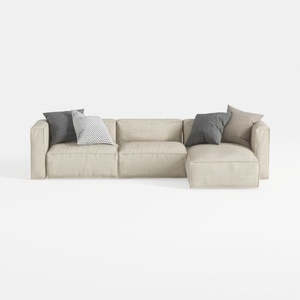
Minimalist Fabric L Shaped Sectional Sofa with Throw Pillows 3D Model

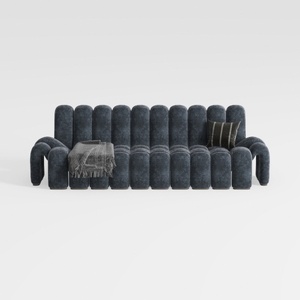

Modern Dark Blue Fabric Channel Tufted Oversized Sofa 3D Model
Homestyler is your go-to platform for effortless home design. Enjoy its user-friendly online tool, stunning 3D renderings, and a treasure trove of design projects and DIY video tutorials. Transform your space and unleash your creativity with ease!
Design Now for FREE
































