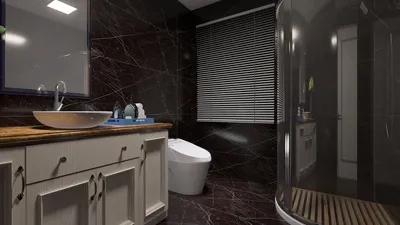


I once suggested a mid-gray shade to a client who believed it would enhance the coziness of their compact bathroom. However, they nearly withdrew the idea when the color appeared gloomy during our initial light test. We switched to a warmer gray, and suddenly the ambiance resembled that of a boutique hotel. Small spaces require audacity and precision; the right gray paint can visually enlarge a bathroom or make it feel constricted, depending on its undertone and finish.
1. Cool Light Gray with High Reflectance
Opting for a cool, light gray (think gentle dove shades) reflects light effectively, making small bathrooms seem more spacious. I often complement this with a glossy ceiling or semi-gloss trim to boost reflectivity; the perk is that you get brightness without the harshness of stark white. A slight drawback is that cool grays can take on a blue hue under warm lighting, so it’s essential to test samples in both daylight and evening conditions.
save pin
2. Warm Greige for a Cozy Spa Atmosphere
Greige, which is a blend of gray and beige, mitigates the clinical feel that some grays can convey. It infuses warmth, especially alongside wooden vanities or warm metal accents. This hue adapts well to varying lighting but may appear too beige in north-facing bathrooms, thus testing larger samples before making a final decision is wise. For layout and visualization purposes, I sometimes create a scheme in a room planner like Homestyler to assess how it harmonizes with the chosen fixtures.
save pin
3. Deep Charcoal for an Accent Wall
Utilizing a deep charcoal can introduce dramatic depth on a single wall, allowing the space to feel layered instead of constricted. I prefer this behind vanities or in shower niches, as it brings a sense of luxury without being overwhelming. The downside is that streaks and water spots may be more noticeable, hence using satin or semi-gloss in areas of high contact aids maintenance. For intricate planning, I sometimes guide clients to a kitchen layout planner to ensure bathroom spaces coordinate beautifully.
save pin
4. Gray with Green Undertones for a Natural Vibe
Certain grays have a green undertone, complementing greenery, natural stone, or matte black fixtures beautifully. They offer an earthy yet contemporary look, which I used in a small ensuite to bring a tranquil outdoor essence inside. Keep an eye on undertones shifting with different lighting — CFL bulbs may accentuate the green more than warm white LEDs. From a budget perspective, you can achieve a designer appearance with just paint and a few accessories, rather than a full remodel.
save pin
5. Soft Taupe-Gray for Timeless Neutrality
Taupe-grays deliver a classic backdrop that complements nearly any tile or vanity style. I often recommend them for their longevity, particularly when wanting a color that won't quickly go out of style. They work well with aging fixtures, but very pale taupes may appear flat if the bathroom lacks directional lighting. To illustrate spatial relationships, utilizing a 3D floor planner — like Homestyler — assisted one of my clients in selecting tiles that beautifully matched the wall color.
save pin
FAQ
Q: What is the most suitable gray paint finish for bathrooms? A: Semi-gloss or satin finishes are ideal since they resist moisture and are easier to clean; flat finishes conceal imperfections but lack durability.
Q: How do undertones influence gray paint selections? A: Undertones (blue, green, brown) affect how a gray appears under different lighting; it's crucial to sample large swatches on multiple walls and observe them at various times of day.
Q: Can gray paint create the illusion of space in a small bathroom? A: Indeed — light cool grays and greiges reflect light, imparting an airy ambiance, while well-placed dark accents add depth without making the space feel enclosed.
Q: Should I coordinate gray walls with gray tiles? A: Not necessarily—contrasting wall paint and tiles can highlight features; just ensure the undertones complement each other to maintain visual harmony.
Q: Are gray paints appropriate for rental bathrooms? A: Absolutely — neutral grays have widespread appeal among renters and can enhance perceived quality without significant investment. For durability, opt for mid-tones that can disguise wear and tear.
Q: How crucial is lighting in selecting gray paint? A: Extremely important — natural versus artificial light can dramatically alter perceived color. It’s vital to test samples under the actual lighting conditions of the bathroom.
Q: Where can I visualize paint colors within a floor plan? A: I recommend employing a free floor plan creator, like Homestyler, to simulate colors and finishes in context for more informed decisions.
Q: Are there reputable resources for color choices? A: Certainly—manufacturer swatches and the Munsell color system offer precise color references; for paint science and durability, refer to ASTM standards or manufacturer technical documentation (e.g., Sherwin-Williams and Benjamin Moore).
save pin
Discover the magic of home design with Homestyler! This user-friendly platform offers an intuitive online design tool, stunning 3D renderings, and a wealth of design projects. Plus, you'll find inspiring DIY video tutorials to guide you every step of the way. Transform your space effortlessly!
Design Now for FREE
































