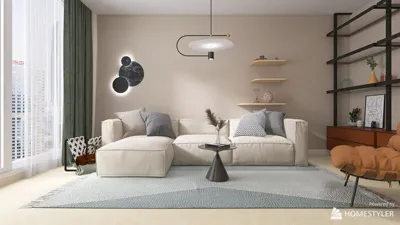


I once managed to persuade a client that the beige she adored would translate to a delightful 'sunny cream' — that was until the afternoon sunlight bathed the entire room in a buttery glow. The takeaway from this experience is that beige can flirt with yellow, pink, or gray hues based on lighting and decor choices. That's why I now advise clients to envision their living rooms in various lights before making a definitive choice. This is especially crucial in smaller spaces, where the right neutral can either expand the area or cause it to feel cramped, which is where tools like Homestyler come in handy for visualizing designs.
1. Warm Greige: A Cozy Yet Modern Neutral
I often choose a warm greige when a client is in search of a neutral that offers warmth without sacrificing modern appeal. It complements wooden elements and warm metallic accents seamlessly. While it results in a snug, inviting ambiance, it’s important to note that in north-facing rooms, it might appear washed out—so testing large swatches at various times of the day is essential.
save pin
2. Soft Cream: Airy and Versatile
Soft cream tones bounce light effectively, creating a sense of openness in smaller living areas. They are accommodating of mismatched furniture, yet may seem too conservative if you're aiming for a dramatic flair—solve this by adding deeper trim or a bold rug to ground the room.
save pin
3. Classic Taupe: A Timeless and Flexible Base
Taupe varieties often lean slightly towards gray, providing a sophisticated backdrop for artwork and textured fabrics. The timeless nature of taupe is its significant advantage; however, selecting the correct undertone is crucial—taupe with green undertones may clash with greenery, while taupe with purple undertones pairs well with cooler metals.
save pin
4. Sandy Beige with Cool Accents
Sandy beige evokes the tranquility of a quiet beach day and pairs beautifully with cool blue or green accents to mitigate too much warmth. If you want to assess traffic flow and furniture arrangement within this palette, utilizing a 3D floor visualizer like Homestyler can clarify which walls read warm or cool under varying lighting conditions.
save pin
5. Moody Beige: Adding Depth Without Darkness
For a sophisticated living room, I sometimes push towards deeper, richer beige tones—think warm mushroom or espresso-inspired shades. They yield depth while maintaining neutrality; just be aware that these tones require careful layering of light and a few reflective surfaces to avoid a cave-like effect. Often, I generate realistic 3D renders of these shades so that clients can visualize the ambiance before proceeding.
save pin
FAQ
Q1: What is the most universally flattering beige for living spaces?
A1: Typically, a warm greige with balanced undertones suits various lighting conditions and furniture styles. It’s wise to test a 12x12" sample on the main wall and observe it under morning and evening lights before committing to a purchase.
Q2: How can I make beige less tedious?
A2: Introduce a variety of textures such as linen curtains, a wool rug, and both matte and metallic finishes, along with one vibrant accent color to create contrast. Patterned cushions or striking artwork can immediately enliven a neutral color scheme.
Q3: Should trim be lighter or darker than beige walls?
A3: Generally, I suggest slightly lighter trim to frame the space crisply; however, using a darker trim can impart a dramatic touch but requires precision and higher-quality finishes.
Q4: Do warm beiges make small spaces appear even smaller?
A4: They can if overly saturated; opting for a light warm beige while keeping ceilings and trims bright helps maintain openness. Effective lighting and reflective surfaces will also counteract a cramped atmosphere.
Q5: How do I select beige undertones to suit my furniture?
A5: Compare color swatches against your most prominent fixed features—like sofas, hardwood floors, or built-ins—as beige can appear distinctively different next to warm woods or cool leathers. If your furniture is predominantly warm-toned, choose a beige with warm undertones for cohesion.
Q6: Is beige suitable for a contemporary minimalist living room?
A6: Absolutely—beige serves as a soft, neutral base that highlights minimalist aesthetics. Maintaining a clutter-free environment and contrasting through sculptural lighting or a singular textured rug will enhance the overall design.
Q7: How significantly does lighting influence my choice of beige?
A7: Substantially—north-facing rooms often cast a cooler tone on beige, while south-facing light enhances warm undertones. It’s critical to evaluate swatches at different times of the day under the actual lighting of your room.
Q8: Where can I digitally experiment with colors before purchasing samples?
A8: Numerous paint companies provide online visualizers; for example, Sherwin-Williams offers digital tools and color suggestions. Check out the Sherwin-Williams ColorSnap visualizer for precise previews. I still recommend acquiring physical swatches after any digital testing for the best results.
save pin
Homestyler is your go-to online home design platform! With its user-friendly design tool, stunning 3D renderings, and a wealth of design projects and DIY video tutorials, you can easily transform your space and unleash your creativity—no prior experience needed!
Design Now for FREE
































