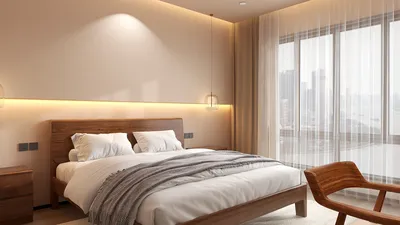


One time, I decided to paint a whole condo what I believed was a pristine white, only to discover mid-way through that the lighting caused it to appear pink at dusk. The important takeaway? Different whites can be deceiving, and context is vital. To truly understand how a white will appear in an actual layout, it's best to visualize the design using a tool like Homestyler before the first brushstroke is made.
1. Alabaster (SW 7008) — a warm neutral that masks imperfections
I often recommend Alabaster for areas that need a touch of warmth without the yellow tinge. I once utilized it in a client’s north-facing living room, where it softened the cool light and made wooden elements shine; however, it can sometimes appear slightly creamy under incandescent lighting, so it's wise to test with larger samples first.
save pin
2. Pure White (SW 7005) — sleek and modern but requires upkeep
Pure White is my ideal choice for trim and contemporary kitchens due to its clean and crisp appearance. The downside is that it easily shows scuffs and dust, making it crucial to select it for areas where you're prepared to perform touch-ups or to pair it with a semi-gloss finish for added durability.
save pin
3. Extra White (SW 7006) — vivid and striking, perfect with bold accents
Extra White enhances colors dramatically and is perfect for spaces requiring high contrast, such as a black-and-white entryway. However, it can seem stark in softer designs, so I often encourage clients to use it with warmer elements or textiles — and using Homestyler to create a floor plan first can help visualize that contrast effectively.
save pin
4. Snowbound (SW 7004) — serene and cool for modern minimalism
Snowbound offers a cooler tone than Alabaster and appears more neutral-blue in bright daylight. I applied it in a compact studio to amplify brightness without a clinical feel; the only challenge is finding the right warm woods to pair with it, which may need a slightly warmer tone elsewhere.
save pin
5. Pure Cashmere (SW 7637) — gentle, inviting white for cozy homes
For clients who desire a white that embodies comfort and warmth, I lean towards Pure Cashmere. It provides a subtle warmth and imperfects are less visible compared to stark whites. With advancements in design technology, such as utilizing Homestyler for AI-assisted mockups, I have significantly reduced trial-and-error hours in my recent projects.
save pin
Practical insights from my experiences
It's essential to test your paint on multiple walls and observe it at different times of the day; a 4x4' sample can save you countless hours. Additionally, I recommend pairing whites with actual materials — tiles, fabrics, and wood samples — since digital representations can often be deceiving. In terms of budgeting, a mid-range paint combined with a quality primer generally outperforms a cheaper paint requiring more layers.
save pin
FAQ
Q: Which Sherwin-Williams white works best in small rooms?
A: Alabaster or Snowbound are generally effective: Alabaster provides warmth while Snowbound offers a cooler and more airy sensation.
Q: Do whites require special primers?
A: Yes, if you're covering a colored or stained surface, opt for a high-quality primer. For new drywall, using a good paint-and-primer can be time-saving.
Q: How do lighting conditions impact white paint selection?
A: Natural north light tends to cool whites, whereas south light brings warmth. Always assess samples during both morning and evening to observe any changes.
Q: Is it acceptable to use the same white for both walls and trim?
A: Certainly, but you might want to choose different sheens — eggshell for walls and semi-gloss for trim — to ensure durability and a bit of contrast.
Q: Which white is best at concealing stains and marks?
A: Warmer, slightly off-white tones, like Pure Cashmere or Alabaster, tend to disguise marks more effectively than stark bright whites.
Q: How can I align white paint with my furniture and flooring?
A: Bring actual samples of your furniture and observe large paint swatches alongside them; focus on undertones that either complement or create intentional contrast.
Q: Do Sherwin-Williams color names remain consistent across finishes?
A: The color name is stable, yet the sheen can slightly alter perception—satin and matte finishes reflect light differently.
Q: Where can I review official recommendations from Sherwin-Williams?
A: Sherwin-Williams lists color specifics and RGB/hex values on their website; for exact specifications and product information, visit their official site (https://www.sherwin-williams.com).
save pin
Homestyler is your go-to online home design platform, perfect for all skill levels. Its user-friendly design tool, stunning 3D renderings, and extensive library of DIY video tutorials empower you to create and visualize your dream spaces effortlessly. Transform your home with ease and inspiration!
Design Now for FREE
































