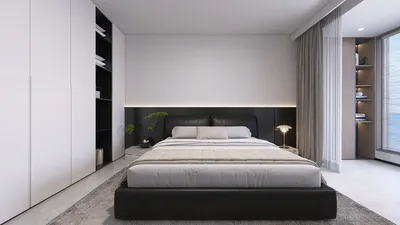


In the past, I committed to painting a client's narrow hallway in a shade whimsically named “Bulbasaur Green,” a decision made under the impression it would uplift their plants—lesson learned about the importance of testing colors and the effect of lighting. Utilizing a 3D floor planner like Homestyler allows me to visualize how a color appears at different times of day, from morning sunlight to evening lamp light. This practice has notably saved me from incurring numerous repaint expenses.
Benjamin Moore Regal: The go-to option for dependable quality
Whenever clients seek a rich, smooth finish without excessive flair, I turn to Benjamin Moore’s Regal line. It offers impressive coverage with minimal touch-ups and presents a lavish appearance on walls. While it comes with a higher price tag, I suggest it when durability and an exquisite finish are prioritized over cost-effectiveness.
Sherwin-Williams SuperPaint: Reliable and simple to use
Sherwin-Williams SuperPaint is my preferred choice for rental properties and family residences, given its balance between endurance and affordability. It has excellent stain resistance and is easily repairable, though certain colors may require a primer for accurate tinting. For dynamic, busy homes, its washability proves to be invaluable.
save pin
Behr Marquee: Cost-effective efficiency
For clients that require excellent coverage on a limited budget, Behr Marquee is my go-to recommendation—it typically delivers on its one-coat promise in most settings. While it has fewer artisan color options compared to high-end brands, it effectively reduces labor and paint waste over time. Particularly for accent walls or quick updates, it's a pragmatic choice. I often utilize Homestyler to draft layouts and evaluate lighting and finish selections for kitchen spaces.
save pin
Farrow & Ball: For bold colors and distinct character
For those who cherish rich, historic pigments, I indulge clients with Farrow & Ball, as its colors present unique qualities in every space and impart a genuine personality to rooms. Though this brand is pricier and necessitates meticulous preparation, the distinctive, designer appeal it offers makes it worthwhile. I always emphasize the necessity of testers; small spaces particularly reveal every brush stroke.
save pin
ECOS or low-VOC choices: A health-conscious selection
For households with infants, asthma issues, or sensitivities, I guide clients towards ECOS or low-VOC lines from well-regarded brands; the improvement in air quality is noticeable after just a week. While these options might slightly increase costs and occasionally demand more application layers, the health advantages justify the investment. Recently, I’ve combined these preferences with AI-assisted color analysis through Homestyler to anticipate how colors perform across various rooms.
save pin
FAQ
Q1: Which are the top brands for interior wall paint?
A: My favorite brands include Benjamin Moore, Sherwin-Williams, Behr, Farrow & Ball, and ECOS (especially for low-VOC options). Each brand excels in specific situations—be it budget, coverage, pigment richness, or health matters.
Q2: How can I decide between matte and eggshell finishes?
A: Matte finishes effectively conceal wall imperfections, making them ideal for low-traffic areas. Conversely, eggshell provides a slight sheen that enhances cleanliness, making it suitable for areas like living rooms and hallways. Consider maintenance; sheens often correlate with ease of cleaning.
Q3: Are low-VOC paints worth the additional expense?
A: Absolutely, especially in bedrooms or for homes with children and allergies—low-VOC options enhance indoor air quality and typically emit less odor. They may call for additional coats, yet the health benefits make the trade-off worthwhile.
Q4: How many layers of paint do I genuinely need?
A: Most high-quality paints cover adequately in one to two coats, although transitions from dark to light shades generally require a primer plus two coats for consistent color. I consistently advise clients to conduct test patches prior to committing to full-room applications.
Q5: Is it advisable to use the same brand for trims and walls?
A: Certainly, but I often select a different sheen for trims (satin or semi-gloss) to enhance durability and facilitate cleaning. Using the same brand can ease color matching but isn’t strictly necessary.
Q6: How critical are sample pots and testers?
A: They are crucial—always try multiple samples and evaluate them at various times throughout the day. The way paint appears can significantly change under natural and artificial lighting, which is why I create mock-ups, often using Homestyler, before making final decisions.
Q7: Where can I find trustworthy information regarding VOCs and indoor air quality?
A: The U.S. Environmental Protection Agency (EPA) offers reliable guidance on VOCs and indoor air quality at https://www.epa.gov/indoor-air-quality-iaq/volatile-organic-compounds-impact-indoor-air-quality. I frequently direct clients to this resource for evidence-based insights.
Q8: Is it better to hire a professional or take on painting as a DIY project?
A: If the project involves matching intricate finishes, extensive surface preparation, or high ceilings, enlisting a professional can be a time-saver and may prove cost-effective in the end. For smaller spaces and straightforward repaints, a DIY approach can work, provided adequate time is dedicated to preparation and testing.
save pin
Homestyler is your go-to online home design platform! With its user-friendly design tool, stunning 3D renderings, a myriad of design projects, and helpful video tutorials, you can effortlessly create and visualize your dream space. Perfect for both beginners and seasoned designers!
Design Now for FREE
































