



Corner Wall Gallery: Reading the Style of a Spatial Storyboard
The "Corner Wall Gallery" theme turns an often-overlooked junction of two walls into the emotional focus of a room. Instead of treating walls as flat backdrops, this style treats them as a storyboard: art, photographs, shelves and lighting work together to create a layered, lived-in narrative. The result must feel stylish yet intimate, visually rich yet still calm enough for daily life.
Three traits define this look: 1. Layered storytelling – walls are curated with photos, abstracts, keepsakes and everyday objects that tell a personal story rather than just decorate. 2. Corner as focal point – the intersection of two walls is deliberately framed with art, furniture and light so that the corner becomes a destination instead of a dead zone. 3. Calm but expressive palette – earthy neutrals and warm woods are the base, with focused accents (ochre, crimson, monochrome graphics, MCM tones) to keep the gallery vibrant without visual chaos. In Homestyler, this style is easy to prototype by combining gallery frames, modular shelving, wall sconces and seating in real-time 3D, refining layouts until the corner reads like a cohesive composition.
Corner Wall Gallery in Practice
In the competition entries, we see several consistent moves: - Walls are treated as a continuous canvas wrapping around a corner, often with grids or loose clusters of frames. - Seating, consoles or plants anchor the base of the gallery so the composition has a clear "start" and "end" in space. - Light, both natural and artificial, is used as a soft spotlight to add depth to the frames and textures. These strategies turn a basic architectural joint into a personal mini-museum. With Homestyler's smart furniture arrangement and real-time material preview, designers can quickly test frame sizes, heights and colors on both walls without measuring or re-hanging in real life.


Design by graca doutel, "Corner Wall Gallery: A Reinterpretation". This project is a textbook example of the style: two intersecting walls carry a mix of contemporary abstract art and personal memory boards, while indoor greenery softens the base. Soft daylight filtered by blinds creates a gentle gradient of light over the frames. In Homestyler 3D, such a scheme can be built by placing a corner sofa or bench, selecting framed artwork from the model library, and using the real-time render preview to balance color and brightness before finalizing the layout.
Start Free Design NowKey Elements of the Corner Wall Gallery Style 🎨
Element 1: Warm, Expressive Color Palettes 🌈
Color in this style walks a fine line: it must be warm and inviting enough for daily living, but expressive enough to highlight the gallery. Typical approaches include: - Warm neutrals as a base: soft beiges, warm whites, caramel and honey-toned woods on walls, floors and large furniture pieces. - Focused accent hues: ochre, crimson, forest green or inky blues repeated across frames and textiles to tie the composition together. - Monochrome anchors: black-and-white photography, line drawings or bold black frames to stabilize richer tones. By using a restrained base and repeating accents, the gallery reads as cohesive rather than visually noisy, even when the content of the frames is varied.


In afrah alwy's "Artful Serenity", geometric wall art in ochre and crimson sits on a neutral backdrop, while a soft orb light warms the palette. The frames echo the accent colors, so the corner feels curated rather than random. In Homestyler, you can quickly arrive at this balance by: - Picking a neutral wall paint from the material library. - Dropping in multiple art frames and assigning them accent colors. - Using real-time 3D rendering to fine-tune saturation and brightness so the space feels vivid but still restful.
Begin Your Free DesignElement 2: Structural Composition Around the Corner 🧩
Unlike a single flat gallery wall, the corner gallery uses the L-shape itself as a compositional tool. Key structural strategies include: - Wrapping layouts: frames start on one wall and continue seamlessly onto the adjacent wall, creating a visual "hug" around seating or a console. - Clear visual hierarchies: one or two hero pieces anchor the arrangement; smaller frames, shelves and objects orbit around them at aligned top or midlines. - Base anchoring: a chair, bench, sideboard or bookshelf sits at the corner base, giving the gallery a physical grounding point. This structural thinking ensures the corner reads as one unified installation instead of two separate walls with unrelated decor.


Mika Baldini (profile elina_plost) shows this beautifully in "Whispers of a Modular Haven". A single armchair is cradled in the glow of a suspended light, while lean frames and modular panels step around the corner. The height of frames is carefully staggered but visually linked, so the corner becomes a deliberate niche. Using Homestyler, you can recreate this structure by: - Switching to the 3D or perspective view to align frames across both walls. - Snapping artwork to consistent eye-height, then offsetting a few pieces for rhythm. - Testing different armchair positions and modular wall panels to see how they read from multiple camera angles in the real-time renderer.
Free Design PreviewElement 3: Decorative Layers & Personal Narratives 🖼️
Beyond color and structure, what really defines the style is how decor becomes narrative. The corner wall gallery is rarely just art prints; it is a collage of life. Typical layers include: - Mixed media: framed art, photographs, postcards, pressed botanicals, small mirrors and sculptural objects. - Personal memorabilia: travel souvenirs, family snapshots, handwritten notes or vintage finds that make the space feel inhabited. - Supporting objects: plants, vases, books and lamps at the base of the wall that extend the story into 3D. This layered approach creates visual depth and emotional resonance—the corner feels like a window into the owner's history and tastes.


Lena Vranac's "Charming MCM Gallery Wall" captures this narrative layering in a mid-century modern context. Vintage-inspired art, warm wood tones and playful objets on the console create a collected, personal atmosphere. The gallery is not just decorative; it suggests years of curated living. In Homestyler, you can emulate this by: - Combining MCM furniture models with frames from the library. - Dragging in books, vases and plants to the console plane. - Using Homestyler's real-time 3D render tool to check how these layers cast shadows and overlap, ensuring the wall reads as a rich yet coherent composition.
Try Free Design TodayCommon Questions
Q1. How do I start designing a corner wall gallery in Homestyler?
Begin by drawing or importing your room in Homestyler, then focus on the two walls that meet at the corner. Add a key furniture piece (chair, console or bookshelf) at the base to anchor the space. Next, drag and drop picture frames from the model library onto both walls, using the 3D view to align them at eye level. Finally, apply materials and upload your own photos or art so the real-time 3D renderer shows a realistic preview of your future gallery.
Q2. How many frames should I use to keep the corner gallery from feeling cluttered?
For most living or bedroom corners, 6–12 frames across both walls are enough to build impact without visual overload. In Homestyler you can experiment freely: duplicate frames, move them along the wall and switch between 2D and 3D views to see when the arrangement starts to feel crowded. Use one or two larger pieces as anchors, then fill gaps with smaller frames or objects until the composition feels balanced.
Q3. How can I make the gallery look cohesive if my photos and artwork are very different?
Focus on unifying elements: consistent frame colors, a limited accent palette and repeated sizes or proportions. In the Homestyler 3D rendering environment, you can recolor frames, adjust matting and test different background wall colors in seconds. Even if the imagery varies widely, these shared visual rules will tie the gallery together and keep the corner from feeling chaotic.
Q4. What lighting works best for a corner wall gallery?
Soft, layered lighting is ideal. Combine an overhead fixture with a wall sconce or a floor lamp near the corner to create gentle highlights and shadows on the frames. In Homestyler, add light sources and use the real-time render preview to see how light falls on the artwork at different intensities and temperatures. Adjust until the frames are evenly readable, with just enough shadow to add depth and drama.
What began as an Autodesk innovation has evolved into a design platform used by more than 20+ million registered users (platform data, 2026) around the globe. Homestyler combines powerful rendering, an intuitive editor, and a vast furniture library to help you turn inspiration into photorealistic designs — whether you're redesigning a single room or planning an entire home.
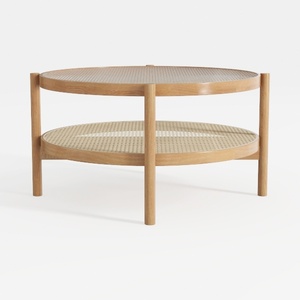
Minimalist Oak Rattan Two Tier Round Coffee Table 3D Model

Minimalist Japandi Solid Oak Rattan TV Stand Cabinet 3D Model
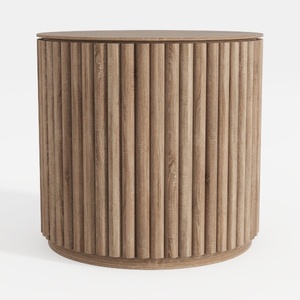
Minimalist Fluted Solid Wood Round Side Table 3D Model
Homestyler offers an easy-to-use online home design tool with stunning 3D renderings, inspiring design projects, and helpful DIY video tutorials. It’s perfect for visualizing and creating your dream space effortlessly, whether you’re a beginner or a design enthusiast.
Design Now for FREE






