

I have constructed numerous utility and dining tables using 2x4 lumber for various settings, including homes, studios, and small businesses. Utilizing 2x4 lumber for your table can be more than just a simple weekend project—it's a sturdy and flexible surface capable of supporting everyday activities ranging from meal preparation to project prototyping. The success of such a build largely depends on proportional design, joint strength, and surface finish. For typical users, a height of 29 to 30 inches is ideal for seated tasks, while a height of 36 inches is standard for counter tasks. Research from Herman Miller reinforces the significance of matching the height of surfaces to specific tasks to minimize strain; their findings in work surface ergonomics illustrate that suitable heights and proper clearance can enhance comfort and foster prolonged productivity.
Achieving comfort involves more than just adjusting height. According to the WELL v2 guidelines, it’s essential to ensure clearances are accessible and materials are healthy; maintaining 27 to 28 inches of knee space under the table facilitates better posture and prevents awkward reaching. Lighting is another crucial factor: The Illuminating Engineering Society suggests a brightness of 300 to 500 lux for general tasks and up to 750 lux for detailed work—aim for the higher end when completing finishing touches and sanding to spot surface imperfections. When selecting colors and finishes, Verywell Mind emphasizes that warmer neutral tones can enhance feelings of coziness, while cooler shades impart a cleaner, more focused atmosphere—keep this in mind when deciding how to stain or paint kitchens compared to studio spaces.
Fundamental Dimensions and Spatial Relationships
For a dining table accommodating four people, I generally recommend a tabletop length of 60 to 72 inches and a width of 30 to 36 inches, providing approximately 24 inches of elbow space per individual and ensuring a stable design. In workshops, a 30 x 60 inch tabletop suits smaller projects, while increasing the width to 36 to 40 inches can support heavier work, such as clamping and using vices. Ensure the leg placement is inset by 3 to 4 inches from the edges to prevent knee collisions. If visualization of leg placements and spacing is needed, utilizing a room layout tool can effectively simulate how the table fits within the overall space and helps confirm circulation routes.
Selecting Materials: Picking and Preparing 2x4s
Opt for kiln-dried construction-grade 2x4s that exhibit minimal crown and twist. At the store, I inspect each board: sighting down their lengths, rejecting those with significant knots positioned near joints, and selecting ones with straighter grains for the aprons and legs. Before assembly, plane or sand the reference faces; even a light pass with 120 to 150 grit sandpaper significantly reduces gaps in glue lines. If your budget permits, consider using "premium" or "select" stud grade lumber for better aesthetics. For the tabletop, you could laminate 2x4s standing on their edges to create a thicker 1.5-inch slab, or combine them with plywood and a hardwood edge band for a lighter, flatter finish.
Structural Approach: Bracing, Aprons, and Racking Resistance
The table's rigidity is derived from the apron—the frame that ties the legs together—along with diagonal or cross bracing. I construct aprons using 2x4s ripped down to 3 inches for a balanced aesthetic; boards measuring 3.5 inches may appear bulky unless you desire an industrial look. Employ robust mechanical joints; pocket-hole screws with glue are sufficient for light-duty tables, but for heavier applications, opting for dowels or loose tenons, such as a mortise-and-tenon approach, greatly enhances shear resistance and prevents racking. Adding 2x2 corner blocks inside the apron at every leg contributes to torsional stability. If the table is to accommodate a bench vise or heavy tools, a lower stretcher placed 8 to 10 inches off the floor will aid in enhancing overall rigidity.
Ergonomics: Height, Clearances, and Edge Profiles
Dining tables and work surfaces are most effective at 29 to 30 inches tall. If you have chairs with armrests or elevated seats, consider testing height adjustments with spacers before finalizing leg length. Always leave at least 27 inches of knee clearance and a minimum of 8 to 10 inches for toe space. Opt for rounded or chamfered edges with edge profiles measuring 1/8 to 3/16 inch to lessen pressure on forearms and protect the surface finish. For standing tasks, 36 inches is comfortable for most individuals; if precision is necessary, you might elevate the height to 38 to 40 inches, ensuring anti-fatigue mats and proper task lighting are available to support ergonomic postures.
Lighting and Acoustic Comfort at the Table
Using task lighting with levels of 300 to 500 lux is suitable for dining and general use; incorporate focused task lamps or under-cabinet lighting to reach 500 to 750 lux when engaged in joinery or examining detailed drawings. Utilize warm 2700 to 3000K lighting for dining settings, while neutral white at 3500 to 4000K works best in workshops, accurately displaying colors during finishing processes. Minimize glare by using diffused overhead fixtures and positioning lamps at a 30 to 45-degree angle relative to the work surface. In busy homes or makerspaces, installing soft furnishings and wall panels can decrease noise; for environments involving substantial tool usage, consider rubberized flooring or area rugs to dampen impact sounds and protect tools from drops.
Material List and Required Hardware
To build a 30 x 60 inch table set at 30 inches high: cut four legs at 29 inches (adding thickness of the tabletop), two long aprons at 52.5 inches, and two shorter aprons at 22.5 inches—dimensions assume a 1.5-inch tabletop and a 3-inch apron height with a 1/2 inch inset. Adjust these lengths to match your preferences for thickness and overhang. Required hardware includes 2.5-inch pocket screws or 3-inch wood screws, wood glue (PVA), corner brackets or 2x2 blocks, clamps, and optional threaded inserts for detachable legs. If laminating a 2x4 tabletop, alternate the orientation of the growth rings and clamp every 8 to 10 inches to minimize cupping during assembly.
Construction Sequence
1) Mill and sand the boards, marking straight edges to serve as references. 2) Cut the legs and aprons to the designated lengths, pre-drill pocket holes or mortises as needed. 3) Perform a dry fit of the apron frame to verify it is square, then proceed to glue and secure. 4) Install corner blocks and a center stretcher if required. 5) Assemble the tabletop: laminate the 2x4s vertical or attach a plywood core with edge banding. 6) Flatten and sand the top surface to a grit of 180–220. 7) Secure the tabletop using figure-eight fasteners or elongated holes to provide for wood movement. 8) Finish with a low-VOC polyurethane, hardwax oil, or waterborne lacquer; apply two to three coats, sanding lightly between each application.
Finishing and Color Psychology
For kitchen and family room tables, a warm medium stain like walnut or chestnut gives a welcoming look while effectively hiding scuffs. In contrast, a matte finish in studios keeps visual distractions minimal and makes it easier to identify dust or glue residue. Verywell Mind’s perspective on color psychology reveals that warm colors create a cozy atmosphere, while cooler neutrals encourage focus; apply this understanding to your stain choices and the overall color palette of the space. If paint is preferred, begin with a bonding primer, follow up with two coats of durable enamel paint, and consider a contrasting edge to enhance the visual lightness of a thick tabletop.
Durability and Maintenance Tips
Ensure to seal the end grain well—it acts like a sponge and is the first area to absorb spills. Add felt pads beneath the legs to protect flooring while facilitating easy leveling. Reapply finish to high-wear surfaces annually if soft finishes are used. For outdoor applications, substitute standard PVA glue for waterproof Type II or III formulas and choose an exterior-rated spar urethane, acknowledging that 2x4s will expand and contract with seasonal changes; design with slotted holes and avoid broad slab tops for outdoor furnishings.
Space Planning for Your Design
Prior to cutting your lumber, assess how the table will engage with doors, storage features, and circulation patterns. That said, ensure at least 36 inches of clearance on primary sides for movement, and ideally 42 to 48 inches in kitchen areas where appliance doors might encroach into pathways. If trying various sizes or incorporating benches, employing an interior layout planner can facilitate a quicker visualization of traffic flows and reach zones.
Safety and Human Considerations
When working with sharp blades and stable clamps, back the drill bit with scrap material to avert tear-out near edges. Always wear hearing protection when operating saws—small workshops often hover around 85 to 90 dB, which can rapidly lead to fatigue. When lifting the assembled tabletop, collaborate with someone else; a 1.5-inch laminated 2x4 slab measuring 30 x 60 inches can weigh between 45 to 60 pounds, influenced by moisture content and wood species.
Common Modifications
- Install adjustable-height legs employing threaded feet to assist with uneven floors. - Consider a split tabletop design featuring a removable center section for clamping attachments. - Embed narrow cutouts in the apron for wheelchair accessibility while ensuring rigidity through the use of concealed steel angles. - Integrate cable grommets for power tools or laptop charging. - Construct a lower shelf with 2x2s for storage, keeping at least 12 inches clearance from the floor to facilitate visibility and easy cleaning.
Frequently Asked Questions
Q1: What is the optimal height for a multipurpose 2x4 table?
A: A height range of 29 to 30 inches is comfortable for seated tasks; 36 inches is standard for standing tasks. For precision work while standing, adjustments to 38 to 40 inches paired with anti-fatigue flooring are advisable.
Q2: How much clearance is necessary around the table?
A: Maintain at least 36 inches on primary sides for movement, with 42 to 48 inches in kitchen settings to accommodate appliance door swings and ensure safe circulation.
Q3: Which joint types enhance durability?
A: For light-duty tables, pocket-hole screws combined with glue are effective. For high-use scenarios, consider dowels, dominos/loose tenons, or full mortise-and-tenon constructions to prevent racking.
Q4: What lighting levels should I target for construction and table use?
A: Aim for 500 to 750 lux when working on cutting and finishing tasks to easily identify flaws. For general work or dining, 300 to 500 lux offers a comfortable, low-glare environment.
Q5: How do I minimize wood movement in a 2x4 top?
A: Alternate the growth ring orientations during the lamination process, utilize cauls while clamping, and attach the top with figure-eight fasteners or elongated holes to accommodate wood expansion and contraction.
Q6: What finish is best for a kitchen table?
A: A low-VOC waterborne polyurethane or hardwax oil provides excellent durability and ease of maintenance. Ensure comprehensive sealing of the end grain.
Q7: Can 2x4 legs handle heavy tools like a vise?
A: Absolutely, as long as you have a solid apron and a lower stretcher. Add corner blocks for additional support and consider bolting the vise through to distribute the weight appropriately.
Q8: How can I keep the table comfortable for extended use?
A: Adjust height according to the task, round edges to alleviate pressure on forearms, provide a minimum of 27 to 28 inches knee clearance, and select neutral lighting (3500–4000K) for focused work sessions.
Q9: What’s the ideal method for leveling on uneven flooring?
A: Employ adjustable feet or threaded inserts in the legs. Start with felt pads and shim as needed, refining the balance with the adjusters.
Q10: Is it beneficial to rip 2x4s to specific widths?
A: Yes, as ripping to 3 inches for aprons refines proportions and diminishes bulk; this process also eliminates the rounded factory edges which enables tighter joints.

Vintage Solid Oak Sideboard with Drawers and Cabinet Doors 3D Model
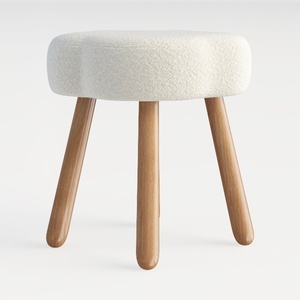
Minimalist Boucle Wooden Ottoman 3D Model

Modern Contemporary Tufted Brown Leather Metal Armchair 3D Model
Discover your inner designer with Homestyler! This exceptional online platform offers an intuitive design tool, stunning 3D renderings, and a wealth of design projects and DIY video tutorials. Whether you’re a novice or a seasoned pro, Homestyler empowers you to transform your space effortlessly. Get started today!
Дизайн сейчас бесплатно
































