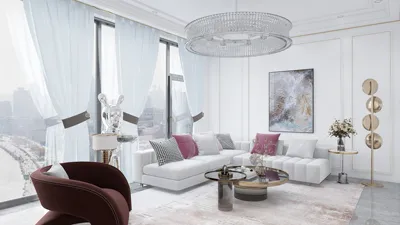


Having transformed numerous compact spaces while adhering to strict budgets, I've found that the most gratifying outcomes often arise when costs are kept below $1,000. The secret lies in establishing disciplined priorities: prioritize functionality first, then incorporate layers of light, color, and materials that enhance perception and comfort. One effective way to visualize and plan these designs is by utilizing Homestyler, a versatile tool for interior layout planning.
Two guiding principles shape my decision-making process. Firstly, the quality of lighting has a strong link to comfort and the perceived spaciousness of a room; the Illuminating Engineering Society (IES) suggests 300–500 lux for living spaces and 500 lux specifically for task areas like kitchens and desks. Secondly, the use of color and contrast can significantly impact the feeling of space; studies compiled by Verywell Mind highlight that lighter shades and cool hues tend to recede visually, creating a sense of increased size and tranquility. Sticking to these key data points allows for a budget-conscious focus on changes that yield the greatest impact.
When tackling smaller projects, my initial approach often involves revisiting the room layout to enhance movement and storage options before making any purchases. For a quick way to experiment with furniture arrangements and sightlines—and to avoid expensive errors—homestyling tools can be incredibly useful. A brief simulation often saves a significant amount on unwanted returns, sometimes as much as $200.
Focus on the Key Elements: Layout, Light, and Color
Changes in layout are cost-free but can yield a 10–20% increase in usable space if you move furniture away from the walls, establish clear traffic paths (30–36 inches recommended), and stack functions vertically. I recommend keeping storage units at least 72 inches high to maximize floor space for movement.
Light serves as another crucial enhancer. Aim for a layered lighting setup: ambient light at 300–500 lux, task lighting hitting 500 lux at surfaces, and accent lighting around 150–300 lux to add depth. Use 2700–3000K in living and sleeping areas, and 3000–3500K in kitchens and studies, ensuring a Color Rendering Index (CRI) of at least 90 for precise color representation. Often, three strategically placed plug-in fixtures can outperform a single overhead light.
Color establishes the room's atmosphere. Low-contrast, low-saturation color schemes can visually expand a room; it’s best to keep walls and large furniture pieces in colors that are one to two shades apart. For those who desire a more vibrant mood, introduce bolder colors in smaller accent pieces to maintain an airy visual volume. Adding a gloss finish of 20-30 units on trim can reflect more light without causing glare.
Budget Framework: Strategies for a $1,000 Room Upgrade
For the majority of cozy spaces, I break down expenses to ensure performance is protected:
This budget allocation typically covers a room of approximately 120–180 square feet with durable improvements that won’t need replacement within a year.
Small Living Room: Cohesive and Airy for Under $1,000
Begin by floating the seating at least 6–8 inches from the walls to create an inviting shadow gap that allows the perimeter to appear larger. If a sofa is already in place, consider replacing bulky side tables with a single C-table. Adding a 5x8 or 6x9 rug will create a visual anchor; ensure it extends at least 24 inches beyond the coffee table to enhance sightlines.
Lighting: Integrate two plug-in sconces positioned at 60–64 inches height on either side of the sofa, along with a floor arc lamp for layered lighting. Maintain a color temperature between 2700–3000K and opt for dimmable controls. If reading is a key activity, make sure there’s 500 lux available at the seat with a focused task lamp.
Color and materials: Paint walls in a light neutral shade and select a slightly cooler tone for the ceiling to elevate the visual height. A 28–34 inch round mirror opposite a window can help double the natural light. Combine two textures—such as a nubby weave and smooth cotton—to maintain visual appeal without adding clutter.
Expected expenditures: approximately $280–$380 for lighting, $180–$250 for a rug, $60–$120 for paint and repairs, $80–$150 for mirror/art, and $120–$200 for shelves or a narrow media console. Total cost is roughly $800–$1,000.
Studio or Bedroom: Organized and Serene with Ample Storage
Sleep areas benefit from calm, cool surfaces and minimized glare. According to WELL v2 guidelines, mitigating glare is essential for comfort; I prefer opaque curtains paired with sheer ones for optimal daylight control and privacy. Position bedside lighting at 2700K and utilize low-profile shades to prevent intrusive glare.
Zoning: A curtain that is 60–72 inches wide or an open shelving unit can serve as a semi-permeable divider between the bed and desk while ensuring a 30-inch pathway remains clear. A headboard with shelving offers extra storage, and under-bed bins can recover 12–18 cubic feet of wasted space.
Color Palette: Soft low-contrast neutrals with a single muted accent (like sage or slate blue) can decrease cognitive overload—this echoes insights from color psychology highlighted by Verywell Mind. Limit shiny metals to small accent pieces, as matte finishes can diminish visual distractions.
Estimated costs: around $250–$350 for window coverings and associated hardware, $180–$250 for lighting, $120–$180 for storage, $60–$120 for paint, and $80–$120 for linens or a standout art piece.
Compact Kitchenette or Dining Corner: Prioritizing Functionality
Effective task lighting is crucial at work surfaces; aim for 500 lux on countertops using plug-in LED bars with a color temperature between 3000–3500K. Position lights near the front of cabinets to eliminate scallops and shadows. Switching mismatched hardware to a cohesive finish can enhance the overall aesthetic.
In order to maintain flow, consider using fold-down wall tables or a 24–30 inch round café table. Limit the number of chairs to three within compact spaces; a bench against the wall can provide additional seating without cluttering the floor. Open shelving for everyday items can lessen the bulk of upper cabinets and visually widen the space—select a color palette limited to two tones plus one wood tone.
Financial outline: about $120–$200 for lighting, $120–$220 for a compact table and seating, $60–$100 for hardware, $120–$220 for shelves, and $60–$100 for paint or backsplash film.
Bathroom Revamp: Clean Lines with Enhanced Lighting
Consider replacing a wide-bezel mirror with a frameless version and adding a plug-in sconce or a brighter LED bar at 4000K for true color rendering (with a CRI of at least 90). If drilling is not an option, adhesive hooks and tension rods can provide storage solutions. Select a single accent finish—such as matte black or brushed nickel—and ensure all visible metals match.
Budget considerations: between $160–$260 for the mirror and lighting, $60–$100 for hardware and hooks, $60–$100 for textiles, and $40–$80 for paint or caulk. Aim for large-scale patterns to maintain a unified look.
Creating a Spacious Feel: Effective Visual Tricks
Safeguards for Your Budget
Maintain your budget by adhering to these practices:
Case Study: 150 sq ft Living-Dining Combination
Objective: accommodate seating for four, add storage, and enhance brightness, all within a $1,000 limit.
Decisions Made: floated loveseat 8 inches from the wall, incorporated a 6x9 rug, a 30-inch round table, two plug-in sconces, one arc lamp, shelves above the media console, and a single 32-inch mirror. The end result: circulation paths expanded to 34 inches, average ambient light increased from ~120 lux to ~350 lux at seating, and task light reached ~550 lux at the table, aligning with IES recommendations for living and task areas.
Total expenditure: $310 for lighting, $220 for the rug, $150 for the table and chairs (purchased secondhand), $120 for shelves and hardware, $70 for paint and patching, and $80 for the mirror. Final total: $950.
Frequently Asked Questions
It's best to prioritize lighting and an appropriately scaled rug first; these elements fundamentally reset both functionality and perceived size. Following this, address storage to minimize floor clutter, then tackle paint and accents last.
Yes. Utilizing layered lighting and choosing brighter vertical surfaces enhances luminance contrast and depth perception within small rooms. Following IES targets of 300–500 lux ambient light with task-specific enhancements can indeed create a more open feel without overwhelming glare.
Avoid pushing every piece against the walls. Ensure at least one item is floated and maintain a clear path of 30–36 inches to keep a room from feeling like a narrow corridor.
Not strictly necessary, but keep contrasts low. If opting for a dark wall, ensure furniture and trim maintain similar tones, and implement high-quality lighting to sustain 300+ lux in ambient spaces.
The rug should be large enough to accommodate the front legs of seating—generally, 5x8 or 6x9 sizes work well in small living areas. Rugs that are too small can visually fragment the space.
Maximize vertical space: consider wall shelves positioned above eye level, hooks on the backs of doors, and utilize under-bed bins. Reducing floor clutter enhances the perception of room size and improves traffic flow.
Employ diffused shades, indirect lighting that bounces off walls, and matte finishes on key surfaces. Lastly, ensure that task lighting is placed directly at the source for comfortable dimming of ambient lighting.
Yes, consider options like plug-in under-cabinet lights, peel-and-stick backsplash films, tension-rod pot rails, and adhesive hooks for organizing utensils and towels.
Select one light neutral for walls and replicate it on doors and trim while introducing a single muted accent through textiles to create a sense of continuity that visually enlarges the space.
Measure wall-to-wall and take note of any obstructions, then employ a room design visualization tool like Homestyler to confirm clearances before proceeding with purchases.
Aim for a CRI of at least 90 to ensure accurate color reproduction and effective material depiction, particularly in kitchens and bathrooms.
Absolutely. Incorporating a rug with a felt pad, heavy curtains, and fabric panels can help diminish reflections. Fewer hard, parallel surfaces contribute to clearer and more relaxed conversations.
Consider a wall-mounted drop-leaf desk paired with a slim task chair. Maintain a single task light set to 3000–3500K, and organize peripherals in vertical holders to maximize floor space.


Looking to transform your space? Homestyler is your go-to online home design platform! It features an easy-to-use design tool, stunning 3D renderings, a wealth of design projects, and helpful video tutorials. Unleash your creativity and bring your interior design dreams to life effortlessly!
立即免费设计
































