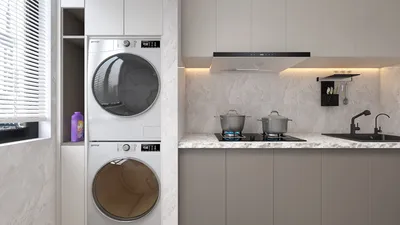


I had a client once who wanted the basement laundry area to be painted ‘bright enough to do my taxes in’ — which led me to experiment with color under the dryer light at midnight. Even small spaces can inspire significant creativity, so I'll share five effective paint ideas for your basement laundry room that work well in dim light and humid conditions. If you're interested in visualizing your layout in 3D prior to selecting paint, using a tool like Homestyler can be incredibly beneficial.
1. Crisp White with Warm Trim
Opting for white walls can greatly enhance the light reflection from bulbs, creating an illusion of openness in a confined basement. I often recommend pairing a subtle off-white with warmer trim, which helps conceal slight imperfections while maintaining a fresh feel; however, keep in mind that scuffs may be visible, so choose a finish that's easy to clean.
save pin
2. Pale Mint Ceiling, Neutral Walls
A very light mint or blue ceiling can give the impression of increased height while imparting a clean, fresh atmosphere without overwhelming the laundry machines and shelving. It’s a gentle yet uplifting choice; just ensure the ceiling is well-prepped to achieve even color application, especially if textured.
save pin
3. Accent Wall Behind Washer (Satin Finish)
Choosing one short wall for a more striking color, such as slate blue or muted terracotta, can create a lovely contrast against stainless steel appliances and laundry baskets. Applying a satin or semi-gloss finish ensures durability; if you'd like to see a design layout before making any decisions, utilizing an AI tool like Homestyler can save you countless hours in the decision-making process.
save pin
4. Two-Tone Durability: Dark Lower, Light Upper
Consider painting the lower portion of the walls in a darker, washable hue while keeping the upper sections light to visually elevate the room. This technique conceals scuff marks from baskets and detergents, striking a balance between easy maintenance and brightness. Just be sure to tape for a clean divide.
save pin
5. Semi-Gloss Utility Finish with a Patterned Stencil
For a touch of individuality, consider a neutral semi-gloss base with a repeating stencil behind the folding area — it’s a fun way to add character without fully committing to an accent color. This type of finish handles moisture well; and if you’re thinking about broader renovations like cabinets or a sink, a detail-rich mockup tool can help you adapt these designs to your laundry area.
save pin
FAQ
Q1: What paint finish is ideal for a basement laundry room?
A: A semi-gloss or satin finish is preferable since it cleans easily and holds up against moisture better than flat paints. Opt for quality paint with mildew-resistant properties if your basement tends to be humid.
Q2: Can color truly create the illusion of height in a low basement?
A: Definitely — light, cool shades on the walls combined with a subtly tinted pale ceiling can visually heighten the space. The placement of contrasting and strategic trim colors also plays a significant role in how spacious a room feels.
Q3: Should I be concerned about moisture when painting a basement laundry room?
A: Yes, it's crucial to select paints designed for high-humidity environments and to rectify any leaks or water issues prior to painting. For information on managing indoor air and moisture, refer to EPA guidelines.
Q4: Are vibrant colors unsuitable for a utility room?
A: Not in the least — a strategically placed bold hue can inject personality and purpose into the space. The secret is to limit bold colors to one wall or a smaller area, preventing them from overwhelming the functional aspects of the room.
Q5: What’s the best way to conceal stains and scuffs?
A: Implement darker tones on the lower walls or utilize durable semi-gloss finishes; washable paints are extremely helpful for combatting marks and detergent spills. You might also consider installing wainscoting or vinyl beadboard in areas that endure high contact.
Q6: What kind of lighting pairs best with my chosen paint?
A: Bright, cool LED lights (around 4000K) provide excellent task lighting and help colors appear accurately. Warm lighting can offer a cozy atmosphere but may dim perceived brightness.
Q7: Is it necessary to use a primer on basement walls?
A: Yes, especially for newly installed or patched drywall and masonry — a stain-blocking primer enhances adhesion and provides better coverage. When painting concrete or masonry, opt for a primer specifically designed for those surfaces to avoid peeling.
Q8: Any budget-friendly painting suggestions?
A: Painting is among the most impactful yet cost-effective upgrades; consider purchasing sample pots to evaluate in your unique lighting. Focus on painting just one accent wall if your budget is tight, and prioritize durable finishes as necessary while doing DIY work on trims to cut costs.
Discover the magic of home design with Homestyler! This user-friendly platform offers an intuitive online design tool, stunning 3D renderings, and a wealth of inspiring design projects. Plus, you can enhance your skills with easy-to-follow DIY video tutorials. Transform your space effortlessly!
Design Now for FREE
































