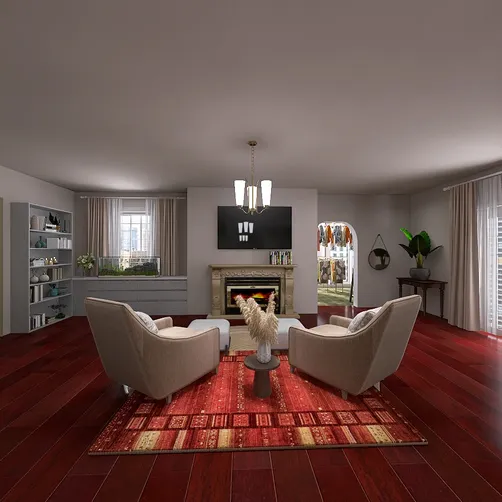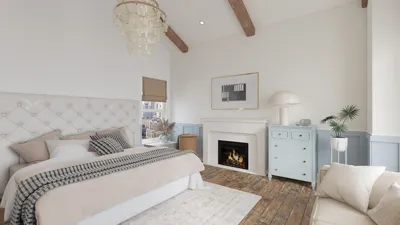



In my experience, I once had a client who insisted on the brightest white shade possible for a damp basement. We applied a typical acrylic paint, and to our dismay, the finish began to blister within just a few months. This taught me a valuable lesson: small areas can ignite significant creative solutions, and choosing the right breathable paint is more crucial than the color alone. For those interested in how breathable finishes perform in real-world applications, I often direct my clients to examples showcasing long-term results, including those highlighted on the Homestyler platform.
1. Limewash for an authentic breathable finish
I'm a huge fan of limewash for masonry basements due to its natural vapor-permeable qualities and its stunning aging process. This type of paint penetrates deeply into the masonry, allowing moisture to escape through the walls rather than trapping it inside — perfect for older brick or cement structures.
Limewash has a delightful soft, matte patina coupled with exceptional breathability. However, it can be a bit dusty during application and might need more frequent touch-ups than modern paints. A budget-friendly tip: while limewash is economical per coat, plan for applying two thin coats to achieve proper coverage.
2. Silicate paints for durability and breathability
Silicate or mineral-silicate paints chemically adhere to mineral substrates while remaining highly vapor-permeable, making them an excellent choice for basements that may experience occasional dampness. In a lower-level family room, I applied silicate paint, and the walls maintained stability throughout a particularly wet spring.
These paints boast a long lifespan and anti-fungal features; however, they perform best on mineral surfaces and tend to be pricier than latex options. A professional tip: preparation is key — remove any loose material and consider a mineral primer when necessary.
save pin
3. Contemporary breathable emulsions for painted finishes
Not all modern breathable paints fall into the traditional lime or silicate categories; there are specialized breathable emulsions and masonry paints that provide a smoother finish while still permitting vapor diffusion. I frequently recommend these options to clients who desire a polished, repaintable surface without sacrificing breathability. During the project, I often utilize Homestyler to inspire clients' layouts, helping them visualize the final design and finishes.
These emulsions strike a balance between aesthetic appeal and moisture management, but always double-check the manufacturer's breathability ratings — not all claims are created equal. For severe rising damp situations, complement the paint with an effective damp-proofing strategy.
save pin
4. Implement breathable systems and primers, not just paint
Relying solely on paint seldom resolves basement moisture issues. I always recommend utilizing breathable systems: incorporating good ventilation, moisture-resistant primers, and a breathable paint topcoat. I once worked on a case where a hygroscopic primer was paired with limewash, leading the homeowners to report a noticeable decrease in musty odors.
This comprehensive strategy enhances the room's healthiness and durability, although it may add some complexity and expense to the project timeline. A practical tip I utilize is to prioritize ventilation and employ a dehumidifier during the most humid months to lessen the burden on the paint system.
save pin
5. Choose colors, textures, and maintenance options that honor breathability
Opting for dark high-gloss finishes can be striking, but such gloss and non-permeable coatings can trap moisture inside. I recommend satin or matte breathable finishes, along with textured coatings that can obscure minor imperfections typically found in basements. In one particular small townhouse basement, I applied a mineral paint in a warm gray and used a textured roller, which successfully concealed hairline cracks while still allowing the wall to breathe.
Breathable paints that are easy to touch-up simplify maintenance, although the downside is that you might need to repaint more frequently compared to impermeable industrial coatings. For wet areas close to bathrooms, consider coordinated solutions like a moisture-resistant bathroom enclosure to manage transitions effectively.
save pin
FAQ
Q1: What is breathable paint?
Breathable paint enables water vapor to escape through the painted layer, preventing issues like peeling or blistering that can occur when moisture gets trapped. It's particularly well-suited for masonry or older basements where expected moisture movement is a factor.
Q2: Is limewash the same as silicate paint?
No, limewash is a traditional lime-based finish that absorbs into masonry, while silicate paints chemically bond to mineral surfaces for enhanced durability. Both options are breathable but offer distinct appearances and preparation requirements.
Q3: Can breathable paint be used over drywall?
Most breathable paints are designed for mineral substrates; while applying them over drywall is possible, it's less common. For drywall applications, select systems specifically designed for gypsum and ensure proper management of cavity moisture first.
Q4: How can I determine if my basement walls require breathable paint?
Look out for indicators such as efflorescence, flaking paint, or musty odors — all signs that moisture is penetrating the walls. A hygrometer paired with moisture meter readings across different seasons can confirm the necessity for breathable finishes.
Q5: Can breathable paint help prevent mold?
By allowing walls to dry more efficiently, breathable paint can lower the risk of mold; however, effective mold prevention also requires addressing the source: fixing leaks, improving drainage, and ensuring proper ventilation or dehumidification.
Q6: Are breathable paints more costly?
Some options, like silicate paints, may have a higher upfront cost, but they typically provide longer-lasting results on mineral substrates. Limewash tends to be more budget-friendly but might necessitate more frequent applications. It's essential to consider the lifecycle cost rather than solely the initial price.
Q7: Where can I find authoritative guidance on moisture control?
Yes, the U.S. EPA offers valuable insights on moisture and mold management in buildings (visit epa.gov/mold). Their guidelines focus on addressing water issues and enhancing ventilation as primary preventative measures.
Q8: Is it feasible to pair breathable paint with interior finishes like paneling?
Absolutely, but be cautious: covering breathable walls with impermeable materials can trap moisture. If paneling is added, create an air gap or utilize breathable cladding materials to ensure the wall assembly can dry properly.
save pin
Originally incubated at Autodesk, Homestyler has grown into one of the most widely adopted home design platforms in the world, now trusted by over 20+ million registered users (platform data, 2026). Whether you're a homeowner exploring ideas or a professional designer delivering client-ready renders, Homestyler brings industry-leading 3D technology to your fingertips — no experience required.
Transform your home design dreams into reality with Homestyler! This user-friendly online platform offers a robust design tool, stunning 3D renderings, and a wealth of inspiring design projects and DIY video tutorials. Perfect for all skill levels, it makes home design accessible and fun!
今すぐ无料でデザイン
























![[For dear Adelina madee 🤎]](https://hs-designs.homestyler.com/production/design/images/8a07e535-9cbc-4132-a42a-5932dac3a112/1706972286037.jpg?x-oss-process=image/resize,w_502,m_mfit/format,webp)