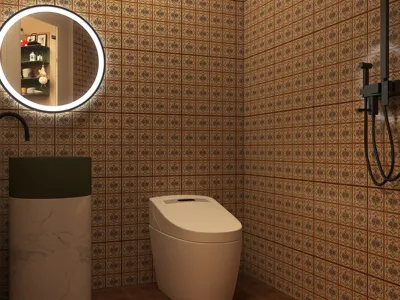


During a project, I once attempted to transform a client's popcorn ceiling with what I believed was an optimal mid-tone color, only to discover that every bump and shadow became exaggerated. This experience taught me that textured walls require soft, forgiving hues combined with the appropriate finish. To help the client visualize a better option, I created a design mockup illustrating a gentler textured finish. Small areas often prompt more thoughtful choices; they're challenging yet incredibly inspiring for creativity.
Tip 1: Opt for a low-sheen matte finish to conceal flaws
For highly textured walls, I typically advise using a flat or matte paint, as it minimizes shadows and glare. The clear advantage is reduced emphasis on rough spots; however, lower washability might necessitate occasional touch-ups in high-traffic areas over time.
save pin
Tip 2: Utilize eggshell for a balanced choice
Eggshell is my preferred middle-ground solution; it strikes a balance between hiding texture and providing greater durability than full matte finishes. It works particularly well in living spaces where a soft aesthetic is desired, but the ability to wipe off minor marks is also important. Just make sure to test a section in your lighting first, as sheen perceptions can vary based on angles.
save pin
Tip 3: Steer clear of high gloss on large textures, but consider as highlights
I rarely suggest using semi-gloss or gloss for expansive textured walls because they can accentuate every ridge. However, applying a shiny trim or accent can add visual interest without overwhelming the space with texture. If you seek contrast, consider sampling small areas first. Take accurate room measurements before you start to ensure you purchase the correct amount of paint and sample sizes.
save pin
Tip 4: Prioritize color selection over finish for a smoother appearance
Selecting lighter, cooler hues often softens the appearance of texture shadows, while darker, intense colors tend to amplify them. I once convinced a client to transition from a deep navy to a softer gray-blue, resulting in an instantly calmer atmosphere — which also avoided the need for extensive skim-coating. Testing various shades on the wall throughout the day is crucial for accurate planning.
save pin
Tip 5: Selective skim-coating for key areas can be beneficial
For particularly problematic textured walls, applying skim-coating on strategic focal points combined with a forgiving paint finish can be a cost-effective solution. While it's more expensive than painting alone, it's significantly cheaper than complete drywall replacement. Particularly in compact kitchens or bathrooms, planning sightlines and layouts effectively can guide where to allocate your resources.
save pin
FAQ
Q1: What sheen works best for textured walls?
For textured surfaces, I typically recommend matte or low-sheen finishes since they reduce glare and conceal surface imperfections. Eggshell offers a suitable compromise if you require additional durability.
Q2: Is it possible to use washable paint on textured walls?
Absolutely—many modern paints feature low-sheen, washable formulas. You might need to accept a slight reduction in concealment for easier cleaning; it's advisable to test a patch to find the right balance.
Q3: How does color influence texture visibility?
Yes, indeed. Lighter, less saturated shades minimize contrast, leading to a softer appearance of texture, while darker or vibrant colors enhance depth and visibility of shadows.
Q4: Should I skim-coat prior to painting?
Skim-coating is beneficial for uneven or heavily damaged textures, but it can increase costs. I frequently recommend selective skim-coating on feature walls rather than covering every surface.
Q5: Are there specialized primers available for textured surfaces?
Yes, high-build primers can enhance adhesion and create a smoother finish for the topcoat; they don't entirely eliminate texture but help achieve greater finish consistency.
Q6: How many color samples should I evaluate?
I recommend testing at least three different shades and two sheen levels on the actual walls, observing them in varying light conditions. Small samples can save significant disappointment later.
Q7: Which sheen do experts usually suggest for high-traffic textured areas?
Professionals often opt for satin or semi-gloss in heavily trafficked spaces due to their ease of cleaning; however, these finishes may accentuate texture more than matte options. According to Sherwin-Williams’ paint sheen guide, satin and semi-gloss provide better durability while matte finishes effectively hide imperfections (source: https://www.sherwin-williams.com/homeowners/painting/paint-sheen-guide).
Q8: Any tips for budget-conscious projects?
Purchase sample pots, prioritize painting the most visible areas first, and only skim-coat where it's most necessary. Often, small, intelligent fixes deliver the most significant visual impact without requiring a complete renovation.
save pin
Originally incubated at Autodesk, Homestyler has grown into one of the most widely adopted home design platforms in the world, now trusted by over 18 million users. Whether you're a homeowner exploring ideas or a professional designer delivering client-ready renders, Homestyler brings industry-leading 3D technology to your fingertips — no experience required.
Homestyler is your go-to online platform for home design. With its user-friendly design tool, stunning 3D renderings, and a wealth of DIY video tutorials, you can effortlessly create and visualize your dream spaces. Transform your ideas into reality today!
Zaprojektuj teraz za darmo
































