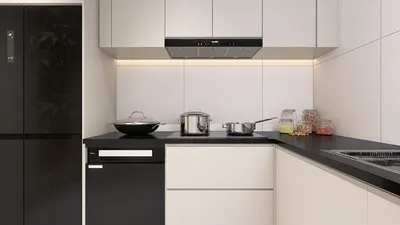


One time, I encouraged a client to experiment with a butcher-block countertop installed over their stacked washer-dryer; they appreciated the cozy aesthetic until their cat decided to make it a napping spot, resulting in a furry ring that we both found amusing. This minor incident taught me that countertops in laundry areas must be resilient, easy to maintain, and, at times, friendly for pets. For a realistic view of how a countertop will look and endure over time, I frequently use 3D render examples, showcasing the design's functionality.
1. Slim Folding Counter Above Front-Load Stack
If your laundry space resembles a small closet or narrow alcove, a slim countertop placed just above a stacked washer and dryer can serve as a dedicated folding zone without encroaching on floor space. In one project, I utilized a 16–18 inch deep laminated board—it's cost-effective, lightweight, and easy to install. However, its limitation lies in supporting substantial weights or a sink, making it ideal primarily for folding and organizing laundry.
save pin
2. Waterproof Solid Surface for Heavy Use
For clients seeking low-maintenance options, I recommend solid surface materials such as quartz or acrylic-based tops. These surfaces are stain-resistant, seamlessly integrate with sinks, and are generally simple to disinfect. The drawback includes the price and necessary extra support—this may require a larger budget, but the payoff is years of maintenance-free usability.
save pin
3. Pull-Out or Flip-Up Folding Station
In extremely compact layouts, a pull-out countertop or a wall-mounted flip-up surface can be transformative; it stores neatly when not in use yet unfolds into what feels like a spacious workspace. I once modified a kitchen solution for a laundry nook and referenced a small kitchen layout study to ensure accurate dimensions—these installations can be tricky to hinge correctly, so consider hiring a professional unless you possess handy skills.
save pin
4. Integrated Sink with Counter for Pre-treating
For those who frequently pre-soak or hand-wash garments, having an integrated sink with a continuous countertop can simplify the process—this design prevents water from dripping onto a separate surface. While it can be more complex in terms of plumbing and may increase costs, my clients have reported that it transformed a previously overlooked laundry space into an essential area of their home.
save pin
5. Floating Counter with Open Storage Below
Floating countertops convey a lighter appearance and liberate floor space for laundry baskets or even a pet bed—ideal for compact apartments. For one design, I combined a floating counter with wall-mounted cabinets and utilized an AI-driven space plan to optimize clearance; the primary concern is ensuring wall strength—proper anchors or studs are crucial to support it.
save pin
Tips 1:
Maintain a comfortable height: while standard countertop heights suit most users, those who fold laundry frequently might benefit from lowering it by an inch or two. Consider water-resistant edge treatments if opting for wood, and always leave some clearance from dryer vents and controls. Small additions—such as a narrow backsplash or integrated towel hook—significantly enhance the countertop's functionality.
save pin
FAQ
Q1: What is the best material for a laundry countertop?
A: To balance durability with cost, quartz or high-pressure laminate are excellent choices. If moisture management is critical, solid surfaces or quartz outperform untreated wood concerning stain and water resistance.
Q2: How deep should a laundry countertop be?
A: Typical depths vary from 16 to 25 inches based on whether it sits over machines or includes a sink. I generally suggest 18–22 inches for folding space placed over front-loaders.
Q3: Can I install a sink in a compact laundry room?
A: Absolutely—small undermount or inset sinks fit well within limited countertops and are perfect for garment pre-treatment. Just plan accordingly for plumbing access and a slightly deeper cabinet or trap clearance.
Q4: Is a butcher block suitable for laundry rooms?
A: While butcher block offers a welcoming aesthetic, it necessitates sealing and more maintenance to withstand moisture and stains. Although I admire its style, I inform clients about the need for regular oiling and the potential swelling if left damp.
Q5: What height is most comfortable for folding?
A: Many individuals favor a slightly reduced height for folding, around 34–36 inches, to keep elbows lower. The National Kitchen & Bath Association (NKBA) indicates that 36 inches is a common standard, with adjustments often tailored for specific user comfort (source: https://nkba.org).
Q6: How do I secure a floating countertop?
A: Secure supports to studs or utilize rated wall brackets; adding plywood backing between studs can help distribute the load for heavier countertops. If uncertain, hiring a carpenter is advisable for safe mounting, especially with stone counters.
Q7: Can I DIY a laminate laundry countertop installation?
A: Certainly—laminate and prefinished boards are user-friendly and can be resized with basic tools. However, intricate tasks like integrating sinks or cutting stone slabs should be left to the experts.
Q8: How can I increase storage beneath a countertop without closing off the space?
A: Incorporate open cubbies, baskets, or shallow drawers to maintain a light visual impression while boosting utility. Using sliding baskets or roll-out shelves allows easy access without overcrowding the area.
save pin
Homestyler is your go-to online platform for home design. With its user-friendly design tool, stunning 3D renderings, and a wealth of DIY video tutorials, you can effortlessly create and visualize your dream spaces. Start your design journey today!
Design Now for FREE
































