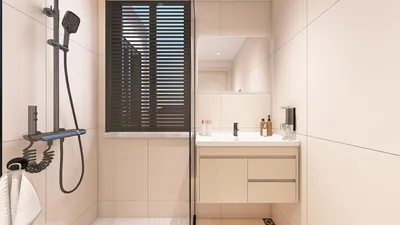


I once decided on a stunning matte paint for a bathroom ceiling, but a week later, the homeowner reached out to me: the ceiling was peeling like it had been sunburned. I realized I had neglected to consider the continuous steam from long showers — a rookie error that taught me to prioritize moisture management in my designs. In compact spaces such as bathrooms, it's essential to think both practically and creatively, and selecting the right ceiling paint can transform a small room, making it feel fresher and more expansive.
1. Opt for a moisture-resistant flat finish
In bathroom spaces, I typically select flat or low-sheen paints that are explicitly designated as moisture- or mildew-resistant. This type hides minor imperfections effectively, maintaining a smooth appearance on the ceiling. However, the downside is that completely flat paints can be more challenging to clean, so they are best suited for areas with controlled ventilation or where the ceiling is high out of reach.
save pin
2. Choose semi-gloss for areas with high humidity
I frequently rely on semi-gloss paints in bathrooms that lack natural light or where the extraction fan is ineffective — these paints repel water and are easy to clean. They also enhance light reflection, brightening up a bathroom with low ceilings, though the added sheen could accentuate any uneven surfaces.
save pin
3. Consider satin for a balanced aesthetic
Satin finishes strike a nice balance: they are more washable than flat options yet less shiny than semi-gloss. I’ve used satin on ceilings where clients desired a subtle radiance without causing glare. The trade-off is that there’s slightly less moisture resistance compared to semi-gloss, so it’s advisable to ensure adequate ventilation.
save pin
4. Select paints with built-in mildewcide
Many bathroom ceiling paints are formulated with mildewcide or anti-mold components — I recommended these for a small rental bathroom and saw a reduction in staining over two years. While they may be pricier, they prevent persistent mold growth and reduce the need for repainting down the line. Remember: although these additives are helpful, they cannot substitute for proper exhaust systems.
save pin
5. Light colors for enhancing visual height
I often suggest keeping the ceiling white or in very soft hues to create an illusion of lift within the room. A slightly warmer white can avoid the overly sterile look of extremely cool whites. The challenge lies in selecting a white that harmonizes with the wall color — I always test color swatches under different lighting conditions, particularly at night and during shower steam, to assess their behavior.
If you want to quickly visualize various ceiling colors and finishes, consider using the 3D floor planner feature of Homestyler to see how light and sheen can alter the mood. This tool assisted one couple in selecting a satin warm white that looked perfect under all lighting conditions.
save pin
FAQ
Q: What is the best paint finish for a bathroom ceiling?
A: Semi-gloss or satin with moisture-resistant features are considered the best options; semi-gloss is the easiest to clean, while satin provides a good balance of sheen and washability.
Q: Can I use standard interior paint on a bathroom ceiling?
A: Yes, but conventional paints may not offer mildew resistance; it’s best to choose a product that is specifically labeled for bathrooms or high-humidity environments for improved durability.
Q: How crucial is ventilation compared to paint quality?
A: Proper ventilation is vital — even the highest quality paint cannot prevent mold if the humidity levels remain elevated. It's important to combine good paint with an efficient exhaust fan for lasting results.
Q: Should bathroom ceilings always be painted white?
A: Not necessarily, though white or light tones can visually elevate the ceiling. Darker colors can be effective in well-ventilated, high-ceiling bathrooms but might make smaller spaces feel confined.
Q: How frequently should bathroom ceilings be repainted?
A: With the right paint and ventilation, you can expect a lifespan of 5 to 7 years; areas with high moisture may require touch-ups sooner.
Q: Are there environmentally friendly options for bathroom paints?
A: Absolutely — many low-VOC or zero-VOC paints are designed for bathroom use; be sure to check product specifications for mildew resistance.
Q: Do additives that resist mildew really make a significant impact?
A: They can help minimize mold growth but should not replace moisture management; for expert guidance, refer to EPA recommendations on mold prevention: https://www.epa.gov/mold.
Q: Is it advisable to use textured ceilings in bathrooms?
A: Textured surfaces can conceal flaws but may trap moisture and are more difficult to clean; I generally avoid heavy textures in small, humid bathrooms unless there is excellent ventilation.
save pin
Homestyler is your go-to online home design platform! With its user-friendly design tool, stunning 3D renderings, and a wealth of design projects and DIY video tutorials, you can effortlessly transform your home into a masterpiece. Start creating your dream space today!
Zaprojektuj teraz za darmo
































