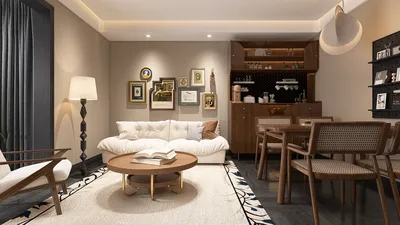


I once took on a quirky request from a client: "Transform my living room to feel like a café, but keep it under $800." Although it made me chuckle, this challenge revealed how working with limited budgets can ignite creativity. Small spaces often fuel inventive solutions, especially when searching for affordable living room furniture sets.
In this article, I will share five practical design inspirations drawn from real projects, blending budget-friendly sourcing, intelligent layouts, and styling techniques. This way, a low-cost furniture living room set can still appear intentional and welcoming, thanks to the right tools, such as Homestyler.
1. Modular Sofa + Multi-use Coffee Table
I have a fondness for modular sofas because they adapt to your needs: start with an inexpensive two-seater and later add a chaise lounge. Pair this with a coffee table that offers storage or adjusts to dining height. This combination provides both flexibility and long-term savings. However, some budget modules may feel flimsy or creaky, so it’s wise to test their sturdiness before making a purchase.
save pin
2. Slim Profile Media Wall
Create storage without excess bulk by using a floating TV shelf and a narrow console. I’ve crafted this look using budget-friendly flat-pack furniture and a touch of DIY painting to match the room's style. This approach enhances the appearance of a low-cost living room set, although managing hidden cables can be tricky if you're not comfortable with basic wiring tasks.
save pin
3. Secondhand Accent Pieces with New Soft Furnishings
Regular visits to thrift stores help me find sturdy chairs and tables, which I then personalize with new cushions or slipcovers. This method keeps expenses low while adding unique charm to the space. The trade-off, though, is the time investment: refinishing or reupholstering requires patience, but the final results are often far superior to standard cheap sets.
save pin
4. Light Colors and Reflective Surfaces
Utilizing paint, mirrors, and an affordable glass-top table can visually enlarge a small living room. In a budget studio project, I implemented this strategy to give an airy feel to a low-cost sofa set. The catch? Light colors and glass surfaces need frequent cleaning, but they significantly enhance the overall aesthetic.
save pin
5. Zone with Rugs and Open Shelving
Utilize rugs and open shelving as dividers to define seating and reading areas. Affordable rugs combined with versatile shelving systems can create an intricate look, even in a low-budget furniture living room setting. Just be cautious; if decor isn’t regularly curated, the space might appear cluttered.
Limited budgets compel resourcefulness: blend newly acquired inexpensive furniture with thrifted finds, focus on comfort in often-used seating, and enhance the rest of the decor with paint and textiles. For those wanting to visualize layouts before making purchases, I occasionally use quick floor plans to experiment with sofa placements and traffic flow—this simple step helps avoid costly mistakes. For instance, using a reliable room planner like Homestyler, I can swiftly visualize different seating arrangements.
save pin
Tips 1:
Budgeting tips: allocate approximately 60% for seating (sofa plus a crucial chair), 20% for surfaces (coffee table, side table), and 20% for textiles and decor. A practical recommendation is to purchase removable cushion covers; this allows you to refresh the decor affordably every few years. If interested in laying out options for a compact living room, check out a free floor plan creator for rapid designs.
save pin
FAQ
Q1: What is the best budget-friendly sofa type for small living rooms?
A1: A compact modular or apartment-sized sofa with a reversible chaise provides versatility and fits snugly into smaller spaces. Always measure entryways before buying to avoid delivery issues.
Q2: How can I make cheap furniture look expensive?
A2: Implement a cohesive color scheme, incorporate quality textiles like textured rugs and cushions, and add one standout piece—such as a vintage lamp—to elevate the overall set.
Q3: Where should I prioritize spending in a cheap living room set?
A3: Invest most in your primary seating (the sofa) for comfort and durability; you can save on accent tables and decor items, which are typically easier to replace.
Q4: Are slipcovers a good idea for budget sofas?
A4: Definitely—slipcovers safeguard and refresh inexpensive sofas, simplifying maintenance and extending their lifespan.
Q5: How do I choose the right rug size for a small living room?
A5: Ideally, ensure the front legs of your main seating sit on the rug; in tight spaces, consider runner-style or smaller rugs that can unify the seating area.
Q6: Can I rely on secondhand furniture for a modern look?
A6: Absolutely! Many sturdy vintage frames can be easily reupholstered. Just verify their structural integrity before making a purchase.
Q7: Is it worth hiring a designer for a cheap furniture living room set?
A7: Engaging a designer can maximize functionality and prevent expensive layout missteps; even a single consultation might prove beneficial by averting wrong purchases.
Q8: Where can I find reliable tips on furniture sizing and planning?
A8: For trustworthy insights into furniture dimensions and ergonomics, refer to resources from the American Institute of Architects or reputable interior design textbooks—AIA publications are particularly valuable.
Homestyler is your go-to platform for transforming your home design dreams into reality. With an easy-to-use online design tool, impressive 3D rendering features, and a wealth of DIY video tutorials, you can create stunning interiors effortlessly—perfect for both novices and seasoned designers!
今すぐ无料でデザイン
































