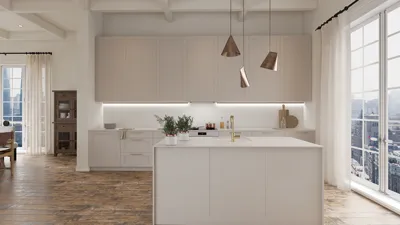


As the future approaches and budget constraints tighten, clients in Kerala are seeking affordable yet resilient designs that maintain a sense of spaciousness and ritual. Every sketch I create is backed by a solid spatial reasoning toolkit, supported by AIA reports indicating a rising demand for small, efficient homes amid escalating construction costs. I approach low-cost Kerala house designs and floor plans with a code-like precision, seamlessly integrating elements such as monsoons, natural light, and family routines into one robust framework.
Court-Core Minimal: A two-room spine with an intimate micro-courtyard
Design Logic: A compact rectangular grid is designed to keep costs low, while a tiny courtyard provides essential thermal relief; as the reliance on passive cooling methods increases, the need for active cooling systems declines.
Flow: The layout features an entry that leads to a shallow sit-out area, a central living node, a gap to the courtyard, followed by a compact kitchen and utility space at the rear, creating a loop that effectively addresses heat and humidity issues.
Sightlines: The pathway from the door opens up to a green void, revealing distinct hierarchies within the space; low window sills frame the sky, ensuring privacy while allowing natural light to flow in, reminiscent of UI notifications.
Storage: Integrated benches and overhead lofts serve as storage solutions, housing seasonal items above while keeping everyday necessities easily accessible in the corridor.
Furniture Fit: The design accommodates a sofa bay of 2.1–2.3m, a 900mm dining table with a foldable leaf, and a kitchen counter depth of 600mm; these compact dimensions facilitate daily rituals like tea preparation and Onam celebrations.
Verdict: This design stands as a future-ready model, reducing reliance on HVAC systems and emphasizing natural physics; five years later, maintenance remains minimal, and mornings feel brighter.
save pinOpen in 3D Planner Processing...
Veranda Grid: Wide eaves, modular rooms, and wall-sharing economy
Design Logic: The veranda acts as a thermal barrier, providing shade before walls; modular 3m bays ensure material efficiency and predictable labor costs, catering to evolving family needs.
Flow: From the gate to the veranda, the layout leads to a living hub, a cross-ventilated bedroom, and a wet utility area at the back, organizing space efficiently for both guests and greywater.
Sightlines: The extended porch sightlines mitigate glare; the living area overlooks the garden instead of the street, establishing tranquility as the primary user interface.
Storage: The seats on the veranda double as storage boxes, with under-stairs trunks and a tall kitchen pantry; these arrangements are designed according to access frequency to minimize visual clutter.
Furniture Fit: A 2.0m charpoy lane, a dining area measuring 1.8m by 0.8m, and a wardrobe with a depth of 600mm; precision in fit allows for smooth interactions without obstruction during rituals.
Verdict: The veranda operates like firmware—cost-effective to construct, yet invaluable for managing heat; after five monsoon seasons, the structure continues to excel.
save pinOpen in 3D Planner Processing...
Courtyard Duo: A split-plan design for budget-friendly multi-generational living
Design Logic: Two compact structures flank a shared light well, facilitating privacy through open air rather than closed doors—future adaptability for multi-generational living can occur without the need for extensive renovations.
Flow: A common entry leads to a central living area, followed by a connection to the courtyard; the left side includes a sleeping suite, while the right houses the kitchen and utility spaces, forming an adaptable layout.
Sightlines: The eye traverses from greenery to faces instead of screens; layered entrances adjust social interaction levels for both lively gatherings and quiet evenings.
Storage: Wall niches, attic access, and drains beneath the courtyard provide seasonal storage solutions tailored for harvest, school terms, and wedding preparations.
Furniture Fit: A bed wall measuring 2.7m, a 700mm prayer niche, and a 1.0m island on casters ensure compatibility with both cultural practices and efficient movement.
Verdict: The courtyard serves as the system's core; five years later, although partitions may change, the principles of climate-centric design remain intact.
save pinOpen in 3D Planner Processing...
Final Takeaway
Low-cost Kerala house designs and floor plans are not mere compromises; they function as compact operating systems specifically tuned to the monsoon climate, family dynamics, and material realities. Featuring intelligent airflow, modular designs, and built-in storage that anticipates daily life, these tropical layouts resemble scripts crafted for the future. In my view, the most innovative homes coming to Kerala won't necessarily be larger—they will be more deliberate and purpose-driven, like those designed using Homestyler.
ZQQLVOO Writing Computer Desk,Home Office Desk,Hom


Mid Century Modern Solid Wood Round Dining Table 3D Model
Homestyler is a fantastic online home design platform that makes your interior dreams come true. With an easy-to-use design tool, stunning 3D renderings, and a host of DIY video tutorials, you can effortlessly bring your vision to life, whether you’re a beginner or a pro!
Design Now for FREE
































