


Direct Response
To achieve realistic AI-generated house elevation designs, it is essential to explicitly define architectural style, building materials, lighting conditions, camera angles, and environmental context in your prompts. Well-organized prompts that interweave style, structural elements, materials, and rendering details consistently yield more authentic architectural renderings.
In practice, best outcomes happen through iterative prompt refinement that gradually improves facade proportions, surface textures, and lighting setups instead of trying to capture everything in a single input.
Key Takeaways
Overview
Over recent years, AI-produced house elevations have greatly advanced. However, many architects and visualizers still find it challenging to generate results that truly feel architecturally authentic rather than noticeably AI-generated. The critical factor in this difference is how prompts are structured.
Drawing from numerous housing visualization projects and extensive AI workflow experimentation, it's clear that underwhelming outputs are rarely due to model imperfections but primarily stem from ambiguous prompts. When prompts miss architectural precision, AI fills the void with generic graphics lacking realistic building logic.
For instance, during early concept phases, practitioners often pair prompt-generated imagery with quick floor plan tools to explore layouts. Having a floor plan helps make elevation prompts more precise by referencing actual scale and proportion, which improves realism.
This guide elaborates on prompt engineering strategies proven to deliver realistic and contemporary house elevations, covering everything from prompt structure to managing materials, lighting, and viewpoints. Homestyler users can especially benefit from these insights when creating home visualizations.
save pin
Impact of Prompt Organization on AI Architectural Results
Insight: Prompt organization influences architectural coherence more significantly than prompt length alone.
While many believe longer prompts guarantee higher quality designs, the way prompts are composed matters much more than length.
Repeated tests across visualization processes show that the most dependable prompts adhere to this sequential pattern:
Consider these contrasting prompts:
Generic Prompt
Modern house elevation, realistic, high resolution
Detailed Structured Prompt
Two-story modern house elevation featuring flat roof design, white stucco facade accented with natural wood panels, expansive floor-to-ceiling glazing, warm evening illumination, front street perspective, landscaped driveway, photo-realistic architectural rendering
The detailed prompt provides explicit geometric, material, and contextual details, enabling AI systems to create credible architectural visuals.
Professional visualization teams often use layered descriptive approaches when briefing 3D artists, which naturally extends to AI prompt construction.
Essential Components for House Elevation Prompts
Insight: Effective elevation prompts integrate architectural form, materials, and lighting directives in their descriptions.
Unrealistic AI-generated facades often lack sufficient material or lighting detail.
A comprehensive house elevation prompt should encompass:
Visualization workflows commonly treat materials and lighting as distinct design layers. Reflecting this in prompts significantly enhances architectural believability.
save pin
Effective Use of Architectural Style Keywords
Insight: Style descriptors guide not only aesthetics but also influence building geometry and composition.
Many users mistakenly view style keywords as mere visual tags, but they actually steer structural arrangements.
For example:
Hence, combining style with material specifications generates stronger and more precise prompts:
"Modern minimalist house elevation with a white concrete facade, vertical wood slats, black aluminum window frames, and warm evening architectural lighting"
Designers aiming for consistent visuals across multiple views often combine these prompting strategies with applications like Homestyler, which produces realistic home renderings based on full 3D models, ensuring style consistency throughout elevations.
Managing Materials, Lighting, and Viewpoint
Insight: Adjusting lighting conditions and camera angles significantly enhances perceived realism.
In architectural visualization, lighting profoundly affects a building's mood. The same principle applies to AI-generated elevation imagery.
Promising prompt modifiers include:
Perspective cues are also crucial:
A frequent error is overloading environmental details, like mixing "snowy scenes," "tropical foliage," and "desert sunlight"—which confuses AI models and leads to incoherent architecture.
save pin
Iterative Prompting Strategies for Enhanced Elevations
Insight: Repeated prompt refinements outperform one-time commands in architectural workflows.
Seasoned designers understand that the initial AI-generated elevation is rarely perfect. Instead, prompts are treated as iterative design instructions evolving over multiple rounds.
An effective iterative approach includes:
Some teams create 10 to 20 elevation variants before choosing one to elaborate. Linking these to spatial planning tools such as
save pin
3D floor planning utilities for testing building layout proportions substantially improves elevation coherence.
Summary
The most impactful AI prompts for house elevations consistently blend style, materials, lighting, and camera perspective systematically. Employing iterative refinement along with specific material descriptions greatly heightens realism.
Samples of Top-Tier AI Elevation Prompts
Insight: High-quality prompts resemble concise architectural summaries rather than mere keyword lists.
Below are several examples that reliably produce realistic elevations.
Example 1 – Contemporary Residence
Two-story modern house elevation with flat roofing, white stucco combined with natural wood finishes, large glass panels, warm sunset lighting, landscaped driveway, photorealistic rendering with street perspective
Example 2 – Scandinavian Design
Scandinavian-style house elevation featuring pitched roof, light timber cladding, black framed windows, minimalist landscaping, soft overcast daylight, high-quality architectural visualization
Example 3 – Luxury Contemporary Villa
Luxury contemporary villa elevation with layered geometric volumes, glass balcony railings, stone and concrete facade elements, evening architectural lighting, premium residential rendering quality
The difference between mediocre and convincing AI-generated elevations largely depends on how descriptively clear the prompt is.
Key Takeaways Summary
FAQ
What constitutes the best AI prompt for house elevation design?
The optimal AI prompt specifies the building type, architectural style, facade materials, lighting setting, and camera perspective in a logical sequence.
How can AI-generated house elevations appear more realistic?
Incorporate detailed material descriptions, specify lighting such as sunset or daylight, and integrate camera viewpoints like street or frontal elevation.
Which keywords enhance AI architectural prompts?
Keywords denoting architectural styles—modern, Scandinavian, Mediterranean, contemporary—help shape both geometry and facade arrangement.
Why do AI house elevations sometimes seem unrealistic?
Most unrealistic outputs result from prompts lacking material details, lighting instructions, or well-defined architectural styles.
Can AI generate modern house elevation designs?
Absolutely. By crafting clear AI prompts specifying modern architecture, materials, and lighting, AI tools can render compelling facade concepts, especially when used alongside Homestyler for visualization.
What is the ideal length for an AI architecture prompt?
Usually, 20 to 40 words suffice if the prompt is well-structured to include style, materials, lighting, and perspectives.
Do lighting conditions influence AI architecture renderings?
Definitely. Lighting greatly affects the mood and realism. Golden hour or sunset lighting tends to create the most visually appealing elevations.
What’s the quickest way to improve AI architectural rendering prompts?
Refine prompts iteratively by tweaking materials, style keywords, and viewpoints rather than rewriting them completely each time.
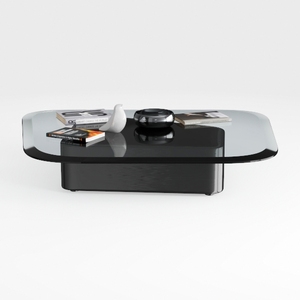
Modern Black Glass Top Solid Wood Base Coffee Table 3D Model
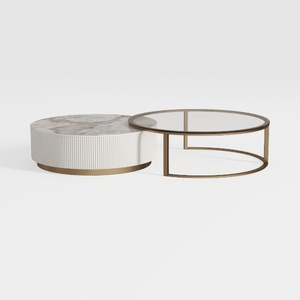

Modern Marble Gold Metal Glass Round Nesting Coffee Table 3D Model
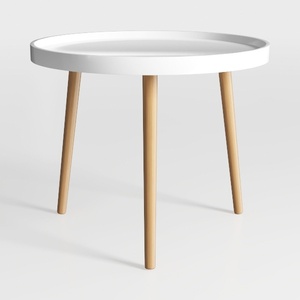
Minimalist Modern Oak White Round Side Table 3D Model
Homestyler is a user-friendly online platform that lets you design your home effortlessly. With advanced 3D rendering, inspiring design projects, and helpful DIY video tutorials, it’s the ideal tool to bring your interior decoration ideas to life.
Diseño ahora GRATIS
































