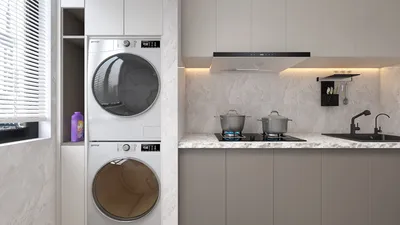


I appreciate the vibrant atmosphere of open-concept homes, but when the living area merges into the kitchen without clear boundaries, it can often feel disorganized. Introducing purposeful partitions—whether fixed or adjustable—can effectively define spaces, guide movement, and enhance comfort, all while maintaining the sociable essence of your home. Utilizing tools like Homestyler can assist in visualizing these changes during planning.
Research consistently supports the significance of well-defined zones in living spaces. According to Steelcase studies, having diverse spatial arrangements leads to increased perceived control and overall satisfaction—a finding that directly applies to home layouts. Distinct activity areas can help minimize cognitive overload and visual chaos. From an efficiency perspective, the WELL v2 guidelines stress the need for acoustic separation and glare management to foster comfort, highlighting the importance of clear distinctions between cooking, dining, and relaxation areas (refer to WELL v2 Feature L03 Light and Feature S01 Sound). Moreover, insights from Verywell Mind suggest that specific colors, such as warm shades like terracotta or muted gold, can enhance social interactions, while cooler tones like sage or slate blue promote tranquility—elements to consider when designing adjacent zones.
Lighting guidelines provide additional insight on how to optimize your spaces. The IES suggests that kitchens should have task lighting at higher illumination levels, typically around 500 lux for preparation areas, while living rooms are more comfortable with lighting levels ranging from 100 to 300 lux through layered ambient sources. Ensuring a balance across partition lines not only enhances safety in areas like the cooktop but also maintains a cozy atmosphere around seating arrangements. When designing furniture layouts or half-height dividers, using an interior layout tool like Homestyler can aid in testing circulation patterns and sightlines effectively.
Zoning Without Walls: Effective Visual Cues
Begin with flooring transitions to create subtle boundaries. For instance, a kitchen finished in large-format porcelain with a gentle matte texture can seamlessly flow into a living space featuring oiled oak planks. This contrast not only serves as a soft divider but also enhances functionality—wood adds warmth and sound absorption, while tile is durable and easy to maintain. Aim for clean thresholds and consistent trims to avoid tripping hazards and ensure visual harmony.
Half-Height Partitions and Storage Solutions
A pony wall measuring between 36 and 42 inches can effectively separate spaces while keeping visibility intact. Consider incorporating built-in storage for cookbooks or dinnerware on the kitchen side, and media storage for vinyl records on the living side. Ensure a circulation path of at least 36 inches; 42 inches is preferable for two-way traffic, keeping the kitchen triangle free from obstruction. Opt for high-pressure laminate for durability inside, paired with a warm wood-clad exterior.
Framed Glass and Sliding Screens as Flexibility Tools
Steel-framed glass dividers or sliding pocket screens can provide acoustic balance without hindering natural light. Utilize laminated glass with an interlayer to minimize noise and choose low-reflectance finishes to reduce glare. For adaptability, ceiling-mounted sliders can open up the space for gatherings or close off when cooking demands focus. Make sure door hardware allows sufficient clearance for major appliances and provides at least a 32-inch wide opening.
Kitchen Island: Combining Function and Flow
A kitchen island can serve as a stylish partition if it’s designed with ergonomics in mind. Positioning sinks or cooktops to face the living room allows the host to stay connected with guests. Consider human factors such as a seating overhang of 15 to 20 inches, a 24-inch width per stool, and at least 42 inches between seated guests for comfortable movement. Ensure you have adequate task lighting over the island—three pendant lights or a linear fixture—with brightness levels around 500 lux and dimmable options to shift to an ambient mode in the evening.
Utilizing Back-of-Sofa + Console Approaches
Transform the back of the living room sofa into a tactile boundary. Incorporating a console table behind it not only defines the separation between rooms but also conceals cables and provides drop zones for everyday items outside the cooking area. Keep the console height between 28 and 30 inches to visually align it with adjacent counters or pony walls, and finish the piece with sound-absorbing runners or felt pads to minimize vibrations.
Invisible Partitions Through Ceiling and Lighting Techniques
Subtle ceiling modifications can signal shifts between zones—like coffered ceilings over the living area or lowered soffits above the kitchen edges. Layering lighting to support varied activities is essential: use under-cabinet task lighting in the kitchen (3000-3500K LEDs) and ambient lighting in the living room with wall washers and floor lamps set at 2700-3000K. The WELL v2 standards recommend managing glare and offering a range of lighting options; dimmers across both areas can help adjust for evening comfort.
Cohesion Through Color Psychology
Implement a dual-palette strategy: utilize grounded neutrals throughout both spaces for a unified look, complemented by accent colors that convey purpose—warmer shades near dining areas to foster sociability, and cooler hues around lounge areas for relaxation. Verywell Mind’s color psychology insights reveal that reds and oranges can stimulate conversation and appetite, while blues and greens help alleviate stress. It's critical to maintain moderate saturation levels to avoid visual overwhelm in open-plan environments.
Promoting Acoustic Comfort & Material Choices
The hard surfaces prevalent in kitchens can reflect sound, while living areas benefit from absorbing materials. To enhance this comfort, consider adding acoustic rugs, upholstered seating with denser foam, and fabric-lined storage within partition elements. If a glass screen is included, ensure you select acoustic seals and soft-close hardware to lessen noise impact. The aim should be to achieve a 5-10 dB decrease in sound levels between the two zones during busy activity periods.
Traffic Flow, Safety, and Clear Sightlines
Design circulation paths carefully to prevent guests from crossing the cooking triangle (sink, range, fridge). Establish primary walkways at 42 inches and secondary paths at 36 inches. Keep partitions low or see-through where supervision is needed, such as watching children in the living area from the kitchen. A brief evaluation with an interior layout planner like Homestyler can effectively check furniture positioning and identify potential congestion points.
Adaptable Partitions for Compact Living Spaces
In smaller apartments, lightweight folding screens or open shelving can delineate spaces without extensive construction. Aim for a 70-80% open shelf ratio to maintain light flow. Position taller items, such as plants or art books, at eye level for visual appeal, while keeping lower shelves accessible for everyday items.
Eco-Friendly Selections
Opt for FSC-certified wood, low-VOC finishes, and enduring materials that age gracefully. Recycled aluminum frames can be ideal for sliding partitions, and ceramic tiles with substantial recycled content will enhance sustainability. Durability is integral to sustainability—choose surfaces that resist staining in cooking zones, along with textiles that have removable, washable covers for living areas.
Integrated Lighting Controls and Smart Technology
Connect kitchen task lights, living area ambient lighting, and fixtures within partitions via scene settings. A “Cook” scene should elevate task levels to about 500 lux with cooler temperatures, while an “Unwind” scene can lower brightness to around 200 lux with warmer tones. Ensure manual wall controls are straightforward and accessible to reduce dependence on mobile applications.
Enhancing the Threshold Area
Pay attention to the transition line between zones. A floating shelf for speakers, an art rail, or a narrow planter can introduce greenery while improving acoustics. Strive for a balanced vertical rhythm—alternating high and low elements so the partition feels intentional rather than abrupt.
Typical Errors to Avoid
Common pitfalls include constructing solid walls that obstruct light, creating color mismatches between kitchen and living room fixtures, and designing islands without adequate clearance. Always prototype layouts, double-check clearances, and assess potential glare from kitchen surfaces when seated on the sofa.
Frequently Asked Questions (FAQ)
A height of 36–42 inches is ideal for defining spaces, maintaining sightlines, and accommodating integrated storage without feeling overwhelming.
Kitchen task areas should aim for around 500 lux with minimal glare; living room ambiance thrives at levels between 100 to 300 lux. Implement dimmers to cater to varying needs through the day.
Laminated glass featuring acoustic seals diminishes noise better than standard options. While it won't completely silence the space, it helps to soften sounds during cooking activities.
Absolutely—if you ensure clearances are well-planned. Maintain at least 42 inches for circulation and provide sufficient task lighting. Arrange sinks or cooktops so they face social zones.
Utilize shared neutral tones with specific accents: warmer colors can be placed near dining spaces for a more social ambiance, while cooler shades can be near lounge seating for tranquility.
In the kitchen, durable tile works well paired with warmer wood in living areas. Ensure trims are flush and finishes are coordinated to prevent tripping hazards and visual disruptions.
To minimize glare, opt for matte countertops, diffuse task lighting, and anti-reflective glass, aligning with WELL v2 standards focused on visual comfort.
Within open plans, maintain about 70-80% of shelf patterns open to ensure light and sightlines are kept clear; consider introducing closed sections for enhanced acoustic and visual calm.
Not necessarily. While scenes are useful, ensure manual controls remain intuitive. Dimmer switches across both zones typically provide most benefits.
Look for FSC-certified wood, recycled aluminum framing, and low-VOC finishes. Selecting durable materials can significantly minimize replacement cycles, contributing to sustainability efforts.


Homestyler is the ultimate home design platform for anyone looking to transform their space. With its user-friendly online design tool, stunning 3D renderings, and a wealth of DIY video tutorials, you can easily create and visualize your dream home. Start designing today!
Zaprojektuj teraz za darmo
































