


Quick Insights:
Overview
Why do many guides on living room design still emphasize matching furniture sets, given our evolving lifestyles and preferences? I hold a different view: intentionally mismatched living room furniture not only disrupts monotony but also better showcases your unique identity while accommodating changing spatial needs. Unlike the typical design blog that adheres to conventional ideals, I see the living room as a dynamic environment driven by identity. As highlighted in a 2024 NAHB Home Buyer Preferences report, only 32% of young homeowners are now looking for complete matching furniture sets, favoring the idea of gradually curating individual pieces. The outdated belief that harmony equals uniformity can lead to costly and generic outcomes, whereas a more thoughtful mix-and-match approach boosts both energy and comfort. In this article, I’ll explain how combining diverse furniture pieces reveals unexpected design advantages, and why the often-overlooked downsides of set matching are worth discussing. If you want to visualize your ideas before rearranging furniture, consider using an AI Interior Design tool like Homestyler for quick layout sketches—no heavy lifting necessary. Together, let's challenge these outdated conventions!
Is Matching Living Room Furniture Still in Style for 2024?
While traditional designers often lean on matching furniture for an easy cohesive appearance, recent statistics reveal a significant shift: Searches for "mismatched sofas" and "eclectic living rooms" have surged threefold since 2022, according to Statista. Based on my experience, strict matching has become passé. Instead, integrating varied pieces captures personal history and evolving lifestyles, crafting a space that’s not only visually engaging but also emotionally meaningful.
What Are The Hidden Costs of Purchasing Complete Furniture Sets?
Breaking away from conventional wisdom, I’ve noticed that complete furniture sets come with unrecognized drawbacks: limited flexibility, higher initial expenses, and challenges in replacing single components. Over time, mismatched living room furnishings tend to be more adaptable and cost-effective. An HGTV study showed that adjusting individual pieces could save buyers up to 28% compared to replacing entire sets as their needs evolved.
How Can You Blend Furniture Styles Without Causing Chaos?
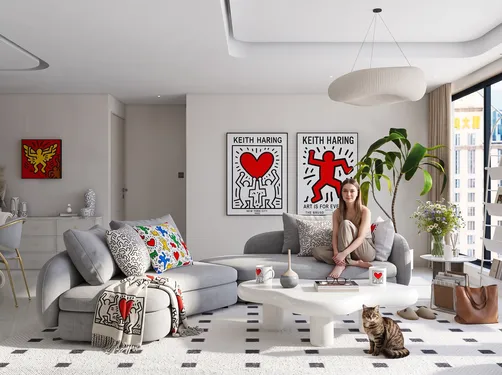
Many guides caution against "clashing aesthetics," but the reality is that layering styles—like pairing a mid-century sofa with a rustic coffee table—adds depth when they share a common color, texture, or theme. Consider selecting two or three recurrent elements, such as brass accents or blue fabrics, to create a seamless flow. Interested in seeing various style combinations? Utilize a 3D Floor Planner like Homestyler to visualize different arrangements before you make a decision.
Does Eclectic Furniture Improve Room Functionality?
While traditional arrangements may concentrate on aesthetics, I’ve discovered that mismatched living room furniture often enhances usability. For instance, replacing a uniform loveseat with two accent chairs offers more flexible seating arrangements and improved traffic flow—an insight supported by research from ArchDaily regarding adaptable living space designs.
How Can You Harmonize Diverse Pieces for a Unified Aesthetic?
Contrary to common belief, cohesion isn’t achieved through identical colors or shapes. From my designer's perspective, a room can feel unified through balanced proportions, strategic alignment, and cohesive secondary colors—regardless of the variety of furniture. Consider using area rugs, artwork, or lighting as "visual anchors" that unify the space.
Are There Risks Associated with Mixing and Matching? How Can You Mitigate Them?
However, evidence indicates that poorly planned mixtures can lead to clutter or disarray. The solution lies in mindful curation: routinely remove items that appear redundant or diminish the room’s theme. Referring to guidelines from interior designer Emily Carter on Houzz, be sure to maintain negative space to avoid overwhelm and allow each piece to shine.
What Market Opportunities Are Available for Non-Matching Furniture?
Unlike the standard sets available at big-box retailers, there lies a hidden potential in secondhand, vintage, and local artisan markets. These sources offer unique, sustainable, and budget-savvy options ideal for creating a personalized, mismatched living room. Focus on quality over quantity, or even consider upcycling your current furniture for a distinctive mix.
Does Mismatched Furniture Impact Resale Value?
While many realtors advocate for neutral, uniform spaces, NAHB research indicates that homebuyers increasingly appreciate "personality" in interior designs, particularly among younger consumers. Therefore, a well-curated eclectic living room can actually serve as an asset, provided it maintains an intentional and cohesive look rather than appearing chaotic.
Conclusion
Mismatched living room furniture boosts character, adapts to evolving requirements, and generally costs less than complete sets. By prioritizing balance, visual anchors, and flexibility, your space can feel cohesive rather than cluttered.
Frequently Asked Questions
If you’re eager to start curating your own unique space, begin with a custom living room layout—it’s easier than you might think. Unleash your creativity with tools like Homestyler and let your living room become a true reflection of who you are!
Homestyler's roots trace back to Autodesk, the global leader in design and engineering software. That heritage lives on in every feature we build. Today, with a community of more than 20+ million registered users (platform data, 2026) worldwide, Homestyler continues to make professional-quality interior design accessible to everyone — from first-time decorators to seasoned architects.
Discover the ease of home design with Homestyler! This user-friendly online platform offers a robust design tool, stunning 3D renderings, and a wealth of DIY video tutorials. Transform your space and bring your creative ideas to life effortlessly—perfect for both beginners and seasoned designers!
Progetta ora GRATIS























![[For dear Adelina madee 🤎]](https://hs-designs.homestyler.com/production/design/images/8a07e535-9cbc-4132-a42a-5932dac3a112/1706972286037.jpg?x-oss-process=image/resize,w_502,m_mfit/format,webp)