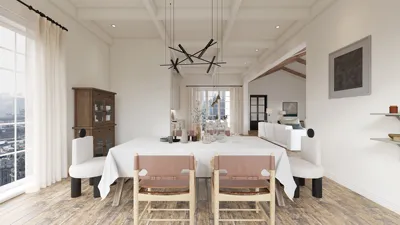


I once boasted to a client that waterproof paint could solve any issue—until I applied it on a moist basement wall without addressing a hairline crack, and watched it bubble up like a poorly made soufflé. The lesson here is clear: while paint is potent, proper preparation outweighs any miracle solution. I even recorded the transformation in a small room renovation to demonstrate how the right prep work can save both time and money.
1. Select the right product for each wall type.
Not all waterproof paints are created equal: elastomeric coatings can bridge hairline cracks and are ideal for exteriors or very humid walls, whereas epoxy or cementitious coatings are more robust options for basements and wet areas. I often recommend epoxy for floors and places with high moisture exposure—it’s durable, though it comes at a higher cost and requires meticulous application, along with good ventilation.
save pin
2. Prepare like a professional.
Surface preparation is crucial: ensure the area is clean and dry, and repair any cracks before applying paint. I once dedicated an afternoon to removing efflorescence from a cellar wall; the end result was stunning. While this effort leads to durable results, it can also uncover hidden repairs that may weigh on your budget.
save pin
3. Use appropriate primers and breathable systems for historic or plaster walls.
For older plaster or lime-based surfaces, I prefer breathable, water-repellent primers over thick, impermeable paints. This method minimizes trapped moisture and prevents future peeling. It’s a smarter choice for homes with character, although it won't solve ongoing leak issues.
save pin
4. Make wet areas both practical and stylish.
Waterproof paint can also serve as a design element in kitchens and bathrooms—opt for satin or semi-gloss finishes that facilitate cleaning and enhance light reflection. For a compact bathroom, I combined mid-tone waterproof paint with large tiles around the tub, resulting in a brighter feel. If you desire a concrete appearance without the associated mess, this finish can reduce labor while necessitating careful joint overlap.
save pin
5. Explore hybrid systems and visualizations before making a commitment.
At times, a dual-system approach—using a masonry sealant paired with a protective topcoat—offers the perfect balance of moisture control and breathability, especially in basements. Before committing to full application, I like to create a mock-up to visualize the outcomes; this saved me from selecting a paint color that made a small bath seem cave-like. For those who prefer to see completed projects, a kitchen example provided one client the reassurance to choose a bold color in a moisture-prone area.
save pin
Practical budgeting and application advice.
Invest in quality primers and focus on crack repairs—these are the true ROI investments. Smaller projects can often be handled as DIY, but for larger basements or areas with persistent leaks, it’s wise to hire a professional to assess for structural problems. While waterproof systems may have a higher initial cost, they typically save money on maintenance and repairs in the long run.
save pin
FAQ
Q1: What is waterproof paint for walls?
A: It is a coating designed to resist water ingress and minimize moisture absorption in masonry, concrete, or plaster surfaces. The effectiveness varies; some are merely water-repellent, while others create a continuous waterproof barrier.
Q2: Can waterproof paint stop leaks?
A: Waterproof paint can seal minor dampness and minor cracks but won’t resolve active leaks caused by plumbing or structural faults. Tackle the origin of the problem first, then apply paint as a protective layer.
Q3: Is waterproof paint resistant to mold?
A: Many waterproof paints contain mildewcides to fend off fungal growth, but the key to preventing mold lies in controlling moisture. As stated by the U.S. Centers for Disease Control and Prevention (CDC), managing moisture is paramount in preventing mold (CDC, Mold: Prevention Strategies and Possible Health Effects).
Q4: Can I use waterproof paint indoors?
A: Absolutely—there are specific formulations designed for indoor use. Opt for low-VOC products for living spaces and ensure adequate ventilation during the application process.
Q5: How long does waterproof paint typically last?
A: The lifespan of waterproof paint depends on factors like the substrate, environmental conditions, and quality of the product; generally, you can expect it to last between 5 and 15 years. High-moisture areas may require more frequent touch-ups or recoats.
Q6: Is a primer necessary before applying waterproof paint?
A: In most cases, yes. A suitable primer enhances adhesion and seals porous surfaces, which boosts the effectiveness and durability of the waterproof coating.
Q7: Can I paint over tiles with waterproof paint?
A: Yes, in some situations, provided that the tiles are well-adhered and primed. However, tiles and grouts are often better repaired or regrouted. Painting tiles can serve as a temporary solution; for showers, I prefer using tile or cementitious coatings.
Q8: What’s the most effective way to test suitability?
A: Create a small mock-up: repair, prime, and apply the system, then monitor it over several weeks for signs of adhesion and blistering. If you’re looking for professional references, a 3D render example helped one homeowner visualize outcomes prior to making a significant investment.
save pin
What began as an Autodesk innovation has evolved into a design platform used by more than 18 million people around the globe. Homestyler combines powerful rendering, an intuitive editor, and a vast furniture library to help you turn inspiration into photorealistic designs — whether you're redesigning a single room or planning an entire home.
Homestyler is your go-to online home design platform. With its intuitive design tool, stunning 3D renderings, and a wealth of DIY video tutorials, you can easily transform your space into something extraordinary. Unleash your creativity and make your dream home a reality!
Design jetzt kostenlos
































