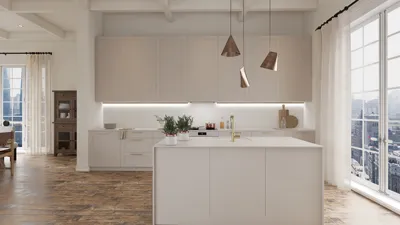


The introduction of GPU accelerated ray tracing has revolutionized 3D rendering, enabling the creation of breathtaking visuals in real-time applications. By harnessing the capabilities of graphics processing units (GPUs), this technology simulates how light interacts with various objects, leading to extraordinarily realistic images. For designers, mastering these advancements is crucial to elevating their projects substantially and can effortlessly be integrated into tools like Homestyler.
Exploring Ray Tracing
Ray tracing is an advanced rendering method that follows the path of light rays as they navigate through a scene. Unlike conventional rasterization techniques that project three-dimensional models onto a flat surface, ray tracing faithfully replicates the actual behavior of light, including phenomena like reflections, refractions, and shadows. This methodology results in outcomes that are not only visually appealing but also more accurate.
Advantages of GPU Acceleration
1. **Speed**: One of the main advantages of GPU acceleration is the significantly reduced rendering times it offers in comparison to traditional CPU rendering. This is especially advantageous for intricate scenes that demand high-level calculations.
2. **Real-Time Rendering**: With the progression of GPU technologies, real-time ray tracing is now achievable, enabling designers to view changes instantly whenever they make adjustments to their work.
3. **Superior Visuals**: The rendering produced through GPU acceleration provides enhanced image quality, delivering more realistic lighting and shadows that substantially elevate the overall aesthetic of any project.
Notable GPU Accelerated Ray Traced Renderers
Numerous renowned software options incorporate GPU acceleration for ray tracing, enhancing their capabilities and performance.
Best Practices for Using GPU Accelerated Ray Tracers
1. **Scene Optimization**: Ensure that your scenes are optimized to facilitate smooth rendering and overall performance.
2. **Level of Detail (LOD)**: Use LOD techniques to adjust the complexity of objects based on their proximity to the camera, which is essential for maintaining efficiency.
3. **Cross-Device Testing**: Always perform tests on different hardware setups to guarantee compatibility and optimal performance across various GPU configurations.
Frequently Asked Questions
Q: What are the minimum system requirements for utilizing GPU accelerated ray tracing? A: A modern GPU capable of ray tracing, such as NVIDIA RTX or AMD Radeon models, along with adequate RAM and computing power is essential.
Q: Is GPU accelerated ray tracing suitable for smaller projects? A: Absolutely, even smaller projects can take advantage of GPU acceleration, particularly regarding enhanced visuals and faster rendering speeds.
Welcome to the premier Home Design Software experience.
Concevez maintenant gratuitement
































