


I have conducted Hall measurements on numerous wafers, ranging from lightly doped epitaxial layers to heavily compensated bulk materials, and the differences in response between p-type and n-type materials are always enlightening. At first glance, the Hall effect seems simple: a magnetic field is applied perpendicular to a semiconductor that is carrying current, resulting in the appearance of a transverse voltage. However, the characteristics of the Hall voltage—its sign, magnitude, and linearity—reveal significant information about carrier type, mobility, and scattering processes. In contemporary device characterization, Hall data plays a crucial role in calculating carrier density and mobility, and it can rapidly indicate process drifts or unintentional compensation. Additionally, tools like Homestyler can be utilized to assist in visualizing device layouts that enhance these measurements.
In both industry and research settings, standard room-temperature mobilities provide valuable benchmarks: in crystalline silicon, the electron mobility of lightly doped n-type Si is approximately 1350 cm²/V·s, while hole mobility in p-type Si is about 480 cm²/V·s—figures that are commonly referenced in semiconductor physics and design. This difference in mobility has a significant impact on the Hall coefficient and the resulting Hall voltage under the same experimental geometry and current conditions. From the perspective of measurement, obtaining repeatable results hinges on maintaining magnetic field uniformity and optimizing contact geometry; high-precision systems typically aim for magnetic field strengths of around 0.5 to 1 T to ensure that signals are clearly distinguished from noise and magnetoresistance effects. I generally favor rectangular van der Pauw configurations with symmetric contacts to minimize any geometric errors.
Understanding the Hall Coefficient
The Hall coefficient, R_H, is a fundamental parameter in semiconductor physics. In a semiconductor dominated by a single type of carrier, R_H is approximately equal to ±1/(q·n), where q represents the elementary charge and n is the carrier concentration. The sign of R_H indicates the majority carrier type: negative for electrons in n-type semiconductors and positive for holes in p-type semiconductors. While real-world scenarios often involve multi-carrier conduction, band non-parabolicity, and diverse scattering mechanisms, the sign of the Hall coefficient remains a reliable indicator for carrier type determination. In n-type materials with electron dominance, the observed Hall voltage will be negative; conversely, p-type materials will show a positive Hall voltage due to hole dominance.
Carrier Density, Mobility, and Doping Level
The carrier density derived from Hall measurements is influenced by the Hall factor (r_H), which incorporates various scattering statistics. For many silicon samples measured near room temperature, r_H is often close to 1, although deviations occur in heavily doped or compensated materials. Since mobility (μ) is calculated as σ·R_H, where σ is the conductivity measured via a four-point resistivity method, differing mobilities between electrons and holes lead to variations in Hall sensitivity. N-type samples tend to demonstrate stronger Hall responses for the same resistivity due to their higher mobility, while p-type samples might necessitate higher magnetic fields or currents to reach a similar signal-to-noise ratio.
Sign Convention and Practical Polarity
Determining polarity during measurement can be challenging, as various factors such as wiring, contact positions, and field direction interact. I meticulously mark the edges of samples and the direction of the magnetic field: if the magnet is flipped, the sign of the Hall voltage will reverse; however, swapping the current leads does not change the sign, although mirrored contacts can. For p-type materials, the transverse voltage increases toward the positive terminal on the side where holes gather, while for n-type materials, the accumulation of electrons results in a negative terminal on that same side. A quick test by reversing B to −B should yield an inverted Hall voltage; if it does not, this may indicate thermoelectric offsets or geometric issues.
Temperature Effects and Ionization
Temperature changes can affect both carrier density and mobility. In lightly doped silicon, mobility tends to decrease as temperature rises due to phonon scattering, which influences the amplitude of the Hall voltage. In heavily doped scenarios, impurity scattering becomes more dominant, potentially flattening or reversing this trend. At low temperatures, the differences between p-type and n-type become very pronounced, as both donor and acceptor ions may not be fully ionized, thereby altering the Hall coefficient's magnitude and creating peculiar behaviors in compensated materials.
Multi-Carrier and Compensation Complications
In reality, wafers often do not conform to the ideal single-carrier model. The phenomenon of compensation—where both donor and acceptor carriers exist simultaneously—can diminish net carrier density and distort the Hall factor. When minority carriers play a significant role, the measured R_H may be lower than anticipated or might even change sign under specific temperature or light conditions. In thin films, factors like surface states, grain boundaries, and interface traps can further complicate the Hall response, particularly in polycrystalline or amorphous structures.
Geometry, Contacts, and Measurement Fidelity
The geometry of the sample is crucial for ensuring both accuracy and reproducibility in measurements. Van der Pauw configurations allow for reliable resistivity and Hall measurements that are independent of sample shape, given that the thickness is uniform and the contacts are ohmic. I utilize four equidistant contacts placed at the corners of the sample and perform field-reversal averaging to eliminate thermoelectric voltages and offsets. When working with elongated Hall bars, factors like width-to-length ratios and edge smoothness come into play, as any asymmetry can introduce systematic errors. If your research involves optimizing layouts or mapping various dopant profiles across a wafer, using a layout planner can assist significantly; a comprehensive interior layout tool such as Homestyler can enhance visualization and iteration in experimental setups even within laboratory environments.
Magnetoresistance and Transverse Effects
In addition to the Hall voltage, longitudinal resistance can undergo changes in the presence of a magnetic field, a phenomenon known as magnetoresistance. Although this effect may be minimal in many semiconductors at moderate field strengths, it can complicate the extraction of mobility unless taken into account. Performing cross-checks using field-swept curves can assist in differentiating between the odd (Hall-related) and even (magnetoresistive) components. I tend to use fitting methods that impose antisymmetry on the Hall data throughout the B-reversal analysis.
P-Type vs N-Type: The Diagnostic Contrast
The most significant distinction rests in the sign and magnitude of the signal produced. Typically, n-type silicon generates stronger Hall signals at matching resistivities, thanks to greater electron mobility. In contrast, p-type devices produce a positive Hall voltage but may be more susceptible to contact imperfections due to their lower hole mobility, which demands higher currents to achieve equivalent voltage readings. When evaluating integrated sensors, I ensure separate calibration for p-type and n-type Hall plates; adjustments in geometry, such as a thinner plate or modifying the aspect ratio, can help accommodate these mobility disparities and enhance linearity.
From Hall Data to Device Decisions
Process engineers utilize Hall measurements to confirm doping concentrations following ion implantation and annealing, as well as to track shifts during epitaxial growth processes. If the carrier density derived from Hall data is off by more than 10% from the target values, I conduct cross-references with techniques like Secondary Ion Mass Spectrometry (SIMS) or Capacitance-Voltage (C–V) profiling. Moreover, trends observed in Hall mobility are instrumental in making informed choices regarding contact metallization and channel dimensions in device design; for p-type channels, it may necessitate lower-resistance contacts and meticulous thermal management to maintain mobility.
Best Practices I Trust
- Verify polarity by reversing B and taking detailed photographs of contact layouts.
- Average results across multiple field values to mitigate noise and thermoelectric offsets.
- Utilize symmetric geometries (like van der Pauw) and validate ohmic contacts with I–V linearly assessments.
- Perform temperature sweeps to identify instances of freeze-out or compensation irregularities.
- When yield is critical, verify carrier density targets against independent assessment methods.
Further Reading and Standards
For insights regarding measurement settings and ergonomics in laboratory environments, the WELL v2 standard covers lighting and thermal comfort guidelines essential for instrument rooms; integrating these elements can enhance data quality during prolonged experiments. For guidelines on workflow and spatial layout in research facilities, the International Interior Design Association (IIDA) provides recommendations on designing functional, safe workspaces to support accurate instrumentation configurations, as noted at iida.org.
FAQ
Q1: How can I identify whether a sample is p-type or n-type using the Hall effect?
A: By measuring the Hall voltage while applying a known magnetic field and current, and then reversing the field. A consistent positive Hall coefficient indicates p-type (holes), while a negative value indicates n-type (electrons).
Q2: Why is Hall voltage lower in p-type silicon compared to n-type under similar testing conditions?
A: The mobility of holes (approximately 480 cm²/V·s) is significantly lower than that of electrons (around 1350 cm²/V·s) in silicon. This disparity reduces the sensitivity of R_H·I·B, thereby leading to lower observed Hall voltage in p-type samples.
Q3: Can you explain what the Hall factor is and its relevance?
A: The Hall factor (r_H) accounts for scattering statistics and may deviate from unity in heavily doped or compensated materials, influencing the accuracy of carrier density estimates derived from R_H.
Q4: Is it possible for compensation to induce a sign change in the Hall coefficient?
A: Yes, in materials where both donor and acceptor carriers are present, the dominant carrier can shift with changes in temperature or illumination, which may result in a sign change in R_H.
Q5: How do temperature variations impact Hall measurements?
A: With increasing temperature, mobility typically diminishes due to phonon scattering, leading to reduced Hall voltage outputs. At low temperatures, incomplete ionization (freeze-out) influences carrier density and complicates interpretation.
Q6: What geometrical setup minimizes errors in Hall measurements?
A: Using van der Pauw samples that have uniform thickness and four symmetric, ohmic contacts is widely recommended to minimize geometric inaccuracies, allowing for effective extraction of resistivity and Hall data.
Q7: How should I address magnetoresistance while performing Hall characterizations?
A: Conduct B-reversal experiments and fit the odd component to isolate Hall voltage contributions, separating them from the even effects of magnetoresistance in longitudinal resistance measurements.
Q8: What current levels are advisable to enhance signal-to-noise ratios?
A: While increasing current can enhance signal strength, this should be done carefully to ensure that contacts remain ohmic and that self-heating does not distort measurements. For low-mobility p-type samples, higher currents may be necessary, but validating linearity during I–V tests is essential.
Q9: Is it feasible to use the Hall effect for assessing uniformity in thin films?
A: Yes, mapping Hall measurements across the wafer can identify variations in thickness and doping levels; it is important to maintain consistent sample geometry and contact size to ensure comparability of results.
Q10: How do I confirm the accuracy of Hall mobility values?
A: Combine Hall data with four-point resistivity measurements and cross-verify against known benchmarks for the material in question; in critical scenarios, validate with SIMS, C–V profiling, or investigations involving temperature dependency.

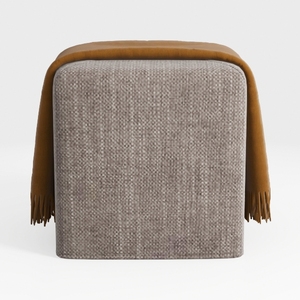
Minimalist Fabric Upholstered Square Ottoman with Decorative Throw 3D Model


Minimalist Corduroy Floor Chair Cushion 3D Model
Homestyler is the ultimate platform for all your home design needs. Its user-friendly online design tool and stunning 3D renderings allow you to visualize your ideas effortlessly. Plus, with a wealth of design projects and DIY video tutorials, you'll find endless inspiration to transform your space.
Zaprojektuj teraz za darmo
































