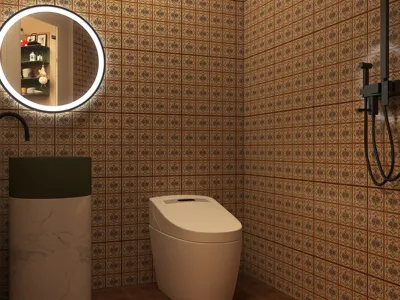


I vividly recall a client who wished their living room to mirror "exactly like my Italian nonna’s villa" — while only having the budget of a Brooklyn studio. To bridge this gap, I created a straightforward Tuscan moodboard and conducted a trial on a small wall first, which ultimately saved us both significant time and potential stress. Working with limited spaces often compels you to make smarter and bolder design choices, and using faux finishes provides an excellent opportunity to explore these options. By leveraging tools like Homestyler, you can visualize these changes effectively.
1. Warm Venetian-style plaster
I find that beginning with a warm Venetian plaster in shades like ochre or soft terracotta beautifully captures the authentic Tuscan essence. This type of plaster imparts depth and a gentle sheen without appearing metallic; the great thing is that it maintains a rich appearance even on a tight budget when applied to an accent wall rather than the entire room. However, it's important to note that achieving this look requires considerable effort — the processes of layering and burnishing are time-intensive, so it's wise to allocate time for practice and testing patches.
save pin
2. Faux travertine panels
Creating a travertine effect using color washes and subtle veining evokes the feel of stone without the hefty costs associated with real stone. This technique pairs excellently with wrought-iron fixtures and dark wood, and it’s also more manageable for touch-ups than authentic stone. The key challenge lies in making the grout lines appear realistic — I advise using a thin glaze wash and gentle sanding between layers to enhance realism.
save pin
3. Layered golden sienna glaze
By layering glazes — starting with a base coat followed by two translucent glazes — you can cultivate that inviting Tuscan warmth that many of my clients desire. This method is forgiving, allowing you to easily adjust the intensity and softness of the appearance. For those looking to preview the texture ahead of time, consider rendering a close-up to understand how light interacts with the layers; however, keep in mind that rushing through the glazing can result in visible brush marks.
save pin
4. Distressed limewash for a vintage touch
Applying limewash provides a matte, mineral-rich finish that conveys an authentically aged look and performs well in humid environments. In a coastal Tuscan-themed kitchen project, I found it incredibly accommodating for touch-ups and wear; nonetheless, limewash is not as washable as modern acrylics, so it's best applied in lower-traffic areas or protected with a sacrificial topcoat.
save pin
5. Enhance niches with faux stone and molding
For those on a budget, you can elevate a recessed niche or chimney breast by using faux-stone techniques combined with simple molding — this tactic anchors the room and can appear significantly more luxurious than the actual costs. It’s an excellent solution for renters or small apartments wishing for dramatic flair without permanence, especially if the design highlights the niche as a focal point. The only caveat is that good lighting is essential; without sufficient highlights and shadows, the effect may fall flat.
save pin
FAQ
Q: What types of paint are best for Tuscan faux finishes?
A: I generally opt for matte or low-sheen acrylics as base layers and translucent acrylic glazes for layering; when achieving limewash effects, mineral lime paints offer authentic breathability.
Q: How does the price of a faux finish compare to regular paint jobs?
A: Faux finishes typically involve higher labor and material costs, which can run 1.5 to 3 times more than a standard paint job; however, applying a single accent wall can significantly reduce expenses.
Q: Are Tuscan faux finishes feasible in a small apartment?
A: Certainly! Small spaces can thrive with one textured wall that sets the overall tone without overwhelming the area. I often suggest starting small and experimenting on removable boards.
Q: How durable are faux finishes?
A: The durability of faux finishes hinges on your choice of products and proper sealing. Generally, glazes applied over acrylic bases prove quite resilient, whereas limewash can be less resistant to cleaning unless sealed with a protective layer.
Q: Do faux finishes require specific preparation?
A: Yes — thorough surface preparation is essential: fill any cracks, smooth the surface, and prime where necessary; I often refer to Sherwin-Williams' guide for preparing tricky substrates, which is quite helpful.
Q: What is the time frame for completing a faux finish wall?
A: Anticipate several sessions: one for the base coat, subsequent days for glaze layering, and finally a day for burnishing or sealing — expect the process for a single accent wall to take between 2 to 4 days, drying times included.
Q: Can faux finishes be cleaned?
A: Most glazed or acrylic faux finishes can be carefully wiped with a damp cloth; avoid using abrasive cleaners and always test in a hidden area first.
Q: How should I begin if I’m unfamiliar with faux finishes?
A: Start with a single small wall or a panel board to practice layering and glazing techniques. Document your progress in various lighting conditions, and remember — hands-on experience accelerates learning.
save pin
Homestyler is your go-to online home design platform, perfect for both novices and experienced decorators. With its user-friendly design tool, stunning 3D renderings, and a wealth of design projects and DIY video tutorials, transforming your space has never been easier or more inspiring!
立即免费设计
































