


As new Xbox Game Pass games continue to expand the horizons of digital entertainment, many gamers are seeking comfortable and functional spaces that enhance their immersive experience. Creating a dedicated gaming nook with ergonomic seating and smart lighting can transform any room, blending technology seamlessly with home design to support extended play and relaxation. Utilizing tools like Homestyler allows gamers and designers alike to visualize and plan these spaces effectively, ensuring both comfort and style.
Direct Answer
The most efficient approach to prototyping a 3D model involves beginning with low-detail geometry to quickly validate proportions and functionality, then progressively increasing detail after confirming form, scale, and usability. This stepwise method minimizes wasted effort rebuilding complex models that don't meet basic design criteria.
Quick Takeaways
Introduction
Having worked on numerous residential interior and product visualization projects for over ten years, I've noticed a common trend: beginners often dedicate excessive time refining a model before confirming if the design is practical. When prototyping 3D models efficiently, prioritizing speed and validation significantly outweighs premature focus on visual perfection.
In professional environments, prototypes are not intended to appear polished. Their role is to swiftly resolve key questions: Are the proportions accurate? Will the mechanism function properly? Is the layout viable? Viewing prototypes as decision-making tools rather than final renders drastically accelerates workflows.
Below is the workflow I consistently apply across diverse projects during early 3D model prototyping stages.
save pin
Why Most 3D Model Prototypes Fail Early
Key Insight: A majority of prototypes falter because creators focus on detailing before confirming foundational structure.
This is a frequent issue in novice portfolios and junior studio work. Hours are spent sculpting surfaces, beveling edges, and adding textures only to later find that scale or functionality is incorrect.
The underlying challenge is psychological: intricate modeling gives a false sense of progress, yet it locks you into design decisions prematurely.
Common early errors include:
Typically, the first phase of prototyping uses extremely basic shapes such as cubes, cylinders, and planes. The objective is swift progress, not visual appeal.
What Is the Fastest Way to Prototype a 3D Model
Key Insight: Block modeling with primitive shapes and approximate proportions is the quickest approach.
Block modeling forms the foundation of effective 3D prototyping. Rather than diving into details initially, the main volumes of an object are constructed first.
Typical block modeling process:
In fields like architectural visualization and interior design, this tactic saves a tremendous amount of time. For example, in a recent living room layout project, furniture placement was validated exclusively using grey blocks before any detailed modeling.
save pin
How Detailed Should a Prototype 3D Model Be
Key Insight: A prototype requires only sufficient detail to resolve design questions.
An often overlooked truth in 3D modeling is that prototypes are tools to make decisions, not finished products. Excessive detailing early on often impedes iteration speed.
A practical guideline I frequently share with junior designers is:
This phased workflow is common among product design teams. Industrial designers regularly evaluate multiple rough digital models before settling on a final concept.
save pin
Should You Use Physical References When Prototyping
Key Insight: Reliable physical measurements significantly enhance prototype accuracy.
Early in my career, I adopted the habit of referencing real-world dimensions whenever practicable. Digital models lacking accurate scale often seem "off" despite appearing correct on screen.
Helpful reference sources include:
When designing furniture or interior spaces, applying actual measurements instantly reveals whether spatial arrangements, ergonomics, and clearances function properly.
How Professionals Iterate 3D Model Prototypes Quickly
Key Insight: Rapid iteration depends on modular modeling strategies and version control systems.
In professional studios, prototypes are seldom contained within a single file. Instead, designers assemble modular components that can be reused and rearranged efficiently.
Professional iteration techniques include:
For extensive visualization tasks, this method lets teams test layout variations within minutes, avoiding full model rebuilds.
save pin
Hidden Cost Many Designers Ignore During Prototyping
Key Insight: Early introduction of overly complex topology causes costly rework later.
Many tutorials neglect this point. When topology complexity escalates prematurely, even minor design adjustments require extensive cleanup.
Symptoms of premature complexity are:
Experienced modelers intentionally keep models rough until receiving design approval, only then beginning topology refinement.
Answer Box
The most successful 3D model prototyping strategy employs simple block shapes initially, quickly verifies scale and function, and adds complexity solely after design validation. This systematic approach minimizes rework and accelerates iteration.
Final Summary
FAQ
What is a 3D model prototype?
A 3D model prototype represents an early iteration used to test shape, scale, and functionality before final detailed modeling.
How detailed should a 3D model prototype be?
It should be detailed just enough to confirm design decisions; typically using simple shapes and minimal geometry.
What software is best for prototyping a 3D model?
Common programs for fast 3D prototyping include Blender, Fusion 360, SketchUp, and Maya.
Why is block modeling useful for prototyping?
Block modeling enables designers to quickly assess proportions without investing time in elaborate details.
Can beginners prototype a 3D model effectively?
Absolutely. Starting with basic shapes and focusing on proportions allows newcomers to prototype efficiently.
What is the biggest mistake in 3D prototyping?
The most common error is adding intricate geometry before verifying proportions and usability.
How long should a prototype take to build?
Many early prototypes can be completed within minutes to a few hours, depending on complexity.
Do professionals use multiple prototypes?
Yes. It is common for designers to develop several prototype versions to explore different ideas before choosing a final direction.
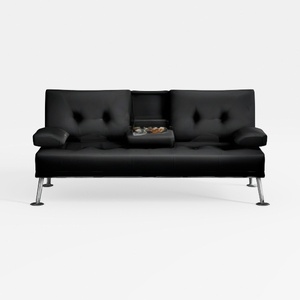
Modern Black Leather Metal Leg Loveseat Sofa with Center Tray 3D Model

Minimalist Black Metal Fabric Dining Table Set 3D Model
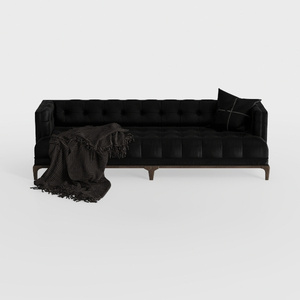

Black Velvet Tufted Contemporary Sofa With Throw Pillow Blanket 3D Model
Homestyler offers an easy-to-use online design tool, stunning 3D renderings, and a vast collection of interior projects. With helpful DIY video tutorials, it’s perfect for anyone looking to create and visualize their dream home effortlessly.
Concevez maintenant gratuitement
































