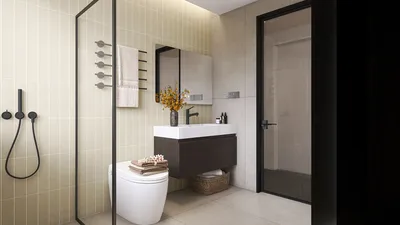


In today’s connected homes, the integration of a versatile TV app transforms how we interact with our living spaces. As streaming services become central to entertainment routines, designing a cozy media nook with ergonomic seating and adjustable lighting enhances both comfort and viewing experience. Thoughtful spatial planning ensures that technology blends seamlessly with home aesthetics, creating an inviting area tailored for relaxation and digital enjoyment.
Direct Answer
3D modeling plays an essential role in contemporary design by enabling designers, clients, and contractors to accurately visualize a space prior to construction. This capability minimizes expensive errors, fosters better communication, and facilitates swift experimentation with layouts, materials, and lighting schemes.
Nowadays, 3D models serve not only as creative instruments but also as decision-making aids, translating abstract ideas into tangible visual presentations.
Quick Takeaways
Introduction
Having worked over ten years in residential and commercial interior design, I am convinced that 3D modeling has revolutionized the way designs evolve from initial concepts to physical reality. Earlier in my career, we depended heavily on 2D schematics and inspiration boards, which required clients to visualize spaces—something many found challenging.
This disconnect between drawings and real-life interpretations often led to misunderstandings, revisions, and costly mistakes.
Currently, 3D modeling bridges that gap perfectly. Whether remodeling a compact apartment kitchen or planning an entire home makeover, a detailed model allows all stakeholders to share a unified vision before any construction begins, especially when utilizing tools like Homestyler to refine the design.
Why Do Designers Rely on 3D Modeling Today?
Insight: The reliance on 3D modeling stems from its ability to transform conceptual designs into spatial realities that everyone involved can assess effectively.
While traditional design documents convey measurements and layouts, they seldom provide a sense of experience or ambiance. In contrast, 3D models do both, enhancing understanding.
In my projects, once clients are presented with photorealistic renders, discussions shift from uncertainty to informed decision-making.
The American Institute of Architects notes that visualization tech like 3D modeling is now a standard part of architecture and interior design workflows, substantially improving collaboration between design teams and builders.
How Does 3D Modeling Improve Design Decisions?
Insight: 3D modeling accelerates design iterations by enabling rapid modifications without incurring physical costs.
One major advantage I've observed is the speed of testing alternatives. Traditionally, revising a kitchen layout could take hours of redrawing; modern 3D tools allow this to happen within minutes.
Designers can swiftly evaluate options like furniture arrangements, material choices, and lighting setups.
Applications such as Homestyler, SketchUp, and Blender empower designers to duplicate models and experiment with multiple scenarios. This capability often results in superior outcomes because concepts are trialed rather than assumed.
What Problems Does 3D Modeling Prevent in Real Projects?
Insight: A significant number of construction errors arise from misinterpretations of 2D plans; 3D modeling alleviates much of this confusion.
A common hidden expense in projects stems from misunderstandings, such as contractors reading plans differently than intended or clients misjudging spatial scale.
3D modeling mitigates these issues by providing realistic visual context.
For example, a residential project in Los Angeles involved a client insisting on a large sectional couch that fit the floor plan technically. However, when placed inside the 3D model, movement around the coffee table became impractical. This model prevented ordering a $7,000 sofa unsuitable for the space.
Can 3D Modeling Improve Client Communication?
Insight: 3D visualization dramatically enhances communication between design professionals and clients.
Most homeowners find it difficult to interpret architectural blueprints, making it unrealistic to expect them to understand spatial layouts from mere lines on paper.
Presenting designs through rendered models changes client engagement significantly, reducing revisions and increasing clarity.
In my experience, integrating 3D renders like those produced in Homestyler during presentations decreases the number of revision cycles by almost half compared to traditional approaches.
Is 3D Modeling Only About Visualization?
Insight: Though visualization is the most apparent benefit, 3D modeling also streamlines technical coordination among various disciplines.
Many perceive 3D modeling as primarily focused on generating attractive images, but its role extends to planning and integrating multiple aspects of design.
Contemporary design teams utilize models to coordinate architectural, structural, and interior elements seamlessly.
This multidisciplinary integration is increasingly prevalent in construction workflows, underscoring the importance of 3D modeling tools such as Homestyler.
Why 3D Modeling Is Becoming Standard in Design Education?
Insight: Design programs now regard 3D modeling as a fundamental skill, reflecting the digital visualization demands of the industry.
During my interior design studies at UCLA, digital modeling was part of the curriculum and has since become even more integral.
Students learn to use software that simulates real-world scenarios including spatial planning, lighting effects, and materials.
Acquiring these skills prepares designers for professional environments where visualization is indispensable.
Answer Box
3D modeling is indispensable in contemporary design since it enables visualization, testing, and communication of ideas well before construction starts. By exposing spatial flaws early and enhancing teamwork, it accelerates project timelines while reducing pricey errors.
Final Summary
FAQ
What is 3D modeling in design?
3D modeling refers to the creation of digital, three-dimensional representations of spaces, objects, or buildings used to visualize and evaluate design plans.
Why is 3D modeling important in architecture and interior design?
It helps professionals visualize spatial relationships, communicate concepts clearly, and identify problems prior to construction.
Does 3D modeling reduce construction mistakes?
Certainly. By previewing layouts, proportions, and materials beforehand, 3D modeling uncovers potential issues that might otherwise emerge during building.
Is 3D modeling difficult to learn?
Basic 3D modeling can be grasped relatively quickly, but mastering nuances like lighting, textures, and realism demands practice and experience.
What software is commonly used for 3D modeling?
Popular applications include SketchUp, Blender, 3ds Max, Rhino, and user-friendly platforms like Homestyler.
Do interior designers always use 3D models?
Most contemporary interior designers incorporate 3D models during concept development and presentations, as clients better understand visual formats than traditional drawings.
Can 3D modeling help small space design?
Yes. It allows for testing furniture scale, storage options, and movement pathways in compact areas before execution.
Is 3D modeling necessary for every design project?
While not every minor project demands detailed models, 3D modeling proves invaluable for renovations, new constructions, and complex layouts, especially with tools like Homestyler enhancing the workflow.


Minimalist White Fabric Wood Base Tufted Armchair 3D Model
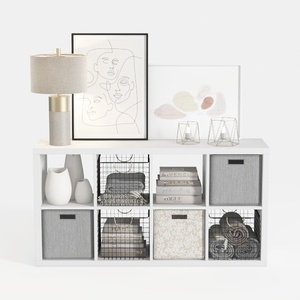
Modern Minimalist White Fabric Solid Wood Storage Cabinet 3D Model

Minimalist White Fabric Tufted Large Sofa 3D Model
Homestyler is an easy-to-use online home design platform that offers powerful 3D rendering, a vast collection of interior design projects, and helpful DIY video tutorials—perfect for bringing your home decoration ideas to life effortlessly.
تصميم الآن مجانا
































