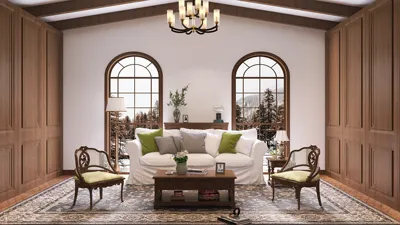


Embracing grey hair has become a natural expression of personal style, reflecting a broader trend toward authenticity and comfort in daily life. This shift influences not only fashion choices but also the way we create our living spaces—favoring calming, neutral tones and textures that celebrate simplicity and elegance. Designing interiors with soft greys and muted palettes can provide a soothing backdrop that complements this lifestyle of embracing natural beauty and self-acceptance. Utilizing tools like Homestyler enables homeowners and designers to visualize such serene environments effortlessly, blending style with comfort seamlessly.
Direct Answer
3D modeling plays a crucial role in everyday life by facilitating the design of products, buildings, films, video games, medical devices, and even enhancing online shopping experiences. Almost all modern items and digital settings originate as 3D models before production or digital presentation. From mobile phones to furniture and animated movies, 3D modeling is the hidden design backbone supporting our daily routines.
Quick Takeaways
Introduction
With over ten years of experience in interior design and collaboration with visualization artists, it’s clear that many people engage with 3D modeling daily without realizing it. When clients glimpse a redesigned living room prior to construction, this preview typically stems from an intricate 3D model. This approach extends to smartphones, footwear, automobiles, and even animated characters featured on popular streaming services.
Within professional design processes, 3D modeling serves more than aesthetic purposes—it minimizes manufacturing errors, expedites approvals, and allows teams to experiment with concepts before financial commitments. Recognizing the prevalence of 3D models reveals their foundational presence across numerous technologies and designs encountered daily.
How Is 3D Modeling Used in Architecture and Interior Design?
Insight: Architects and interior decorators depend on 3D modeling to evaluate layouts, lighting, and material choices ahead of actual construction.
From personal project experience, 3D models frequently mark the moment clients fully grasp a design. Traditional floor plans are helpful, yet a 3D perspective demonstrates how light interacts with surfaces, the suitability of furnishings within spaces, and the practicality of room circulation.
Common applications in architecture and interior decorating include:
Per the American Institute of Architects, digital modeling and Building Information Modeling (BIM) workflows are commonplace among substantial construction projects. The capacity to visualize spatial arrangements prior to building greatly curtails expensive design modifications later on.
Where Do You See 3D Modeling in Movies, Games, and Media?
Insight: Nearly every animated movie, visual effect, or current video game environment is crafted using detailed 3D models.
In entertainment, 3D modeling is highly visible. Characters, settings, vehicles, and props are developed within software before being animated or rendered for viewers.
Examples of everyday media created through 3D modeling:
Recently, the realism of these models has dramatically improved. Game engines such as Unreal Engine produce environments of near-cinematic quality, blurring boundaries between films and interactive media.
Why Do Product Designers Depend on 3D Modeling?
Insight: Virtually every manufacturable product starts as a 3D digital prototype.
Before initiating mold creation or factory production, designers use precise 3D models to test concepts, thereby reducing manufacturing risks and enabling swift iterations.
Products commonly designed using 3D modeling include:
A frequently overlooked expense is that modifying a product’s design after manufacturing commencement can incur multimillion-dollar costs. This explains significant investments in digital modeling and simulations prior to production commitments.
Can 3D Modeling Improve Online Shopping?
Insight: Interactive 3D product representations aid customers in better understanding scale, texture, and functionality beyond traditional images.
E-commerce platforms increasingly incorporate 3D models allowing shoppers to rotate and examine products virtually. Some retailers even offer augmented reality features enabling customers to visualize furniture within their own homes.
Retail applications of 3D modeling include:
Brands like IKEA and Amazon have incorporated 3D and AR visualization into mobile applications, providing users with realistic previews of items in real environments before purchase decisions are made.
What Role Does 3D Modeling Play in Healthcare?
Insight: Healthcare professionals utilize 3D models for surgical planning, implant design, and educational training.
Although less visible, this is one of the most impactful uses of 3D modeling. Surgeons analyze digital organ or bone models derived from CT and MRI scans to prepare for complex operations.
Medical uses include:
Research conducted by institutions like the Mayo Clinic demonstrates that patient-specific 3D models significantly enhance surgical planning accuracy in complicated cases.
Is 3D Modeling Becoming Part of Daily Consumer Technology?
Insight: As augmented reality (AR), virtual reality (VR), and spatial computing technologies evolve, 3D modeling integrates increasingly into everyday digital interfaces.
A decade ago, 3D models were mostly encountered via video games or films. Presently, they appear in smartphone applications, online retailers, and even educational platforms.
Emerging daily applications include:
The progression is evident: more powerful hardware enables a shift from flat digital interfaces to immersive spatial environments built upon 3D models. Platforms such as Homestyler support users in crafting these enriched experiences seamlessly.
Answer Box
3D modeling is integral across architecture, entertainment, product development, medicine, and online retail. It empowers professionals to digitally visualize, experiment, and perfect ideas well before real-world implementation.
Final Summary
FAQ
What is 3D modeling used for in everyday life?
3D modeling supports the design of products, buildings, movies, video games, and medical instruments. Many common objects originate as digital 3D prototypes before manufacturing.
Is 3D modeling used in interior design?
Absolutely. Interior designers employ 3D modeling to visualize spatial layouts, furniture arrangement, lighting, and finishes before construction or renovation commences.
Do movies use 3D modeling?
The majority of modern animated films and visual effects rely on 3D models to create characters, environments, vehicles, and digital landscapes.
How does 3D modeling help product design?
It enables designers to experiment digitally with shapes, materials, and mechanics prior to manufacturing, thereby cutting errors and production costs.
Can 3D modeling be used for online shopping?
Definitely. Many online retailers feature interactive 3D product models so customers can zoom, rotate, and preview items through augmented reality.
Is 3D modeling used in healthcare?
Yes. Medical professionals apply 3D models created from scans for surgical planning, implant fabrication, and academic training.
What industries use 3D modeling the most?
Sectors including architecture, gaming, cinema, manufacturing, automotive design, healthcare, and e-commerce heavily depend on 3D modeling.
Is learning 3D modeling useful today?
Indeed. With the growth of AR, VR, gaming, and digital product creation, demand for 3D modeling expertise continues to rise across numerous fields.

Galaxy Office Desk, Luxury Starry Night Table
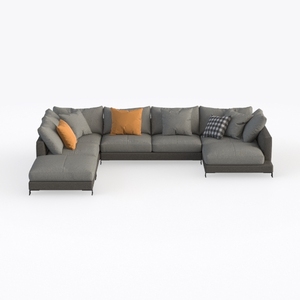
Modern Grey Fabric U Shape Sectional Sofa With Decorative Throw Pillows 3D Model
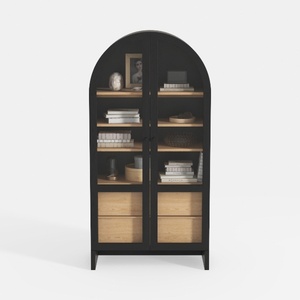
Modern Black Oak Arched Glass Display Cabinet 3D Model
Homestyler offers an easy-to-use online design tool with stunning 3D renderings, a vast collection of interior projects, and helpful DIY video tutorials. It’s ideal for anyone wanting to create and visualize beautiful home designs effortlessly.
تصميم الآن مجانا
































