

Direct Response
The effectiveness of restaurant booth design stems from its blend of ergonomic support, efficient use of space, and enhanced social comfort. Incorporating these hospitality design concepts, a home dining sofa or banquette can become more inviting, accommodate more guests, and fit better in compact areas.
Expert seating design in restaurants emphasizes seat depth, backrest angle, and clearance space. Applying these elements to home dining areas helps even small apartments develop cozy, practical dining spots.
Key Insights
Overview
Through designing numerous dining spaces for restaurants and private homes, I've observed a common theme. Many homeowners desire the warm ambiance of a restaurant booth but find it challenging to replicate with a typical dining sofa.
Restaurant booth seating is more than just aesthetic appeal. It represents decades of refined hospitality design, where every angle, cushion depth, and space allocation is precisely crafted to ensure comfort during long meals while optimizing seating capacity.
These principles adapt exceptionally well to residential environments. Using tools like Homestyler to visualize your dining sofa layout before arranging furniture reveals how booth-inspired seating can maximize wall space and foster a more intimate dining atmosphere.
This guide explores the foundational design rationale behind restaurant booths and explains how these techniques can revolutionize a home dining sofa arrangement.
save pin
Why Booth Seating is Favored in Restaurants
Essential Insight: Booth seating thrives in restaurants because it accommodates more patrons in smaller footprints while enhancing comfort and privacy.
In hospitality design, every inch impacts profitability. Booths enable restaurants to utilize walls and corners effectively, turning previously neglected spaces into valuable seating areas.
Beyond efficiency, booths provide a psychological sense of seclusion. People naturally gravitate toward semi-enclosed spaces as they induce feelings of privacy and relaxation.
Primary advantages of restaurant booths include:
The National Restaurant Association frequently emphasizes space optimization as a key element in restaurant layout strategy. Booth seating is an effective solution balancing comfort with capacity.
Core Design Principles Behind Comfortable Booths
Crucial Insight: Booth comfort is a factor of precise ergonomic design, not merely plush cushions.
A frequent homeowner error is assuming that booth seating should mimic the deep softness of a living room sofa. In contrast, hospitality seating is intentionally engineered to encourage upright posture appropriate for dining.
Common specifications for restaurant booths include:
Seats that are too deep cause diners to lean forward awkwardly, while shallow seats lead to discomfort and rigidity.
Professional designers often utilize 3D floor planning tools—similar to Homestyler’s functionalities—to prototype seating layouts, ensuring optimal circulation space and proper seating dimensions before installation.
save pin
Applying Booth Design to Home Dining Sofas
Critical Insight: Treat a dining sofa as a built-in banquette rather than a conventional living room couch.
This is where many residential dining sofa designs fall short—typical sofas are far too deep and low to support comfortable dining.
Consider designing banquette-style seating:
Combining a banquette on one side with individual chairs on the opposite side is a common design choice. This hybrid layout maintains adaptability while capturing the spatial advantages of booth seating.
save pin
Space Utilization Lessons from Restaurant Layouts
Vital Insight: Circulation planning takes priority over seating placement in restaurant design.
Many residential layouts are furniture-driven, squeezing pieces into the room post-selection. Contrastingly, hospitality design prioritizes traffic flow, ensuring smooth movement throughout.
Standard restaurant circulation recommendations include:
Implementing these strategies at home greatly enhances navigability, making even compact dining rooms more inviting by intentional walkway planning.
Many homeowners experiment with layouts using stepwise kitchen and dining configuration tools like Homestyler, revealing how seating positions affect movement patterns.
Materials and Longevity in Hospitality Seating
Important Insight: Restaurant seating endures longer due to careful selection of materials engineered for durability, not just aesthetics.
Hospitality seating withstands intense daily use far beyond typical residential furniture. Hence, restaurants typically choose fabrics and materials built for resilience.
Frequently used hospitality seating materials include:
For homes with children or frequent gatherings, such materials usually outperform delicate upholstery in longevity and maintenance.
Implementing Booth-Inspired Layouts in Compact Apartments
Crucial Insight: Booth-style dining sofas efficiently transform small corners into usable dining zones.
Banquette seating benefits small apartments by activating wall and corner spaces for seating that would otherwise remain unused.
Successful layouts for limited spaces entail:
One of the greatest benefits is visual simplicity; with seating anchored to the wall, rooms appear less cluttered compared to arrangements with multiple freestanding chairs.
save pin
Summary Box
Restaurant booth design adapts perfectly for residential use by merging ergonomic seating, clever utilization of wall space, and deliberate circulation planning. A thoughtfully designed dining sofa or banquette can increase seating capacity and cultivate a cozy, organized dining atmosphere in small homes.
Conclusion
Frequently Asked Questions
Are restaurant-style booth seats comfortable to use at home?
Absolutely. When designed correctly, restaurant booth seating offers excellent lumbar support and efficient space use ideal for home dining areas.
What is the preferred seat depth for dining sofas?
Optimal dining sofas or banquettes typically feature seat depths between 16 and 18 inches for comfort.
Does banquette seating suit small apartments?
Yes, banquettes inspired by restaurant booths often utilize wall-mounted or corner layouts to maximize floor area in apartments.
Is it feasible to convert a standard sofa into dining seating?
Generally no. Sofas designed for living rooms are usually too deep and low to provide comfortable dining posture.
How much clearance is necessary behind dining seating?
It is recommended to leave 30 to 36 inches for adequate circulation behind dining chairs or benches.
Which materials are best suited for dining sofas?
Materials such as high-density foam cushions, durable textiles, and stain-resistant upholsteries perform best in dining settings.
Are restaurant booths a good choice for home dining rooms?
Yes, they enhance seating capacity while creating a warm, intimate dining environment in residences.
What distinguishes a banquette from a booth?
A booth provides seating on both sides of a table, whereas a banquette usually features wall-fixed seating on one side only.
Sources
National Restaurant Association. Guidelines on Restaurant Layout and Design.
American Society of Interior Designers. Research on Hospitality Seating Ergonomics.
Featured Image Details
File name: restaurant-booth-inspired-home-dining-sofa.jpg
Dimensions: 1920x1080
Alt text: contemporary home dining area featuring booth-style dining sofa inspired by restaurant seating design
Caption: Adaptation of restaurant booth concepts for home dining spaces.

Modern Minimalist Brown Leather Wingback Armchair 3D Model
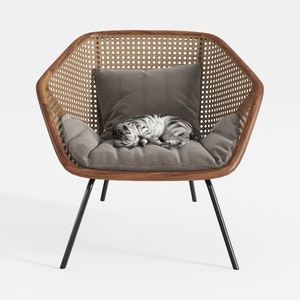

Modern Rattan Solid Wood Linen Accent Armchair with Black Metal Legs 3D Model

Minimalist Solid Wood Cane Fabric Armchair 3D Model
Homestyler is an easy-to-use online home design platform that lets you create stunning 3D renderings, explore thousands of interior design projects, and learn through helpful DIY video tutorials. It’s the perfect tool to bring your home design ideas to life effortlessly.
تصميم الآن مجانا
































