

As technology continues to shape our daily routines, the latest developments like the $135 million Google Android settlement remind us of the growing importance of integrating smart gadgets into our living spaces. Designing home interiors that accommodate various devices seamlessly enhances both functionality and comfort, ensuring our environments support the evolving digital lifestyles we lead.
Direct Answer
The most frequent challenges in 800 sq ft house plans include cramped rooms, inefficient traffic flow, scarce storage, and kitchens that compete with living spaces. These issues generally arise from poor zoning choices rather than the home's dimensions. Thoughtful layout improvements—such as open circulation paths, multi-purpose storage, and proportional room design—can significantly enhance the livability of a compact residence, especially when utilizing Homestyler for precise planning.
Quick Takeaways
Introduction
Having designed compact homes over the last decade, I've observed a key insight about 800 sq ft house plans: size itself rarely causes issues; rather, it's how the space is planned.
I've toured well-designed 750 sq ft homes and awkwardly arranged 900 sq ft ones. The difference almost always lies in circulation, storage solutions, and shared spatial arrangements, which can be tested through tools like Homestyler.
Many homeowners begin by exploring inspirational layouts with simple digital tools. However, once construction starts, resolving overlooked layout flaws can become costly.
This guide outlines prevalent problems found in small house layouts, explores their causes, and presents practical design solutions that make modest homes feel much larger than their actual size.
Why Small House Plans Often Create Layout Challenges
Key Insight: Small houses struggle when designers divide space into too many isolated rooms rather than embracing flexible, shared zones.
A common myth about compact dwellings is that every function requires its own room. In truth, walls consume critical square footage and hinder seamless movement.
In homes under 900 sq ft, corridors, walls, and corners carry heavy space costs. A single hallway could waste 40–70 square feet—nearly 10% of an 800 sq ft home.
Three design pitfalls often cause issues:
Architect Sarah Susanka, famous for 'Not So Big House' principles, emphasizes that well-designed small homes rely on interconnected spatial zones instead of isolated rooms.
Layouts centered on flow and visual connection, rather than fixed boundaries, help even very compact homes feel spacious.
Problem: Rooms Feel Too Cramped
Key Insight: Rooms feel confined when furniture size and wall placement ignore personal movement needs.
A common complaint with 800 sq ft house designs is that bedrooms and living areas appear smaller than anticipated.
This often results from blueprints drawn without sufficient clearance for real furniture and daily use.
Typical spacing errors include:
Effective remedies involve:
Small tweaks can reclaim 20–40 square feet of valuable circulation space in compact homes.
Problem: Poor Traffic Flow Between Spaces
Key Insight: Stressful circulation happens when movement paths disrupt main activity zones.
Many floor plans mistakenly route movement through living or kitchen areas in small homes, reducing comfort.
Proper layout tactics separate circulation pathways from active zones.
Typical circulation mistakes include:
When redesigning compact homes, I employ digital simulations similar to those found in Homestyler, which uncover conflicts between movement and living spaces early on.
The best designs create subtle circulation loops around shared spaces instead of cutting through them.
Problem: Not Enough Storage in 800 Sq Ft Homes
Key Insight: Storage shortages in small homes are linked to unused vertical space, not the lack of floor area.
Storage deficiencies commonly arise from underestimating daily needs and poor utilization of vertical surfaces.
Many compact plans overlook necessary storage volumes:
Smart storage strategies include:
Vertical solutions alone can boost storage capacity by 30–50% without enlarging the home's footprint.
Problem: Kitchen and Living Areas Compete for Space
Key Insight: In small houses, kitchen design largely dictates whether the overall space feels cramped.
Oversized kitchens often overwhelm living areas because layouts are copied from larger homes, disregarding scale.
In homes around 800 sq ft, kitchens must be carefully proportioned.
A balanced layout typically adheres to this ratio:
Solutions for efficient small kitchens include:
Visual openness, rather than kitchen size, is the primary goal.
Practical Design Fixes for Each Issue
Key Insight: Most small home challenges can be mitigated with thoughtful layout tweaks prior to building.
Effective fixes I recommend when improving tight house plans are:
Simple blueprint modifications, often made via user-friendly platforms like Homestyler, can greatly enhance everyday comfort and usability.
Answer Box
The main difficulties in 800 sq ft house planning stem from suboptimal zoning, oversized kitchens, and poor circulation. Simplifying layouts, incorporating vertical storage, and designing flexible living zones enable small homes to feel substantially larger without adding square footage.
When to Modify a Blueprint Before Building
Key Insight: The most cost-effective time to resolve small home design issues is before construction begins.
Though blueprints may appear sound on paper, real-world functionality often differs. Testing layouts with scale furniture and circulation paths using tools like Homestyler is highly advisable.
Many homeowners now use immersive layout platforms that preview furniture placement and room flow, revealing design weaknesses visually before committing.
If reviewing a small house plan, consider revising the blueprint when you observe:
Addressing these problems early prevents expensive structural modifications later on.
Final Summary
FAQ
What are the biggest problems with small house floor plans?
Common issues include cramped rooms, awkward circulation, insufficient storage, and kitchens that dominate limited space.
How can I improve an 800 sq ft house layout?
Enhance circulation, eliminate unnecessary walls, incorporate built-in storage, and balance kitchen size with living areas, possibly using Homestyler for visualization.
Are open floor plans better for small houses?
Typically yes. Open layouts reduce wasted hallway space and allow rooms to share square footage efficiently.
What is the ideal bedroom size in an 800 sq ft home?
A functional small bedroom should be at least 9 by 10 feet to permit bed clearance and movement.
How much storage should a small home have?
Design professionals suggest dedicating at least 8–10% of total area to storage space.
Why do 800 sq ft house plans sometimes feel smaller than expected?
Poor zoning, oversized furniture layouts, and narrow circulation paths can cause a compact house to feel more confined.
Can small home blueprint design fixes be made after construction?
Yes, though structural changes can be costly. It’s best to refine layouts during the planning stages.
What layout works best for compact homes?
Open living zones combined with efficient kitchen placement and strategic vertical storage typically deliver the most spacious feel.


Contemporary Brass Glass Acrylic Side Table 3D Model
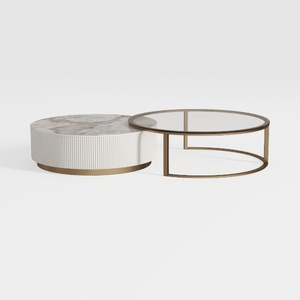
Modern Marble Gold Metal Glass Round Nesting Coffee Table 3D Model

Modern Marble Metal Round Coffee Table and Side Table Set 3D Model
Homestyler is an easy-to-use online home design platform offering powerful 3D rendering tools, a vast collection of interior design projects, and helpful DIY video tutorials. It’s perfect for bringing your creative ideas to life and experimenting with stylish home layouts effortlessly.
지금 무료로 디자인하세요
































