


With the rise of AI tools like ChatGPT becoming integral to daily productivity, many of us now design our home workspaces to accommodate seamless digital interaction. Creating ergonomic setups that support extended screen time and easy access to technology not only enhances comfort but also promotes focus. Thoughtful space planning and furniture choices, such as adjustable desks and cable management solutions, are essential for blending high-tech lifestyles into functional living environments. Utilizing platforms like Homestyler can simplify this design process by allowing users to visualize and optimize their spaces efficiently.
Effective Christmas tree placement in a compact living room hinges more on strategic positioning than merely shrinking the tree size. Employing spatial ingenuity ensures the tree becomes a harmonious centerpiece without overwhelming the limited area, making the room feel festive yet functional.
The optimal spots for situating a Christmas tree in a small living area include corners, vertical zones, and overlooked spaces such as windowsills or adjacent to sofas. Positioning the tree thoughtfully ensures walkways remain clear while the tree serves as a captivating visual element. With the right tree dimensions and awareness of room layout, even the most modest living spaces can accommodate a holiday tree comfortably.
Drawing from years of experience designing urban apartments where space is at a premium, a recurring challenge emerges every holiday season: clients desire the warmth and charm of a full-sized Christmas tree, yet the available space barely accommodates their existing furniture. This dilemma underscores that the key factor is thoughtful placement rather than tree size.
In guiding users through the placement of a Christmas tree in constrained living rooms, methods that foster intentional, balanced aesthetics without sacrificing usable space prove invaluable. Tools like Homestyler offer interactive floor planning solutions, allowing experimentation with tree positioning and furniture arrangement before making physical changes.
Placement often makes the difference between a tree feeling like a festive feature or an intrusive obstacle in small living rooms. Rather than shrinking the tree, relocating it outside primary circulation routes can enhance visual appeal while preserving room navigability.
Small living areas typically break down into multiple functional zones: seating, circulation, and secondary focal points. The Christmas tree ideally fits into a zone that is visible from seating areas but doesn’t obstruct natural movement paths—a design principle known among professionals as "secondary focal placement."
Recommendations from the National Christmas Tree Association highlight that most living room trees range from six to seven feet tall. In smaller interiors, shifting placement rather than opting for a smaller tree often creates superior visual outcomes.
One clever technique frequently leveraged by designers is corner placement. Nestling a Christmas tree into a corner instantaneously minimizes its visual footprint within the central floor space, making a room feel less cramped. This strategy is especially effective in compact apartments.
Designers advise maintaining at least 24 to 30 inches of clearance around the tree to preserve clear pathways. This spacing prevents the tree from interrupting daily movement and fosters a balanced, organized appearance.
Another innovative solution involves placing the tree beside the sofa. Contrary to common assumptions, anchoring the tree next to seating increases its impact and integrates it gracefully into the living space. Slightly rotating the tree so its fullest side faces the room conceals less appealing angles and magnifies visual presence.
Positioning a Christmas tree near a window is a savvy tactic that visually extends the room outward, creating an illusion of spaciousness. Utilizing natural light and reflective surfaces, this arrangement enhances both daytime and nighttime holiday ambiances.
When choosing a tree, slim or pencil varieties are preferable for compact environments. Slim trees typically occupy roughly half the floor area of traditional ones, improving flexibility in tight quarters. Many interior designers advocate these options for small apartments and condos.
Rearranging furniture offers another effective approach: temporarily moving a chair or side table can carve out a dedicated nook perfect for the tree. These subtle yet strategic adjustments unlock hidden potential in limited spaces.
In summary, the most space-efficient locations for Christmas trees within small living rooms are corners, next to sofas, by windows, and areas created through minor furniture rearrangement. Utilizing slim tree profiles enhances these spatial solutions' effectiveness. Platforms like Homestyler aid in visualizing these configurations before execution, making the holiday setup process more manageable.
Frequently Asked Questions
Where is the best place for a Christmas tree in a small living room?
Corners are generally ideal because they keep pathways unobstructed while keeping the tree prominently visible.
What size Christmas tree is best suited for a small living area?
Trees between five and six feet tall, especially those with slim or pencil profiles, work best.
Can I place a Christmas tree beside the TV in a small space?
Yes, as long as heat and cords are safely managed, the tree can complement the TV console area effectively.
Are pencil Christmas trees practical for small rooms?
Absolutely. Pencil trees are specifically designed to fit compact spaces without sacrificing festive charm.
Is placing a Christmas tree in front of a window a good idea?
Yes, a window placement not only reflects holiday lights beautifully but also visually expands the room.
How to decorate a small living room with a Christmas tree?
Opt for slender trees, balance decorations thoughtfully, and avoid blocking traffic flow.
Should the Christmas tree serve as the main focal point in a small living room?
While generally yes, in smaller spaces the tree should share focus with seating to maintain harmony.
How much clearance should be left between the tree and furniture?
Ideally, allow around 24 inches to ensure ease of movement around the room.
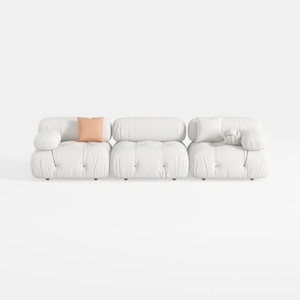
Minimalist White Fabric Modular Sofa 3 Seater 3D Model

Minimalist Modern White Open Bookshelf Display Shelf 3D Model

Minimalist Fabric Modular Sectional Sofa 3D Model
Homestyler offers an easy-to-use online design tool and stunning 3D renderings to help you create and visualize your dream home. Explore a vast collection of design projects and learn through DIY video tutorials—perfect for turning your ideas into reality.
Zaprojektuj teraz za darmo
































