

In today’s ever-evolving digital world, staying updated with the latest tech like Tomodachi Life’s update patch notes reflects a growing desire for seamless entertainment at home. Integrating smart technology into living spaces not only enhances gaming experiences but also transforms how we design our rooms. Thoughtful space planning that accommodates tech-savvy lifestyles helps create inviting, functional environments tailored to immersive digital interaction.
Executive Summary
The appeal of AI-driven home design without requiring a subscription is undeniable. Users can experiment with room configurations, try out different furniture setups, and visualize aesthetic changes all without committing to a recurring fee. An increasing array of platforms provides free access or pay-per-use options that allow AI-assisted interior design creation without upfront costs. However, "free" often comes with hidden constraints. This article explores what to watch for when evaluating subscription-free AI design services, covering limitations like export options, project quotas, image quality, user privacy, and when free use typically pushes you toward paid plans. Whether you’re a homeowner brainstorming ideas, a renter refreshing a room, or a design hobbyist evaluating tools, understanding these aspects will guide you to the best AI platform to suit your needs.
Understanding What "No Subscription" Truly Implies
It’s vital to clarify the meaning of AI home design tools that claim no subscription fees before making any comparisons. This phrase encompasses various pricing frameworks:
Each approach has distinct compromises. Selecting the ideal solution depends on your design frequency, the number of rooms involved, and intended usage of the generated designs.
Critical Factors to Assess in No-Subscription AI Design Solutions
When reviewing any complimentary AI home design software, it’s essential to evaluate based on multiple criteria. A platform that looks impressive at first glance might not deliver when working on a genuine project.
One of the most common stumbling blocks is output restrictions. Free tiers often limit:
Before committing time to a tool, produce a sample render and attempt downloading it. Inspect the image resolution, verify the absence of watermarks, and ensure the file format matches your project demands.
Not all AI-generated room visuals maintain the same standard. Some no-cost options rely on outdated models, resulting in unnatural lighting, skewed furniture scales, or unrealistic textures. Important quality markers include:
A hands-on tip: try uploading the same room photo to several free platforms like Homestyler to compare results directly. The difference between top-tier outputs and average renders is often immediately noticeable. This comparative technique offers a practical method to judge quality before fully committing.
Nearly all free plans impose limits on the count of projects, rooms, or saved designs. Usual restrictions include:
For minor updates or single-room makeovers, these limits might be satisfactory. However, attempting full-house redesigns or multiple layout iterations per room can rapidly overwhelm capped systems.
The assortment of design styles available in free tiers varies greatly. Some services provide over 20 style presets — such as Modern, Scandinavian, Japandi, and Industrial — even without payment. Others restrict most options behind paywalls, leaving free users with just a handful.
In addition to preset styles, consider whether the tool offers:
Fine-tuning capabilities for color schemes, furniture placement, or material choices. Tools limited to one-click, entire-room transformations may work for inspiration but frustrate those needing detailed control.
When uploading personal home photos to cloud-based AI services, privacy concerns are natural. Prior to using any subscription-free design platform, review:
How the service handles your data, their commitment to user confidentiality, and the exact storage policies. Free solutions tend to have fewer privacy safeguards, so reading terms carefully is advisable.
Every complimentary AI design service aims to convert users into paying customers eventually. Being aware of the upgrade path helps prevent unexpected charges:
The most user-friendly approach provides high-resolution, watermark-free renders in the free tier so you can fairly evaluate the platform before deciding on payment.
A Step-by-Step Process to Test No-Subscription AI Interior Design Tools
Follow this structured method to efficiently test any free AI room design tool without wasting time on unsuitable platforms:
This procedure, taking roughly 30 to 45 minutes, avoids the common pitfall of spending hours on a tool that doesn’t fit your requirements.
Common Pitfalls in Free-Tier AI Room Design Tools and How to Steer Clear of Them
From an overview of existing free AI design options, certain recurring issues emerge for new users:
The best protection is to conduct a full workflow trial—from uploading to downloading outputs—before entrusting your project to a specific platform.
When Free Tiers Are Sufficient and When They Fall Short
Free AI design tools are suitable for quick ideas or low-impact applications like mood boarding or initial inspiration:
However, they become inadequate when you need higher output quality, extensive style options, bulk renders, or detailed customization.
The Importance of AI Outputs in Actual Design Projects
It’s critical to remember that AI-generated room designs serve as visualization aids rather than detailed construction plans. While they depict potential aesthetics, they do not:
Use these AI visuals to align expectations between you and collaborators, roommates, or contractors before making tangible changes. For structural, electrical, or plumbing work, always consult qualified professionals. This guidance applies no matter which AI home design services you explore.
Frequently Asked Questions
Is it possible to use AI design tools without any payment? Yes, several platforms like Homestyler allow photo uploads and AI redesign generation for free, though usually with restrictions on the number of renders, image resolution, style sets, or export format. A few offer fully free, unlimited access but often at the expense of advanced features or rendering quality.
Are high-resolution renders available on free tiers? Typically not. Many tools restrict exports to 720p or 1K for free, sometimes adding watermarks. However, some services provide limited full-quality renders upon sign-up for honest evaluation.
What distinguishes a free tier from a free trial? A free tier is a perpetual limited-access plan (such as a quota of renders daily), while a free trial grants full-feature access only temporarily (like seven days), often requiring cancellation to avoid charges. Free tiers accommodate casual long-term use while trials help decide if paid plans are worth it.
Do these AI tools suit beginners? Most are tailored for novices where you upload a room photo, pick a style, and the AI generates redesigns. For detailed renovation planning, some understanding of space layout, color harmony, and materials is beneficial.
Can AI designs replace professional architectural drawings? No, AI-driven visuals primarily serve inspiration and communication purposes. They are invaluable to explore concepts and coordinate ideas but must be complemented by expert drawings and assessments for execution.
What’s the best approach to adopting paid plans? After thoroughly testing a free tier, if the quality and style range suffice and quantity is the main constraint, a short-term paid upgrade may be the most economical. Pick platforms offering transparent cancellation policies and no binding contracts.
Summary
Choosing an AI interior design solution without subscription hinges on aligning a tool’s free capabilities with your project’s true demands. Platforms suitable for quick inspiration might be ill-suited for complex multi-room renovations. By systematically testing outputs—examining image clarity, watermarks, style diversity, privacy protection, and upgrade costs—you can distinguish genuinely free and useful programs from those merely appearing attractive. Begin with a concise project scope, test two to three platforms like Homestyler with the same room photo, and recall that AI renders assist planning rather than serve as building documents. The ideal option delivers high-quality free renders for evaluation and offers affordable, flexible paid tiers without locking users into long-term commitments.
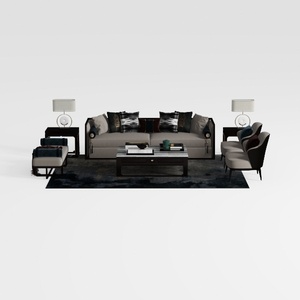
Modern Fabric Wood Living Room Furniture Set Sofa Chairs Coffee Table Lamps 3D Model


Vintage Carved Solid Wood Leather Tufted 3 Seater Sofa 3D Model

Rustic Solid Wood River Rock Inlay Coffee Table 3D Model
Homestyler is an easy-to-use online home design platform offering powerful 3D rendering, a vast collection of design projects, and helpful DIY video tutorials. It’s perfect for anyone looking to create and visualize beautiful interior spaces effortlessly.
Zaprojektuj teraz za darmo
































