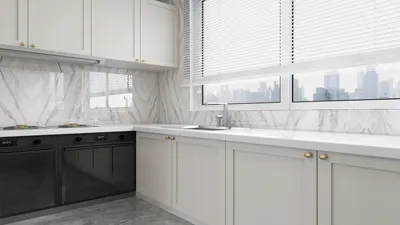


In an era where privacy and discretion have become essential, the popularity of incognito mode reflects a broader desire for personal space and control. This mindset can easily translate into how we design our homes, encouraging the creation of private nooks and rooms that offer a retreat from constant connectivity. Incorporating hidden compartments, adjustable lighting, and soundproofing can help cultivate spaces that feel like a personal sanctuary, much like browsing in incognito mode shields your online presence.
Direct Answer
Mastering 3D modeling design modifications requires creating models that can be rapidly adjusted without compromising geometry, proportions, or downstream production assets. The foundation lies in a well-structured workflow that emphasizes modular construction, clean topology, and non-destructive techniques, ensuring revisions are efficient and foreseeable.
Experienced designers view modifications as an integral part of the modeling workflow rather than an afterthought completed once the model is finalized.
Quick Takeaways
Introduction
With over ten years in residential visualization, furniture design, and architectural modeling, I've observed that a 3D artist's true skill lies not in producing the initial model, but in how well the model adapts to changes.
Clients frequently alter dimensions. Architects amend layouts. Product teams tweak proportions shortly before deadlines. Without a flexible workflow designed to accommodate these edits, revisions can turn into costly reconstructions.
Hence, mastering 3D modeling design modifications is less about advanced tools and more about intelligently building adaptable models from the start. This article outlines professional techniques to maintain model flexibility, clarity, and ease of revision.
Why Do Most 3D Modeling Revisions Become So Difficult
Key Insight: The toughest revisions stem from rigid modeling structures established too early in the process.
A common pattern, especially among novices, is "final-form modeling," where the artist constructs a complete shape right away instead of developing flexible underlying structures. While it may seem efficient initially, it fails when dimensions shift.
Typical challenges during revisions include:
In professional environments like architectural visualization studios, revision cycles may occur five to six times per project. Models lacking modification foresight quickly become obsolete.
Studios such as ILM and Weta Digital emphasize "revision resilience" in asset pipelines because ongoing iterations are essential in production.
How Do Professionals Prepare Models for Future Design Changes
Key Insight: Adaptive models depend on predictable architecture, modular components, and preserved edge flows.
Rather than modeling as a monolithic object, professionals segment geometry into logical parts that can be independently altered.
Practical preparation approaches include:
In product design workflows, especially in furniture or consumer electronics, modular building allows proportion adjustments without reconstructing surfaces.
What Non-Destructive Tools Improve 3D Modeling Design Modifications
Key Insight: Non-destructive modeling tools enable adjustments without permanently modifying the base mesh.
Across platforms like Blender, 3ds Max, Maya, and Fusion 360, non-destructive workflows significantly reduce time spent on revisions.
Common professional pipeline tools include:
For example, in a furniture visualization project, applying a live bevel modifier rather than direct edge beveling allowed clients to instantly modify corner softness across multiple pieces.
Which Topology Mistakes Make Design Modifications Harder
Key Insight: Inferior topology is the largest hidden cost during model revisions.
Even seasoned artists sometimes undervalue how topology affects modification flexibility.
Typical topology issues encompass:
When models are stretched or reshaped, poor topology causes shading artifacts and erratic deformation.
Many industry studios enforce quad-dominant topology standards because quads handle scaling and deformation more predictably.
How Parametric Thinking Changes the Modeling Process
Key Insight: Parametric thinking treats dimensions and relationships as changeable variables rather than fixed geometry.
Designers with CAD backgrounds often excel in heavy revision scenarios due to their relational approach.
Examples of parametric logic include:
Software such as Fusion 360, SolidWorks, and parametric nodes in Blender demonstrate how design variables replace destructive edits.
Hidden Costs of Poor 3D Modeling Design Modifications
Key Insight: Inefficient modification workflows consume more time than the initial modeling phase itself.
Many teams underestimate how costly poorly structured models are during revisions.
Hidden production expenses include:
In expansive architectural projects, even minor layout changes affect hundreds of models. Flexible models significantly reduce such delays.
Answer Box
Combining modular modeling, clean topology, and non-destructive modifiers is the quickest way to manage 3D modeling design changes. Models built with this approach adapt seamlessly to dimension shifts, proportion tweaks, and client revisions without full rebuild requirements. Tools like Homestyler can assist in visualizing such adaptable designs effectively during the planning phase.
Final Summary
FAQ
What are 3D modeling design modifications?
These are adjustments made to a 3D model post-creation, including changes to size, proportion, structure, or detailing.
Why are design modifications common in 3D modeling?
Most projects undergo multiple revisions due to client input, design refinement, or engineering changes.
How can I make 3D models easier to modify?
Employ modular modeling techniques, maintain clean quad-based topology, and utilize non-destructive modifiers to allow edits without dismantling geometry.
Which software supports efficient design modifications?
Applications like Blender, Maya, 3ds Max, Fusion 360, SolidWorks, and Homestyler all facilitate workflows that enhance 3D modeling design flexibility.
Does topology affect 3D modeling design modifications?
Absolutely. Clean topology ensures smooth deformation and scaling, whereas messy meshes introduce shading glitches and structural issues during changes.
What is non-destructive modeling?
Non-destructive modeling preserves the original mesh while applying changes via modifiers or parameters, allowing easy reversibility.
Is parametric modeling better for design revisions?
For projects with frequent dimensional alterations, parametric approaches are generally faster and more reliable.
How do professionals handle large revision cycles?
They rely on well-organized scene hierarchies, modular elements, and modifier- or parameter-driven workflows.
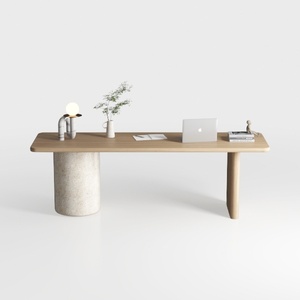
Minimalist Japandi Solid Wood Concrete Office Desk 3D Model
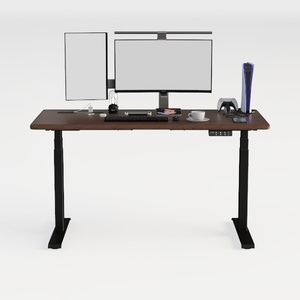
Modern Solid Wood Black Metal Adjustable Standing Desk 3D Model


Minimalist Walnut Wall Mounted Bookshelf 3D Model
Homestyler is an easy-to-use online home design platform offering powerful 3D rendering, a vast collection of interior design projects, and helpful DIY video tutorials. It’s perfect for turning your decorating ideas into stunning, realistic visuals effortlessly.
Desain sekarang Gratis
































